$175 Billion in Tariff Refunds Now Up for Grabs as Trump Scrambles
Revised after bias review
 Council News





Companies lining up for tariff refunds directly impacts businesses and potentially consumers through price adjustments, making it relevant to daily life and economic concerns. The high source count indicates broad interest and significance.
98 sources confirm this is the major story of the day. Companies seeking tariff refunds directly affects consumer prices and business costs—people will feel this in their wallets immediately. High source count + concrete economic impact = must-read.
The Supreme Court's ruling on tariffs directly impacts businesses seeking refunds, which could affect pricing and availability of goods for consumers, making it highly relevant and engaging.
An informed citizen needs to know about Supreme Court rulings on tariffs to understand potential refunds and economic relief for businesses, which directly affects jobs and consumer costs; people would stop scrolling because it involves real money back in their pockets and ongoing trade tensions that surprise many with their speed.
Companies racing for refunds after the Supreme Court slapped down Trump’s tariff power means real money—potentially billions—could flow back to consumers and small businesses. The 98-source swarm shows it’s the day’s dominant story, and readers will click to see if cheaper prices are coming to their next shopping cart.
The Supreme Court struck down President Trump's sweeping tariffs on Friday in a 6-3 decision. The justices ruled that the International Emergency Economic Powers Act, enacted in 1977, does not authorize the president to impose blanket tariffs without congressional approval. The ruling marks another significant check by the court on the administration's use of emergency powers.
The decision invalidates tariffs that generated an estimated $175 billion in government revenue, according to the Penn Wharton Budget Model. But the Supreme Court did not rule on refunds because that question was not part of the case before it, pushing the fight over the money to lower courts.
Justice Brett Kavanaugh warned in his dissent that the ruling would likely create "serious practical consequences." He noted that the government collected billions in tariffs it may now be required to refund, even though some importers already passed those costs to consumers or other businesses. "The Court says nothing today about whether, and if so how, the Government should go about returning the billions of dollars that it has collected from importers," Kavanaugh wrote.
At least 1,000 companies have already sued or are preparing to sue in the Court of International Trade to recover tariffs they paid. Costco, Revlon, and Bumble Bee Foods are among them. But the Supreme Court offered no roadmap for how refunds would actually work.
According to a TD Securities report, the refund process could take 12 to 18 months. The complexity is immense. More than 20 million tariff entries across 300,000 importers are potentially affected, according to customs and tariffs attorney Luis Arandia. He called the issues "mind-boggling."
Trump responded to the ruling by calling the justices who voted against him a "disgrace to the nation." He said he was "absolutely ashamed" of certain justices, including two he himself appointed: Amy Coney Barrett and Neil Gorsuch. He accused the court of being "swayed by foreign interests," without providing evidence. He also called the decision "deeply disappointing" and "totally defective."
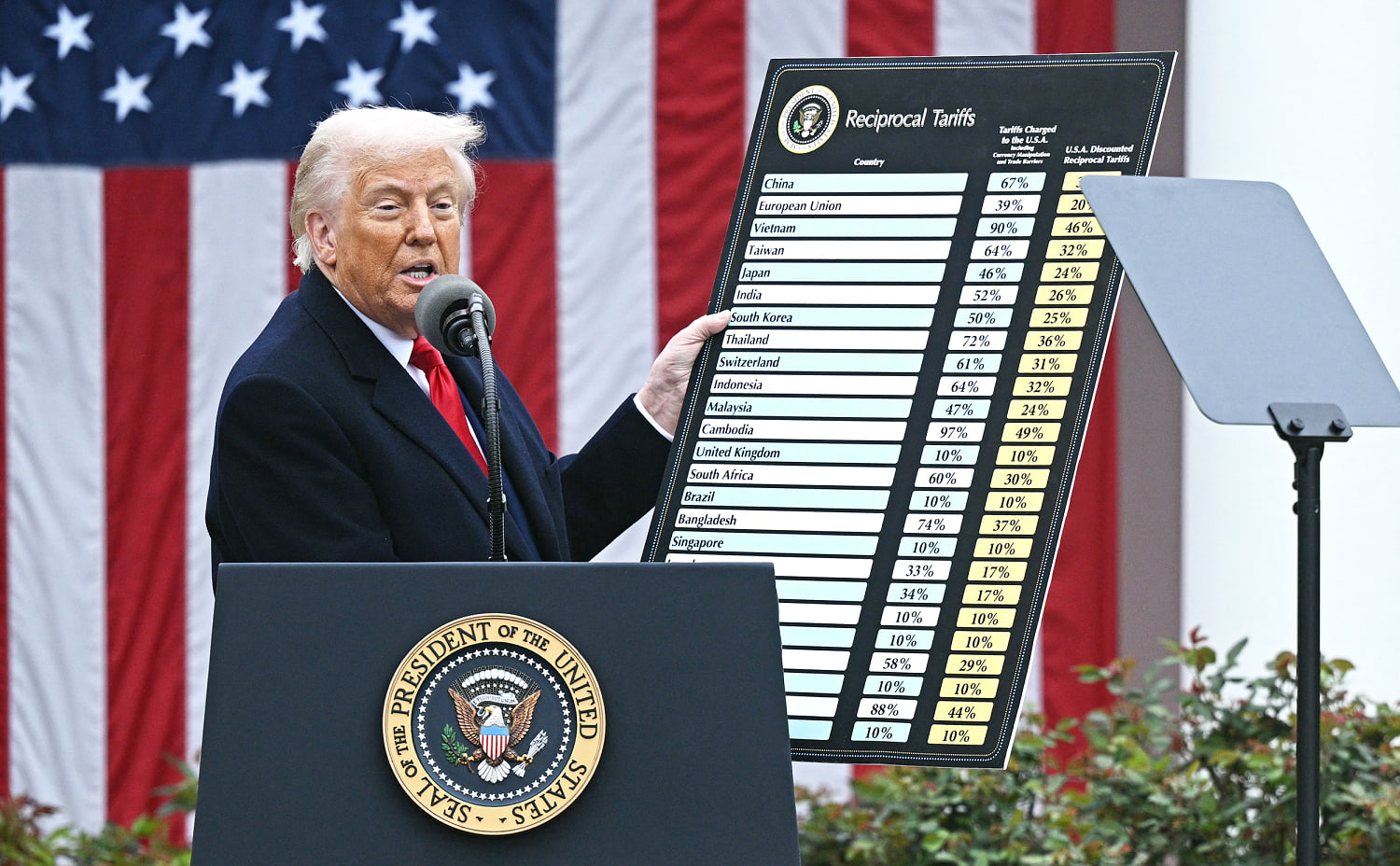
Within hours, Trump signed an executive order imposing a new 10 percent global tariff under Section 122 of the Trade Act of 1974. He said the tariffs would take effect the following week. Unlike the emergency powers law the court struck down, Section 122 of the Trade Act of 1974 limits tariffs to a maximum of 15 percent and allows them to remain in place for only 150 days without congressional approval.
Trump also announced the administration would begin investigations into unfair trade practices that could justify additional tariffs under existing statutes. His top trade negotiator, Jamieson Greer, called the alternative trade law provisions "incredibly legally durable."
Several business groups praised the ruling. The U.S. Chamber of Commerce issued a statement calling it "welcome news" for companies and consumers. Small Business Majority CEO John Arensmeyer said the decision was "critically important because small businesses can do very little to avoid the rapidly rising costs of goods that result from tariffs."
The National Retail Federation urged the Court of International Trade to "ensure a seamless process to refund the tariffs to U.S. importers" in a public statement, saying refunds would serve as an economic boost. The National Restaurant Association, which reported that tariffs strained more than 60 percent of restaurant operators last year, urged the administration to exempt food and beverage imports from any new duties.
But businesses are cautious. Some fear angering Trump, who has publicly threatened companies that criticized tariffs. In May 2025, he demanded Walmart "EAT THE TARIFFS" after the retailer warned of price hikes. Reps for Walmart, Target, and Amazon declined to comment on the ruling. Costco, which had sued preemptively to secure refunds, also did not respond to requests for comment.
Refunds would flow to importers first, but because many passed tariff costs to shoppers, any savings could eventually show up in lower shelf prices—if retailers choose to pass them along.
Democratic leaders praised the ruling. Senate Minority Leader Chuck Schumer called it "a win for the wallets of every American consumer," though refunds would go to importers, not directly to consumers. Illinois Governor JB Pritzker told Trump to "cut the check" and issue refunds to taxpayers.
Some Republicans praised the decision as a defense of constitutional limits on presidential power. Senator Rand Paul, a libertarian-leaning Republican who has repeatedly broken with Trump on executive-power issues, called it "a defense of our Republic." Senator John Curtis said the ruling "affirms that the Founders' system of checks and balances remains strong nearly 250 years later."
Vice President JD Vance condemned the ruling as "lawlessness from the court," arguing that Congress had given the president the ability to regulate imports, though the Supreme Court disagreed with this interpretation. Speaker Mike Johnson said Congress and the White House would "determine the best path forward in the coming weeks," while also noting that "the President's use of tariffs has brought in billions of dollars."
Following the Supreme Court ruling, the refund battle is expected to move to the Court of International Trade, a specialized federal court that will need to establish a mechanism for processing refunds. The court has never handled a refund process of this scale. Senator Maria Cantwell (D-Wash.) has asked Treasury Secretary Scott Bessent for a "detailed explanation" of how the department will handle the refunds.
Trump's new 10 percent global tariff uses different legal authority than the struck-down tariffs, but it is temporary and limited in scope. Administration officials have indicated plans to layer on additional tariffs using other trade laws, potentially creating a patchwork of duties that could trigger another round of exemption requests and international negotiations.
For businesses and consumers, the ruling does not guarantee immediate relief. Cheaper prices are unlikely in the near term. Since the administration has not committed to issuing refunds proactively, companies will need to litigate in the Court of International Trade to recover what they paid—a process that could take years.
Cross-referenced to ensure accuracy