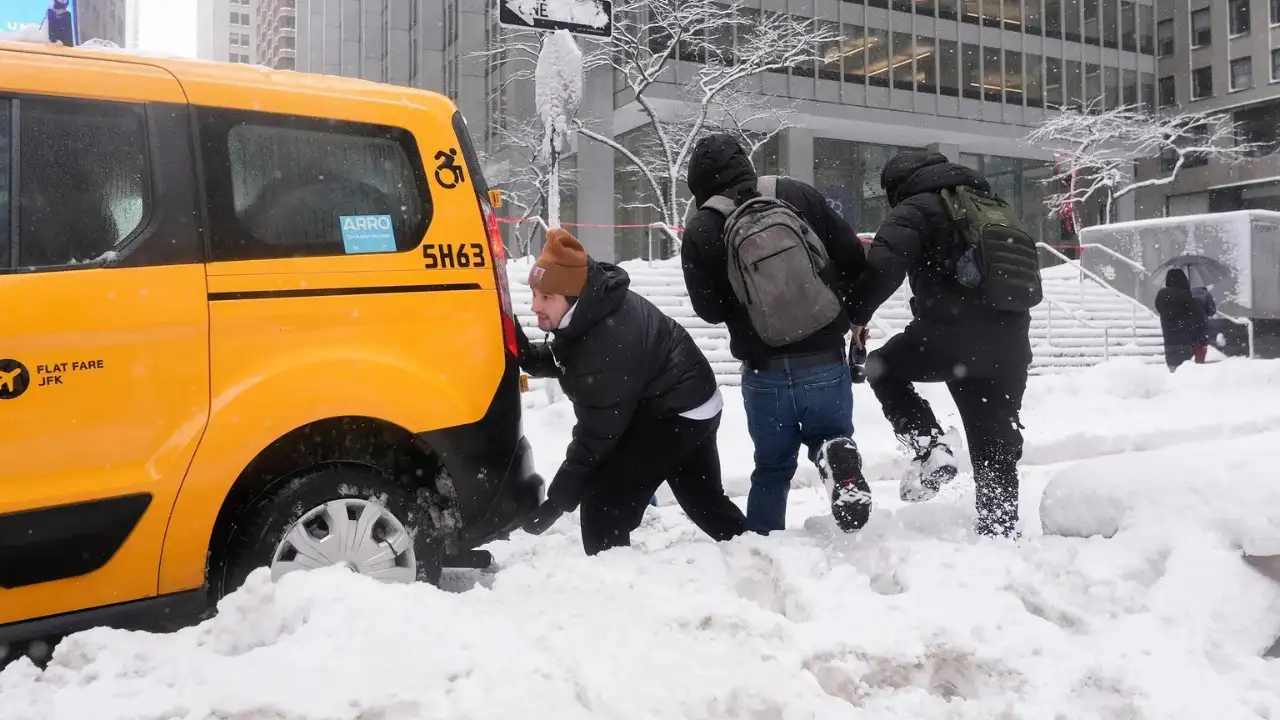
A major winter storm is affecting the Northeast, with more than 447,000 customers without power across Massachusetts, New Jersey, Delaware, and Rhode Island. Thousands of flights have been canceled, and travel bans are in effect across multiple states.
According to the National Weather Service, heavy snowfall rates of 2 to 3 inches per hour have resulted in totals of up to 30 inches in some areas. In Central Park, 15 inches accumulated by Monday morning, while Newark saw more than 18 inches and Long Island topped 22 inches. Gusty winds reaching 70 miles per hour have made driving hazardous and created whiteout conditions that severely limit visibility.
More than 5,300 flights into and out of U.S. airports were canceled by Monday morning. John F. Kennedy International Airport canceled over 500 flights, and LaGuardia saw the same, with disruptions extending from Maryland to Maine. The cancellations have stranded thousands of travelers and disrupted travel plans across the region.
Governors in New York, Massachusetts, New Jersey, and several other eastern states declared states of emergency. In New Jersey, Governor Mike Sherrill imposed a travel ban until noon Monday, suspending transit services. Connecticut Governor Ned Lamont banned commercial vehicles from limited access roads. These actions aim to reduce travel accidents and keep roads clear for emergency crews.
Power restoration efforts are underway in Massachusetts and New Jersey, where 447,000 customers remain without electricity. The National Weather Service forecasts that coastal regions could see one to two feet of snow by Tuesday morning. For the millions under blizzard warnings, restoring power will provide light and heat as cleanup efforts begin.
If you're in the Northeast right now, the blizzard could leave your home without power and heat, forcing you to huddle in the cold while thousands of canceled flights strand your family mid-journey. More than 447,000 customers from Massachusetts to New Jersey are already facing blacked-out nights and frozen pipes as fierce winds and heavy snow batter the region. This storm isn't just weather—it's a direct threat to your warmth, your travel plans, and your daily routine that shows no signs of letting up soon.
Heavy snowfall rates of 2 to 3 inches per hour have dumped up to 30 inches in some spots, turning roads into slick traps and knocking out electricity across states like New York and Massachusetts. In Central Park, 15 inches piled up by Monday morning, while Newark saw more than 18 inches and Long Island topped 22 inches, according to the National Weather Service. Gusty winds reaching 70 miles per hour have worsened the chaos, creating whiteout conditions that make even a short drive feel like a gamble with your safety.
More than 5,300 flights into and out of U.S. airports ground to a halt by Monday morning, leaving travelers like you stuck at gates or scrambling for alternatives. John F. Kennedy International Airport alone canceled over 500 flights, and LaGuardia saw the same, as the storm's grip extended from Maryland to Maine. For families counting on that trip home or to work, these disruptions mean missed connections, lost income, and the frustration of waiting hours in crowded terminals without clear updates.
New York Governor Kathy Hochul declared a state of emergency, urging people to stay indoors and avoid the roads as blizzard conditions peaked. In New Jersey, Governor Mike Murphy imposed a travel ban until noon Monday, suspending transit services to prevent accidents on icy highways. Connecticut Governor Ned Lamont went further by banning commercial vehicles from limited access roads, a move aimed at keeping emergency crews clear to restore power and clear snow. These actions highlight how state leaders are prioritizing public safety, even as the storm's peak hours left residents wondering when help would arrive.
As the snow tapers off, power restoration efforts will ramp up, with utility crews targeting the hardest-hit areas like Massachusetts and New Jersey to reconnect the 447,000 affected customers. The National Weather Service forecasts that coastal regions could see one to two feet of snow by Tuesday morning, setting the stage for a grueling cleanup. For the millions under blizzard warnings, getting power back means not just light and heat, but a return to normal life before the next freeze hits.
Highlighted text was flagged by the council. Tap to see feedback.