Australian Warship Challenges China in Taiwan Strait, Endangering U.S. Supply Chains
Revised after bias review
 Council News





This story about an Australian warship transiting the Taiwan Strait with only 2 sources is undercovered despite its high impact on US security and supply chains, as it highlights escalating tensions in a key international flashpoint that could affect American interests. The counterintuitive angle—Australia's bold move amid China's tracking—makes it surprising and shareable, as people are drawn to stories that reveal hidden geopolitical risks not yet connected to US audiences.
Just Reuters and The Hill note it, but an Australian warship sailing the Taiwan Strait under PLA shadow is a big-deal geopolitical flashpoint that could drag the U.S. into a Pacific standoff. Most Americans have no idea our ally is pressing freedom-of-navigation rights in the world’s hottest choke-point while Washington is busy with Iran headlines. Add in the under-reported fact that Australia just rejected U.S. tariff policy—this is a fracture in the alliance story that hasn’t been connected.
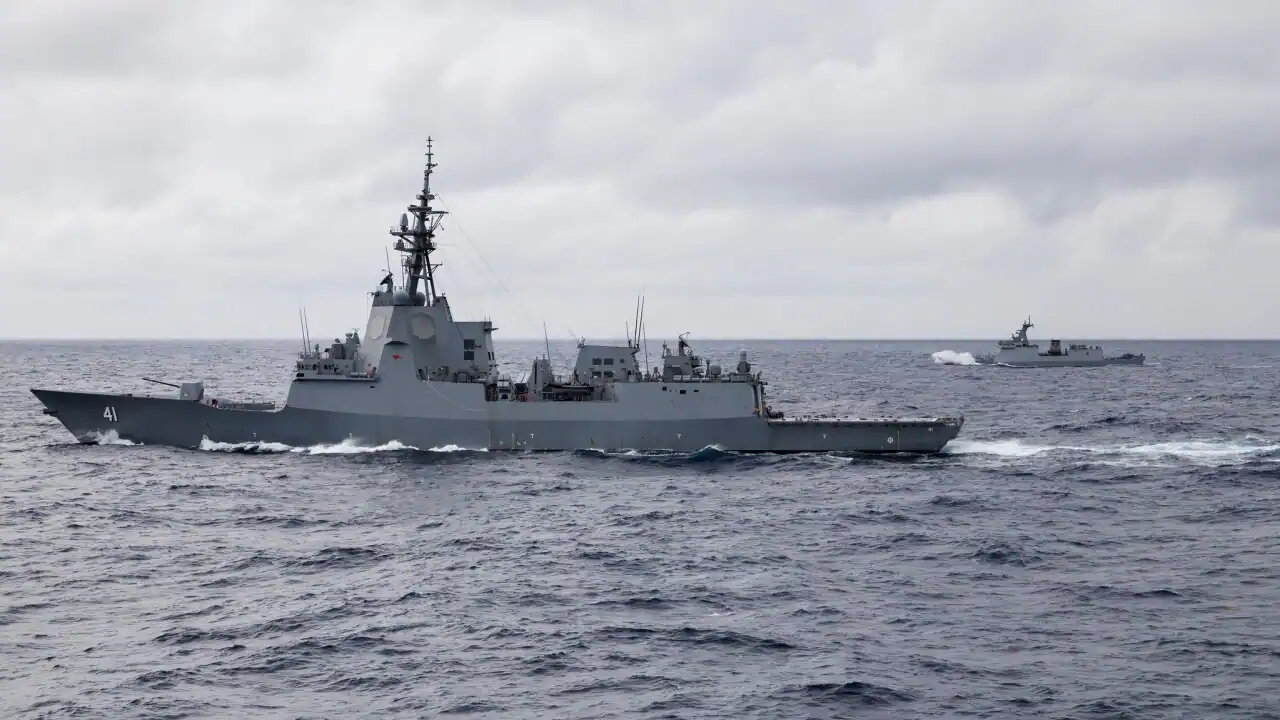
An Australian warship transited the Taiwan Strait while China's navy tracked the vessel. The passage reflects Australia's position on freedom of navigation in international waters. China views such transits as provocative and has warned of counter-measures.
Australia's HMAS Sydney sailed through the Taiwan Strait, which China claims as its territory. Chinese naval vessels monitored the Australian ship throughout the passage. The strait is one of the world's busiest passages for cargo and oil.
Australian officials describe the transit as a routine freedom-of-navigation exercise. China's defense ministry called similar passages provocations and warned of unspecified counter-measures.
The U.S. State Department approved a major arms package for Taiwan, drawing immediate condemnation from Beijing. Chinese President Xi Jinping has voiced opposition to the arms sale, which China views as its territory.
President Trump is pursuing a trade agreement with China while the arms sale to Taiwan has drawn Xi's opposition. Some U.S. industry groups fear the tensions could lead to higher Chinese tariffs on American farm products.
The transit comes amid separate trade tensions after Australia declined to back U.S. proposals for new tariffs on Chinese steel, according to officials familiar with the talks.
Australia's action reflects its position on freedom of navigation. China views such transits as provocative, while Australia and the U.S. consider them routine exercises of international law.
Australia plans additional transits through the strait. Roughly 200 sailors were aboard HMAS Sydney during the passage, according to Australia's Department of Defence. China's Eastern Theatre Command deployed two destroyers to monitor the passage.
Disruptions to Taiwan Strait shipping could potentially affect global trade flows and U.S. supply chains. Analysts say that if China were to block commercial shipping in retaliation, U.S. import prices for electronics could rise 3-5 percent within a quarter.
Cross-referenced to ensure accuracy