




A Hercules transport plane carrying troops went down in the Amazon region
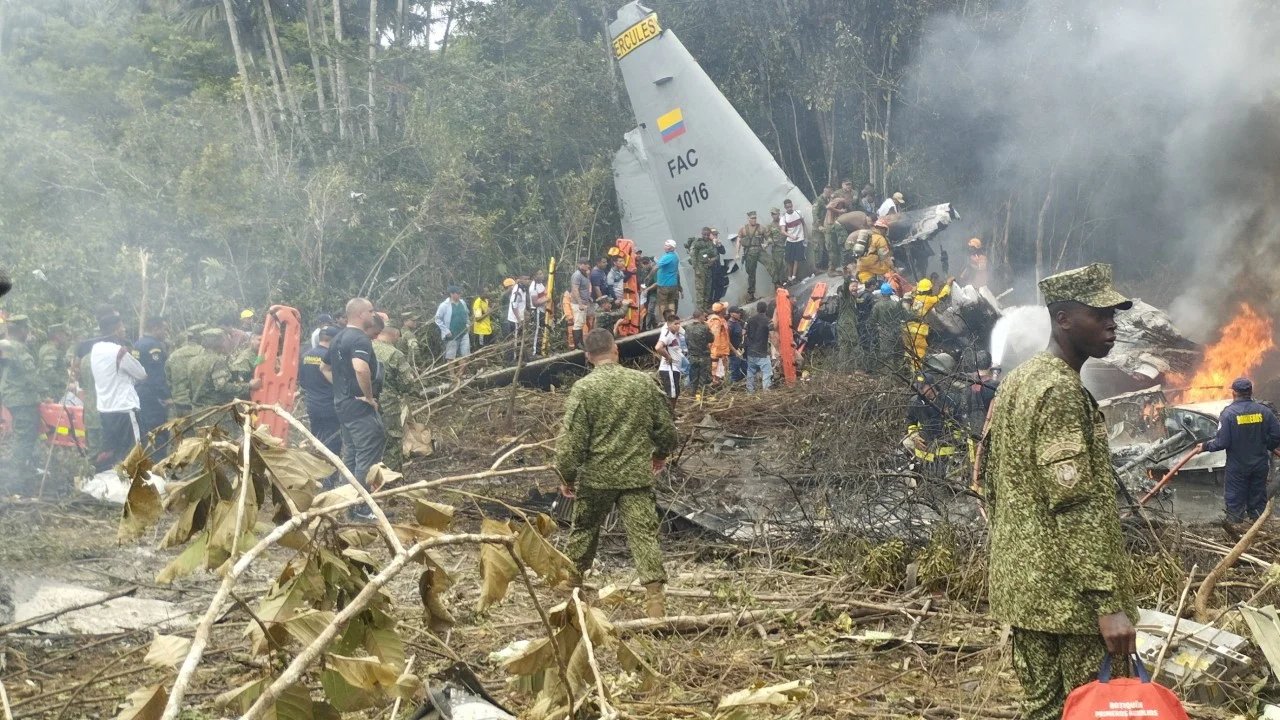
A Colombian military Hercules C-130 transport plane crashed shortly after takeoff on Monday near Puerto Leguizamo in Putumayo, an Amazonian province bordering Peru and Ecuador. The aircraft was carrying 128 people when it went down, killing at least 66 and leaving four soldiers unaccounted for, according to Hugo Alejandro Lopez, head of the nation's armed forces.
The dead included six air force members, 58 army personnel, and two national police officers, the Colombian air force said. Defense Minister Pedro Sánchez called the crash a "tragic accident" and said there were no signs the plane was attacked by rebel groups that operate in the remote region.
The crash site and immediate response
Puerto Leguizamo Deputy Mayor Carlos Claros said the bodies of victims were taken to the town's morgue, and the only two clinics in town treated the injured before they were flown to larger cities. Dozens of injured were airlifted to hospitals in other areas. Images shared by local media outlets showed a black cloud of smoke rising from a field where the plane crashed, with soldiers rushing to the site.
The cause of the crash has not been determined. Colombian President Gustavo Petro seized on the accident to call for modernizing military equipment, saying those efforts have been blocked by "bureaucratic difficulties." He said that "if civilian or military administrative officials are not up to the challenge, they must be removed."
A separate runway disaster at LaGuardia Airport
While rescue efforts continued in Colombia, an aviation tragedy unfolded at New York's LaGuardia Airport late Sunday when an Air Canada Express regional jet collided with a fire-rescue vehicle on a runway. The collision killed both the pilot and co-pilot and injured 41 people, 39 from the aircraft and two Port Authority officers from the truck.
Air traffic control recordings revealed a communication breakdown. A controller cleared the fire-rescue vehicle to cross the runway, then seconds later urgently ordered it to stop: "Truck 1, stop, stop, stop. Stop Truck 1, stop." The vehicle operator did not stop in time. The plane was traveling at about 100 mph when the collision occurred.
Survival and investigation at LaGuardia
The Air Canada plane, Flight 8646, had 72 passengers and four crew members on board coming from Montreal. A flight attendant was found alive strapped to her seat after falling through a hole in the aircraft's floor during the crash, suffering serious but non-life-threatening injuries. Most injuries among passengers were broken bones and bruises, though one person suffered a brain bleed.
Port Authority Executive Director Kathryn Garcia said 32 people had been released from hospitals by Monday morning. The National Transportation Safety Board recovered the cockpit voice recorder and flight data recorder, which will be analyzed in Washington. NTSB Chair Jennifer Homendy said evidence collection could take days due to the "tremendous amount of debris" at the site. One runway at LaGuardia reopened Monday, but the runway where the collision occurred will remain closed until Friday morning.
What investigators will examine
Former NTSB Chair Robert Sumwalt said investigators will examine air traffic control tapes, radar data, and cockpit voice recordings. They will interview controllers and witnesses to understand the communication breakdown that allowed the vehicle to be on the runway as the plane was landing. Sumwalt estimated the investigation will take between 12 and 18 months to complete.
Transportation Secretary Sean Duffy emphasized at a briefing that the incident serves as a reminder of the importance of wearing seatbelts aboard planes. "As you see from last night, they do save lives," Duffy said after visiting the crash site.