Cuba Opens Economy to Exiles as Grid Collapses and Trump Pressures Island
Revised after bias review
 Council News
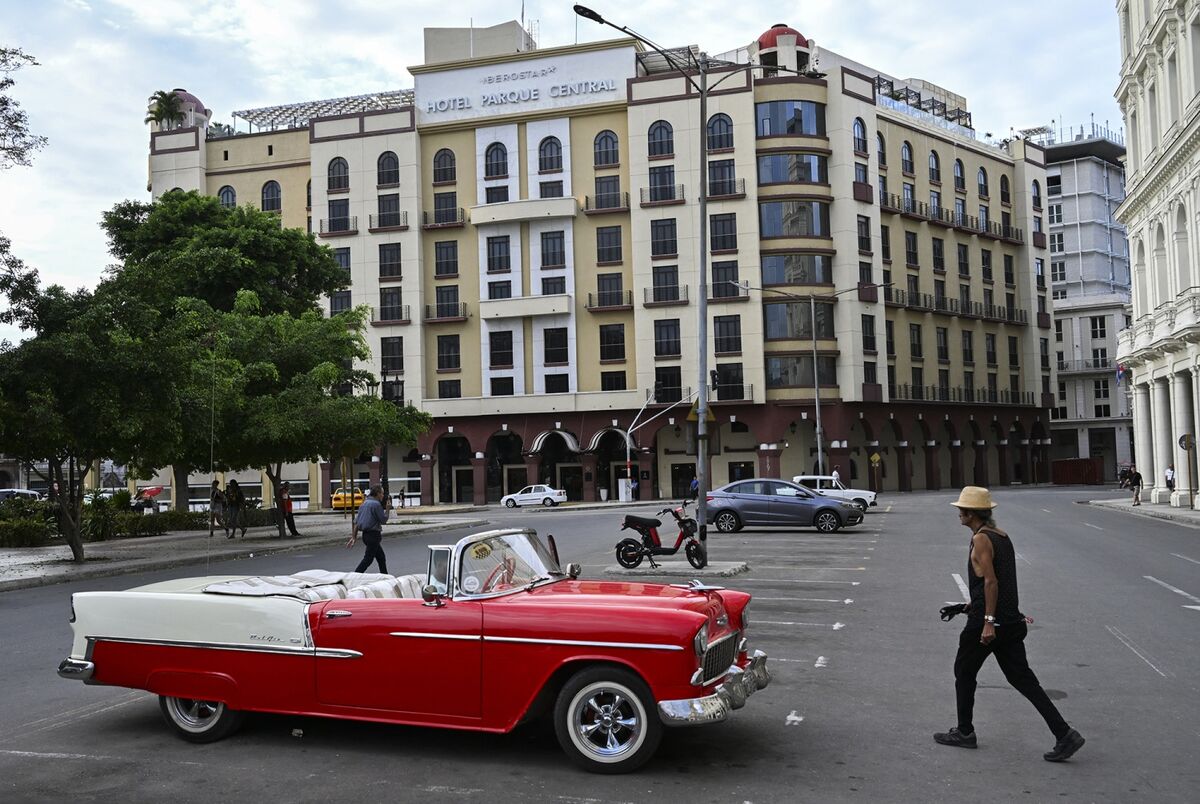





Cuba plans to open up to investment from nationals in the U.S., which is a concrete policy change that could affect remittances and the Cuban economy.
Cuba's decision to open investment opportunities to nationals in the U.S. represents a concrete policy change with measurable economic implications for Cuban-American investors.
Cuba plans to open up to investment from nationals in the U.S., which could lead to significant economic changes and opportunities for Cuban-Americans.
Cuba plans to open investments from US nationals, an imminent policy shift that could affect economic ties and investment opportunities starting soon.
Cuban cabinet approved decree allowing Cuban-Americans to invest directly in private businesses for first time since 1959, potentially shifting remittances into equity stakes.
Deputy Prime Minister Oscar Pérez-Oliva Fraga told NBC News that Cuba would welcome "not only small investments, but also large investments, particularly in infrastructure." Tanieris Diéguez La O, deputy chief of mission at Cuba's embassy in Washington, confirmed that more details on the changes would be announced in coming days. The move builds on past initiatives to engage the diaspora community on social, cultural, and scientific matters. Cuba's state-dominated economy has remained largely closed to private foreign investment, making this announcement a notable opening to outside capital.
Cuba faces a cascading economic crisis that has forced the government's hand. The country's national electric grid collapsed on Monday, leaving approximately 10 million people without power. Grid operator UNE said it was investigating the causes of the blackout, which represents the latest in a series of widespread outages lasting hours or days. A major power plant failure was ruled out by officials, though they had not yet pinpointed the cause, suggesting a transmission problem.
The blackout sparked rare violent protests over the weekend in the communist-run country. The Trump administration threatened steep tariffs on any nation shipping oil to Cuba, choking off petroleum access and creating severe fuel shortages, which exacerbated the issues with Cuba's already obsolete generation system.
President Trump has made clear his administration views Cuba as vulnerable and malleable. On Sunday, Trump told reporters that Cuba "wants to make a deal" and predicted the U.S. would reach an agreement "pretty soon." He described Cuba as a "failed nation" and said "something will happen with Cuba pretty quickly," though he indicated he wanted to address the war with Iran first.
Trump's language grew more explicit when asked about his plans for the island. "Whether I free it, take it, I think I could do anything I want with it, if you want to know the truth," he said. In a separate statement, Trump said he believed he would have "the honour of taking Cuba," describing the nation as "very weakened" right now. Last month, Trump had already suggested a "friendly takeover" of Cuba was possible.
Despite Cuba's openness to exile investment, substantial barriers persist. The U.S. maintains intense sanctions that prohibit Americans from investing in Cuba or conducting business with the country without government permission. The State Department also bans direct financial transactions with companies deemed affiliated with Cuba's military or intelligence services.
Pérez-Oliva Fraga acknowledged these constraints, saying the U.S. restrictions on commerce "undoubtedly affect the development of these transformations." Andy Gomez, a professor of Cuban studies at the University of Miami, warned that investment risks may outweigh potential benefits. "To invest in Cuba and be assured that you're going to be able to, for the companies, be able to keep most of your earnings, that's not very clear," Gomez told CBS Miami.
Cross-referenced to ensure accuracy