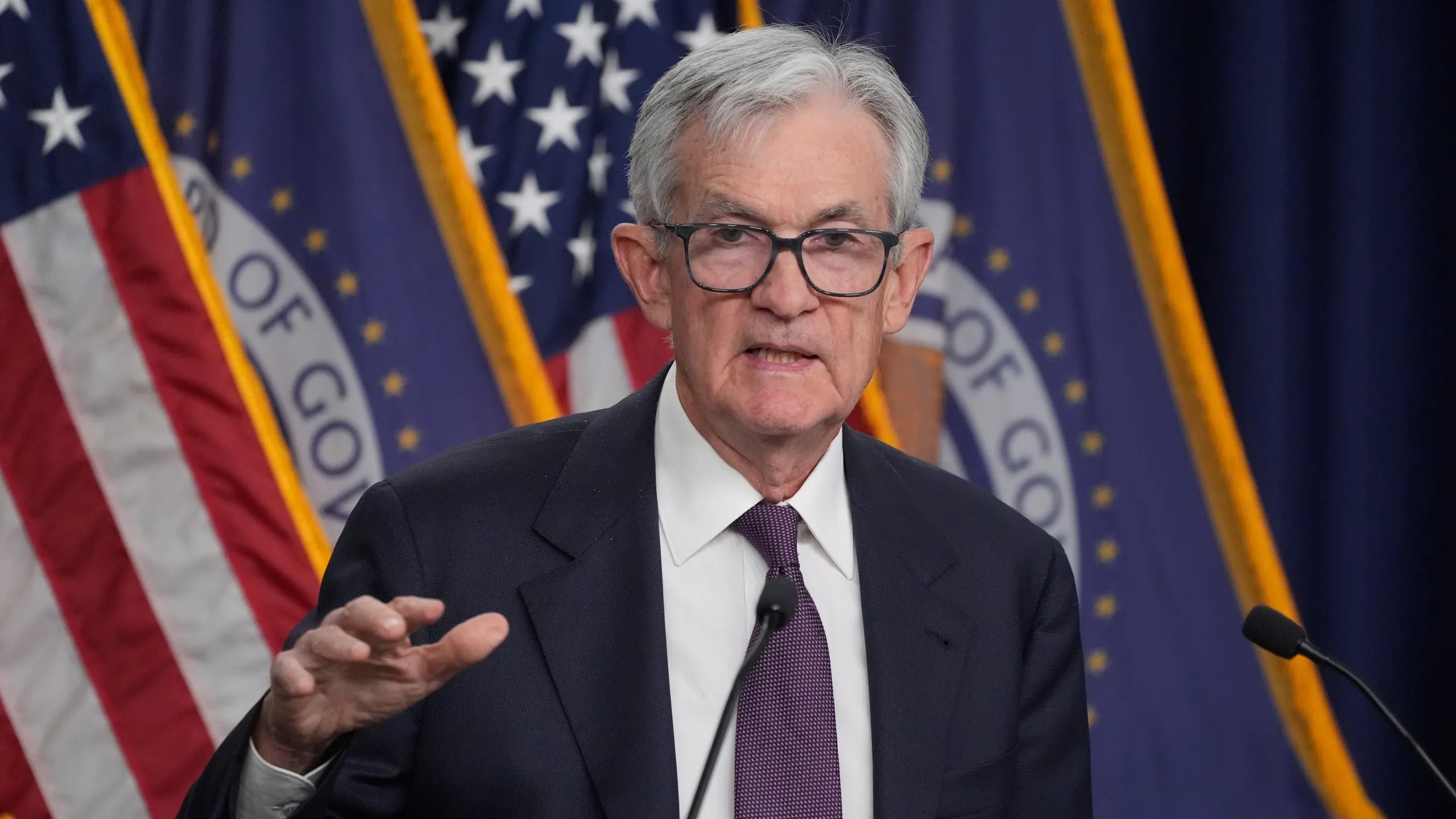
The Federal Reserve held its benchmark interest rate at a range of 3.5 to 3.75 percent on Wednesday, maintaining borrowing costs as policymakers assessed the economic fallout from the Iran conflict. The Federal Open Market Committee voted 11-1 to keep rates unchanged. The European Central Bank and the Bank of England both held their rates steady the same day, with the ECB maintaining its deposit rate at 2 percent and the BOE keeping its benchmark rate at 3.75 percent.
Joseph Lavorgna, SMBC Americas Chief Economist, said the Fed "did what they were suppose to do" by holding rates steady. The ECB and BOE held rates steady on the same day, with officials assessing the disruption caused by the Middle East conflict.
The Fed's decision to pause masks growing inflation concerns that financial markets are already pricing into their expectations. This shift reflects investor concerns that inflation pressures could force the central bank's hand sooner rather than later.
The Fed projects one rate cut in 2026.
Senator Ron Johnson of Wisconsin discussed the rising cost of U.S. involvement in Iran, linking the geopolitical crisis to domestic fiscal pressures. The conflict has become entangled with other budget disputes, including the ongoing Department of Homeland Security funding standoff and negotiations over the SAVE America Act.
Nadhim Zahawi, former UK Chancellor of the Exchequer, weighed in on transatlantic tensions, noting that President Trump has criticized UK Prime Minister Keir Starmer for not being more supportive of U.S. efforts regarding Iran. The diplomatic friction reflects broader disagreements over how Western nations should respond to the Middle East crisis and its economic consequences.
The Federal Reserve held its benchmark interest rate at a range of 3.5 to 3.75 percent on Wednesday, maintaining borrowing costs as policymakers assessed the economic fallout from the Iran conflict. The Federal Open Market Committee voted 11-1 to keep rates unchanged. The European Central Bank and the Bank of England both held their rates steady the same day, with the ECB maintaining its deposit rate at 2 percent and the BOE keeping its benchmark rate at 3.75 percent.
Joseph Lavorgna, SMBC Americas Chief Economist, said the Fed "did what they were suppose to do" by holding rates steady. The coordinated pause across major central banks reflected a cautious stance as officials weighed the disruption caused by the Middle East conflict against other economic pressures.
The Fed's decision to pause masks growing inflation concerns that financial markets are already pricing into their expectations. Markets now assign a 70 percent probability to a rate increase at the next Federal Reserve meeting in six weeks, according to market pricing. This shift reflects investor concerns that inflation pressures could force the central bank's hand sooner rather than later.
The Fed's own projections signal one rate cut is expected in 2026, suggesting officials currently see the path forward as holding steady before eventually lowering rates later in the year. The divergence between market expectations and Fed guidance underscores the uncertainty surrounding how the Iran conflict will ultimately affect inflation and economic growth.
Senator Ron Johnson of Wisconsin discussed the rising cost of U.S. involvement in Iran, linking the geopolitical crisis to domestic fiscal pressures. The conflict has become entangled with other budget disputes, including the ongoing Department of Homeland Security funding standoff and negotiations over the SAVE America Act.
Nadhim Zahawi, former UK Chancellor of the Exchequer, weighed in on transatlantic tensions, noting that President Trump has criticized UK Prime Minister Keir Starmer for not being more supportive of U.S. efforts regarding Iran. The diplomatic friction reflects broader disagreements over how Western nations should respond to the Middle East crisis and its economic consequences.
Highlighted text was flagged by the council. Tap to see feedback.