Germany Sees Lower Tariff Burden After Supreme Court Blocks Trump's Emergency Powers
Revised after bias review
 Council News





Follow-up to the Supreme Court tariff ruling. People want to know how this affects prices and trade, and Germany's perspective adds a key angle. With 105 sources, this is clearly a major story people are following.
Germany's expectations of lower tariff burden after Supreme Court ruling has massive implications for US consumers' import prices and trade policy direction. High source count (105) confirms this is the major breaking story, and readers need to understand what comes next after the court's tariff decision.
The expectation of a lower tariff burden following the US court verdict on Trump tariffs directly impacts consumer prices and trade dynamics, making it a topic people will discuss and want to understand.
This story on lower tariff burdens after a US court verdict directly impacts American consumers through potential reductions in import costs and everyday prices, making it essential for citizens to understand how it affects their wallets; it's engaging due to the high source count and surprise element of economic relief from ongoing tariff debates.
With 105 sources, this is the dominant global story and directly affects what Americans pay for imports; Germany's relief hints at lower prices ahead, so shoppers will click to see if their next purchase gets cheaper.
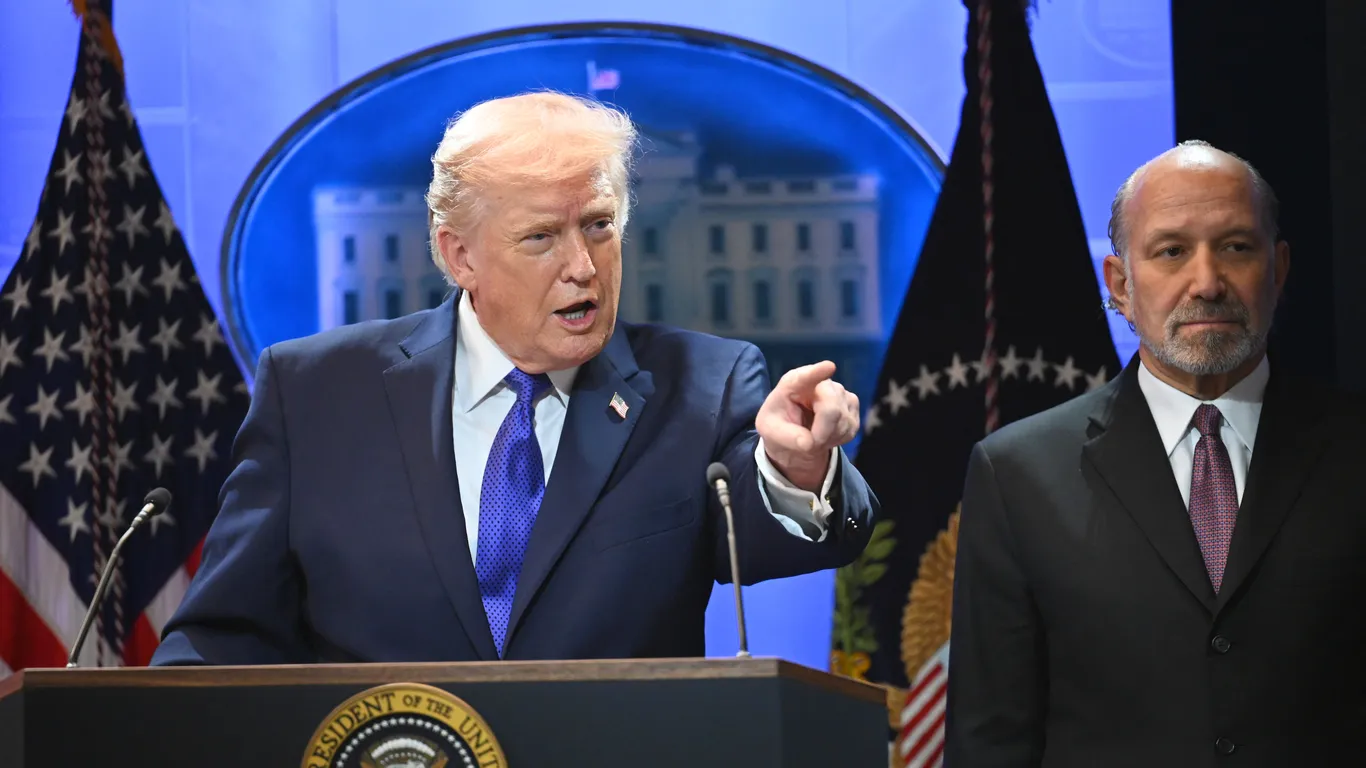
The U.S. Supreme Court struck down most of President Trump's global tariffs on Friday in a 6-3 decision, ruling that he lacked authority to impose the levies under the International Emergency Economic Powers Act. The justices found that only Congress, not the president, holds the constitutional power to impose taxes and tariffs. The ruling marked a significant check on Trump's authority during his second term.
Germany's opposition leader Friedrich Merz expressed cautious optimism about the decision, signaling expectations of a lower tariff burden on European exporters. Brazil's Vice President Gabriel Alckmin said the decision restored competitiveness to Brazilian exporters. European leaders and businesses expressed cautious optimism about the ruling.
Trump responded to the ruling by signing an executive order within hours. He imposed a 10% tariff on all foreign imports under Section 122 of the Trade Act of 1974, a provision that has never before been used to apply tariffs. According to the Trade Act of 1974, Section 122 allows temporary tariffs up to 15% for 150 days to address balance-of-payments issues, after which Congress must act to extend them.
By Saturday, Trump announced a further increase in the tariff rate. He raised the global tariff to 15%, the maximum allowed under Section 122. "I will be raising the 10 percent Worldwide Tariff on Countries to the fully allowed, and legally tested, 15 percent level," he posted on Truth Social. The administration also signaled it would launch new investigations under Section 301 of the Trade Act, potentially targeting most major trading partners with country-specific tariffs.
The Supreme Court's decision did not address whether the government must refund the tariffs collected illegally, leaving this question unresolved. Companies including Costco, Revlon, and Bumble Bee Foods have sued in the Court of International Trade seeking refunds. According to economists at the Penn-Wharton Budget Model, the total refund obligation could exceed $175 billion.
Trump said the court should have addressed refunds in its opinion. "Wouldn't you think they would have put one sentence in there saying, 'keep the money or don't keep the money'?" he said. Without clear guidance, the refund process will likely take 12 to 18 months and require companies to litigate individually in the Court of International Trade. Refunds would go to importers who paid the tariffs, not directly to consumers, though retailers could theoretically cut prices if they recover money.
The ruling created relief for trading partners. Trump's immediate announcement of new tariff authorities under different legal provisions left uncertainty about the duration and scope of tariff relief. European leaders and businesses braced for months of uncertainty as Trump tested alternative legal pathways.
Within the United States, the American Petroleum Institute and other business organizations praised the decision. According to a YouGov poll, 60% of Americans approve of the Supreme Court's ruling, while 23% disapprove. Republican lawmakers expressed divided views. Rep. Don Bacon of Nebraska signaled Congress would challenge the new tariffs. Arkansas Gov. Sarah Huckabee Sanders suggested Trump would be motivated to act more aggressively if told he cannot do something.
Trump has announced plans to impose a new 15% tariff under Section 122, though the timeline for implementation remains uncertain. The tariff would remain in place for 150 days unless Congress extends it. The administration will simultaneously pursue Section 301 investigations targeting major trading partners, potentially reimposing country-specific tariffs. According to reporting, the administration aims to keep the total tariff revenue roughly unchanged from before the court ruling, meaning the new authorities could ultimately collect similar revenue despite the legal setback.
The extent to which Germany and other exporters experience tariff relief depends on whether Trump's alternative tariff authorities survive legal challenges or congressional opposition. The Supreme Court struck down Trump's use of emergency powers to impose tariffs, but disputes over tariff policy and legal authority continue.
Cross-referenced to ensure accuracy