
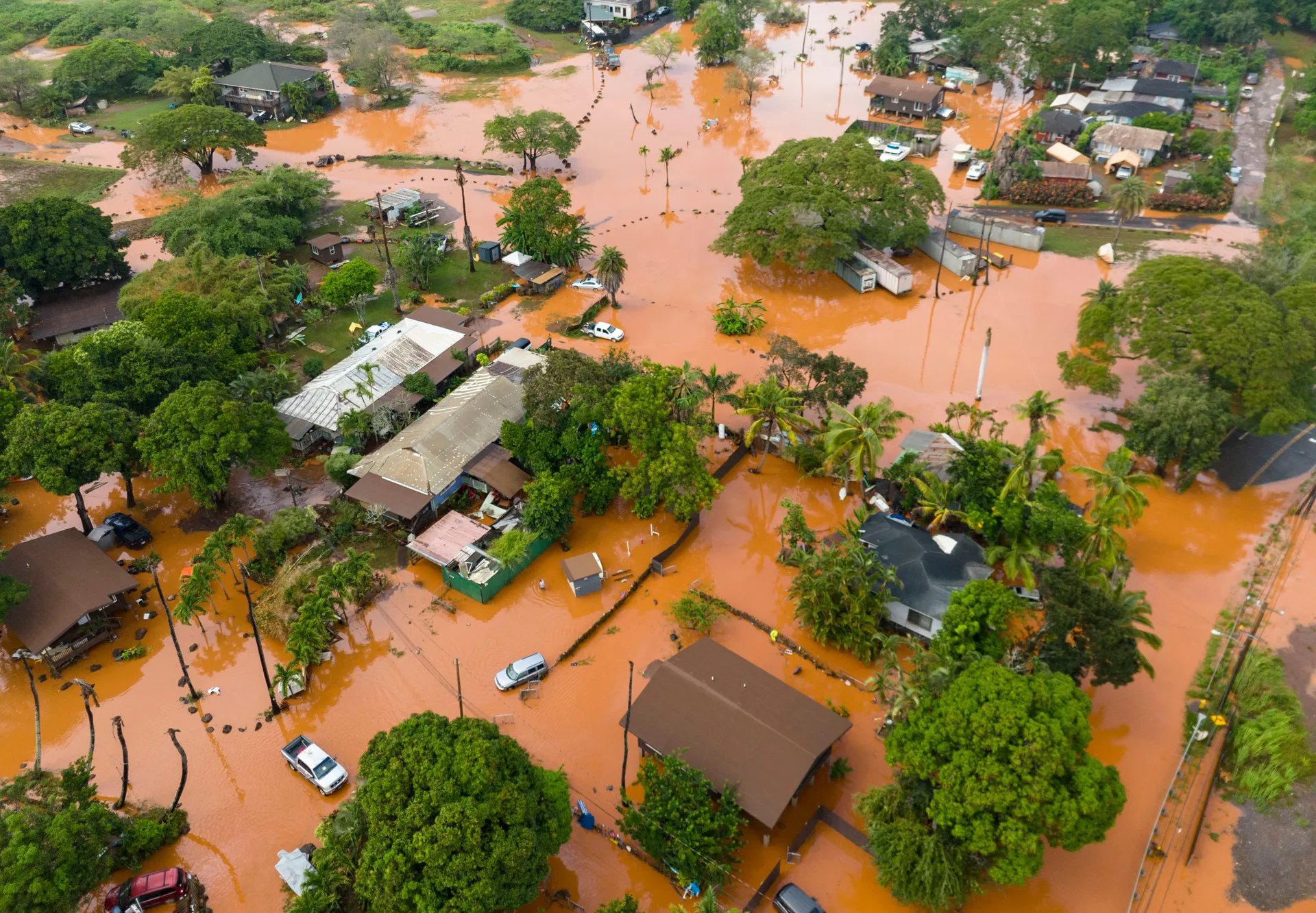





A Storm Hits Saturated Ground
Hawaii is experiencing its worst flooding in more than 20 years as heavy rains pounded soil already drenched by a winter storm a week earlier. The second severe weather event in seven days struck Oahu and Maui over the weekend, with some parts of the state receiving 40 to 50 inches of rain in the past 10 days, according to Governor Josh Green. Oahu's North Shore, a community renowned for big-wave surfing, was hit hardest as muddy floodwaters smothered vast stretches of the region.
Floodwaters lifted homes and cars off the ground and washed away roads. Evacuation orders affected 5,500 people north of Honolulu, though they were later lifted, according to CBS News. Tina Stall, a meteorologist with the National Weather Service in Honolulu, warned residents not to lower their guard: "There's still potential for more flooding impacts." More rain was forecast to fall on Oahu over the coming two to three days.
The Scale of Destruction
Honolulu Mayor Rick Blangiardi said more than 233 people have been rescued so far, with crews searching by air and water for stranded residents. About 10 people were hospitalized with hypothermia. The National Guard and Honolulu Fire Department airlifted 72 children and adults from a spring break youth camp called Our Lady of Kea'au on Oahu's west coast as a precaution, even though the camp sat on high ground.
Honolulu Mayor Rick Blangiardi stated that dozens, if not hundreds, of homes have been damaged, but officials have yet to fully assess the destruction. Governor Green estimated the total cost of the storm could exceed $1 billion, including damage to airports, schools, roads, people's homes, and a Maui hospital in Kula. Blangiardi stated plainly: "There's no question that the damage done thus far has been catastrophic."
The sheer volume of rainfall in a short time on already-saturated ground created the devastation. Parts of Oahu received 8 to 12 inches of rain overnight, while Kaala, the island's highest peak, recorded nearly 16 inches in a single day. No deaths were reported, and no one was unaccounted for.
A Failing Dam Adds Urgency
Officials closely monitored the Wahiawa dam, located about 17 miles northwest of Honolulu, which authorities said was "at risk of imminent failure." The 120-year-old earthen structure was built in 1906 by the Dole Food Company to increase sugar production and was rebuilt after a collapse in 1921. Water levels in the dam rose from 79 feet overnight to 84 feet by Friday, just 6 feet below its capacity. Governor Green called 85 feet "the threshold of great concern."
The state has regulated the dam as having "high hazard potential," meaning a failure "will result in probable loss of human life." State officials have pursued Dole about the dam's deficiencies since 2009, issuing four notices of deficiency. In 2021, the state fined Dole $20,000 for failing to address safety concerns on time. Dole subsequently offered to donate the dam, reservoir, and ditch system to the state in exchange for Hawaii agreeing to repair the spillway to meet dam safety standards.
Hawaii passed legislation in 2023 authorizing the dam's acquisition and provided $5 million to buy the spillway and $21 million to repair and expand it. The transfer has not been completed, but a state board was scheduled to vote on the acquisition the week of March 23. Dole said in a statement: "The dam continues to operate as designed with no indications of damage."
Why the Rain Keeps Coming
Winter storm systems known as "Kona lows" feature southerly or southwesterly winds that pull in moisture-laden air, causing heavy rain and flooding. Molly Pierce, a spokesperson for Oahu's Department of Emergency Management, explained the danger of continued rain on saturated ground: "Just the smallest amount of water can bring those raging back up. So even if it's blue skies where you are, if rain is falling on the mountain, it's coming to you soon enough."
Rescue efforts faced an unexpected obstacle. Ian Scheuring, a spokesperson for Honolulu, said crews were hampered by people flying personal drones to capture images of the flooding, which interfered with official search and rescue operations. The state activated a program allowing people displaced by the storm to access discounted hotel rates, and officials urged residents to seek out shelters and assembly areas across the islands.

The sources state that the fine was issued five years ago, creating a discrepancy with the summary's mention of 2021.