




Two Iranian Leaders Assassinated in Single Night
Israeli Defense Minister Israel Katz announced Tuesday that Ali Larijani, head of Iran's Supreme National Security Council, and Gholamreza Soleimani, commander of the Basij paramilitary force, were both "eliminated" in overnight strikes. According to Israeli Defense Minister Israel Katz, Larijani was the de facto leader of Iran for the first ten days of the war after Supreme Leader Ali Khamenei was killed in Israel's opening strike. The Israeli military launched a "broad wave of attacks" against Iranian infrastructure throughout Tehran following the assassinations.
Netanyahu Frames Killings as Path to Iranian Freedom
Prime Minister Benjamin Netanyahu described Larijani's elimination as part of Israel's effort to destabilize the Iranian regime. "Ali Larijani was the boss of the Revolutionary Guards, the gang of gangsters that effectively runs Iran," Netanyahu said in a statement. The Israeli leader expressed hope that the strikes would give Iranians "an opportunity to remove it" and "take their fate into their own hands." Defense Minister Katz vowed to continue "hunting the leadership of Iran's terror and oppression regime and to repeatedly cut the head of the octopus and not allow it to grow back."
Larijani's Complex Role in Regime's Final Days
Larijani had become the most publicly defiant voice of the Iranian regime, warning Trump on X just last week to "be careful not to get eliminated yourself" and threatening to "hunt down US servicemen" if the U.S. struck Iran's power grid. One Israeli official described Larijani as "the most powerful figure … running Iran" while questions remain about the extent of Mojtaba Khamenei's injuries. In recent days, Larijani had been part of a faction pushing to start peace talks with the U.S., while opposing figures like parliament speaker Mohammad Bagher Ghalibaf and Islamic Revolutionary Guard Corps commander Ahmed Vahidi pushed to continue the war.
Trump's Isolation Grows as Allies Reject Hormuz Pleas
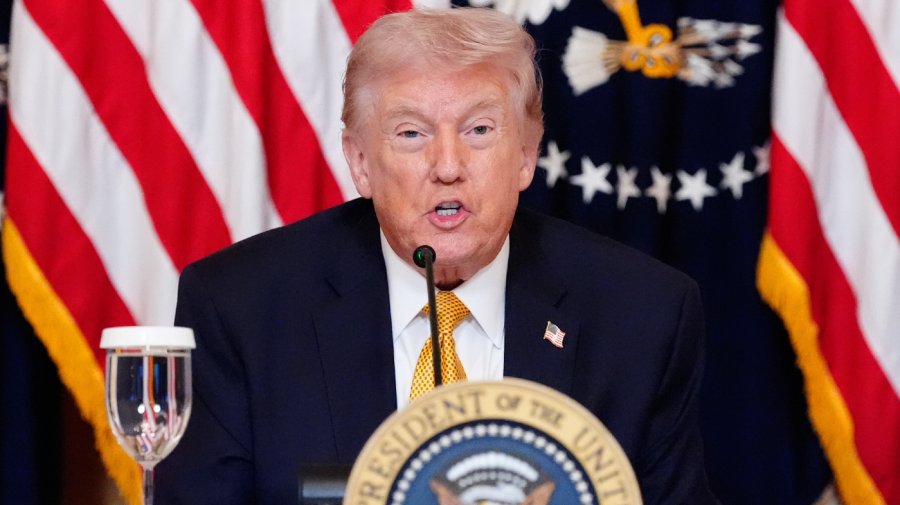
President Trump lashed out at NATO allies Tuesday, saying "most" of them informed the U.S. they "don't want to get involved" in military operations against Iran. "Everyone agrees with us but they don't want to help," Trump said during a White House event with Ireland's Taoiseach Micheál Martin. EU foreign policy chief Kaja Kallas told Reuters that "nobody is ready to put their people in harm's way in the Strait of Hormuz," adding that diplomatic solutions were needed to prevent food, fertilizer, and energy crises.
Global Energy Markets Spiral as Strait Remains Closed
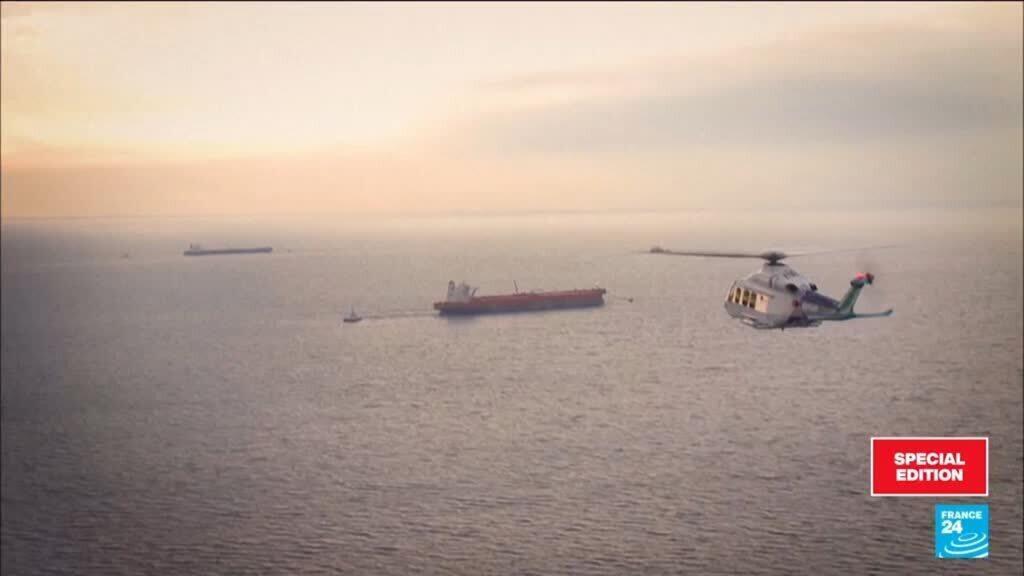
U.S. diesel prices jumped above $5 a gallon Tuesday, reaching $5.04 compared to $3.65 a month ago, according to AAA data. The price surge comes as Iran has virtually closed the Strait of Hormuz to shipping traffic, disrupting roughly a fifth of all crude oil supplies that typically pass through the waterway. The UAE reported engaging 10 ballistic missiles and 45 drones launched from Iran on Tuesday alone, bringing their total intercepts to 314 ballistic missiles, 15 cruise missiles, and 1,672 UAVs since the war began.
Civilian Casualties Mount Across Middle East
Falling debris from missile intercepts killed one person in Abu Dhabi's Bani Yas area Tuesday, bringing the UAE's death toll to eight since the war started. In Lebanon, two soldiers were killed by a hostile Israeli airstrike while riding a motorcycle, raising the Lebanese Army's death toll to three since Israel began its ground incursion.
Trump's China Trip Delayed Indefinitely
President Trump told reporters Tuesday that his planned trip to China has been delayed by about five weeks due to the Iran war. The president had been scheduled to arrive in China in early April but said the meeting would now take place "in about five weeks" after consulting with Chinese officials.
Intelligence Official Resigns Over War Rationale
Joe Kent, Trump's director of the National Counterterrorism Center, announced his immediate resignation Tuesday, claiming the war was "manufactured" by Israel. Kent wrote in his resignation letter that "Iran posed no imminent threat to our nation, and it is clear that we started this war due to pressure from Israel and its powerful American lobby."