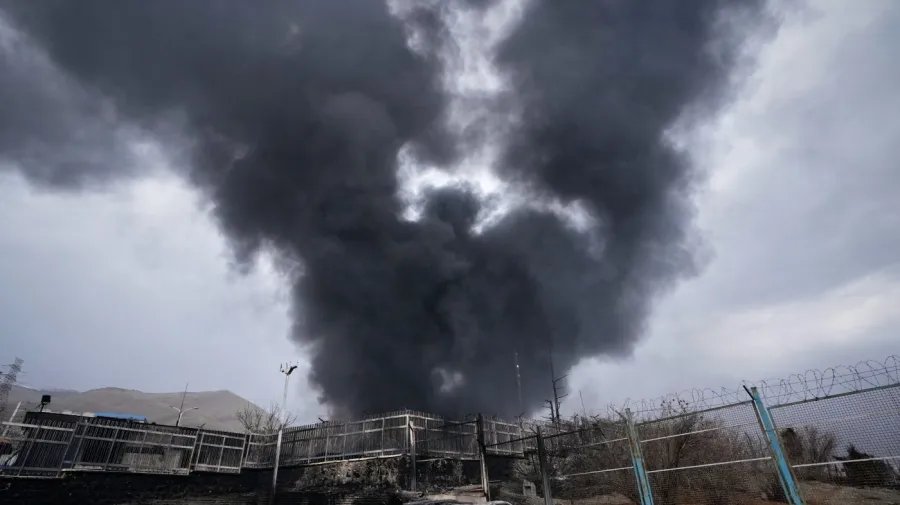
Israel has confirmed a targeted strike that killed Alireza Tangsiri, the commander of the Islamic Revolutionary Guard Corps (IRGC) naval forces. The attack occurred near Bandar Abbas, a critical location by the Strait of Hormuz, a vital shipping route for global oil supplies.
In response to the Israeli strike, Iran has launched attacks on several Israeli cities, including Tel Aviv, Kafr Qasim, Haifa, and Petah Tikva. Video footage has emerged showing extensive damage in these areas, with Israel's health ministry reporting that 149 individuals sustained injuries within a 24-hour period.
The death of Tangsiri is expected to have significant implications for Iran's naval operations, particularly in the strategically important waters of the Persian Gulf. On the other hand, Iran's recent attacks signal a determination to respond decisively to perceived threats, potentially leading to an escalation of hostilities that could affect neighboring countries and international shipping routes.
The international community is closely monitoring the situation, as the conflict has far-reaching consequences.
The situation remains fluid, and developments could significantly alter the security landscape in the Middle East. As regional tensions rise, citizens and businesses alike should remain aware of the potential impacts on energy prices and geopolitical stability.
Israel has confirmed a targeted strike that killed Alireza Tangsiri, the commander of the Islamic Revolutionary Guard Corps (IRGC) naval forces. The attack occurred near Bandar Abbas, a critical location by the Strait of Hormuz, a vital shipping route for global oil supplies. This action marks a significant escalation in the ongoing military confrontations between Israel and Iran, raising concerns about heightened regional instability.
In response to the Israeli strike, Iran has launched attacks on several Israeli cities, including Tel Aviv, Kafr Qasim, Haifa, and Petah Tikva. Video footage has emerged showing extensive damage in these areas, with Israel's health ministry reporting that 149 individuals sustained injuries within a 24-hour period. The ongoing violence indicates a dangerous cycle of retaliation that could further destabilize the region.
The death of Tangsiri is expected to have significant implications for Iran's naval operations, particularly in the strategically important waters of the Persian Gulf. Analysts suggest that this loss could weaken Iran's command structure and operational capabilities. On the other hand, Iran's recent attacks signal a determination to respond decisively to perceived threats, potentially leading to an escalation of hostilities that could affect neighboring countries and international shipping routes.
The international community is closely monitoring the situation, as the conflict has far-reaching consequences. Countries reliant on oil exports through the Strait of Hormuz may face increased risks to their shipping lanes. Diplomatic efforts aimed at de-escalation will be critical in the coming days to prevent further violence and potential military confrontations between Israel and Iran.
The situation remains fluid, and developments could significantly alter the security landscape in the Middle East. As regional tensions rise, citizens and businesses alike should remain aware of the potential impacts on energy prices and geopolitical stability.
Highlighted text was flagged by the council. Tap to see feedback.