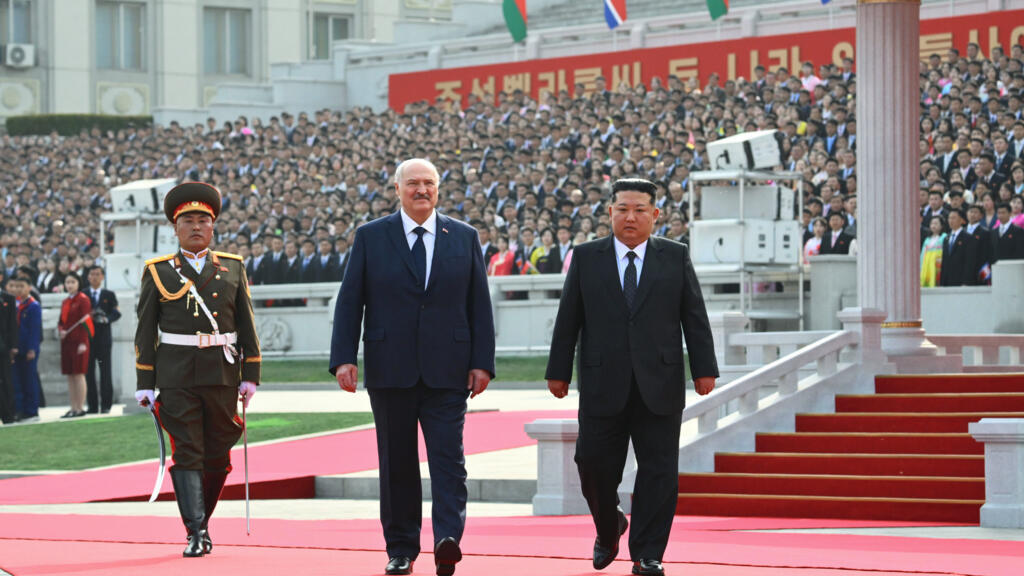
Alexander Lukashenko arrived in North Korea on Wednesday for his first visit to the country, where he and Kim Jong Un signed a "friendship and cooperation" treaty the following day. The agreement formalizes a deepening relationship between two authoritarian leaders who have both backed Russia's war in Ukraine.
Both Belarus and North Korea have provided material support to Russia's military operations in Ukraine. Lukashenko's government has allowed Russian forces to use Belarusian territory for staging and logistics, while North Korea has supplied ammunition to Russian forces.
Both face Western sanctions tied to their domestic governance records and foreign policy choices. The treaty comes as human rights abuses continue to mount in both countries, yet neither leader has shown signs of moderating policies in response to international pressure or economic consequences.
The agreement reflects a wider pattern of authoritarian regimes drawing closer to one another as they face isolation from Western nations. The treaty will likely shape regional dynamics in Eastern Europe and East Asia for years to come, as both nations have demonstrated willingness to absorb sanctions and international criticism in pursuit of their strategic interests.
Alexander Lukashenko arrived in North Korea on Wednesday for his first visit to the country, where he and Kim Jong Un signed a "friendship and cooperation" treaty the following day. The agreement formalizes a deepening relationship between two authoritarian leaders who have both backed Russia's war in Ukraine, cementing what analysts view as a strengthening of Moscow-aligned authoritarian partnerships at a moment of global geopolitical tension.
Both Belarus and North Korea have provided material support to Russia's military operations in Ukraine. Lukashenko's government has allowed Russian forces to use Belarusian territory for staging and logistics, while North Korea has supplied ammunition and troops to Russian forces. The treaty signals that this cooperation will deepen rather than remain transactional.
The two nations operate under intense international scrutiny. Both face Western sanctions tied to their domestic governance records and foreign policy choices. The treaty comes as human rights abuses continue to mount in both countries, yet neither leader has shown signs of moderating policies in response to international pressure or economic consequences.
The agreement reflects a wider pattern of authoritarian regimes drawing closer to one another as they face isolation from Western nations. By formalizing ties through a friendship treaty rather than ad hoc cooperation, Kim and Lukashenko are signaling durability in their partnership. This move strengthens what some analysts describe as an emerging axis of authoritarian states willing to challenge Western-led international order.
The treaty will likely shape regional dynamics in Eastern Europe and East Asia for years to come, as both nations have demonstrated willingness to absorb sanctions and international criticism in pursuit of their strategic interests.
Highlighted text was flagged by the council. Tap to see feedback.