Mexican Cartel Leader's Death Triggers Coordinated Revenge Attacks Across Country
Revised after bias review
 Council News
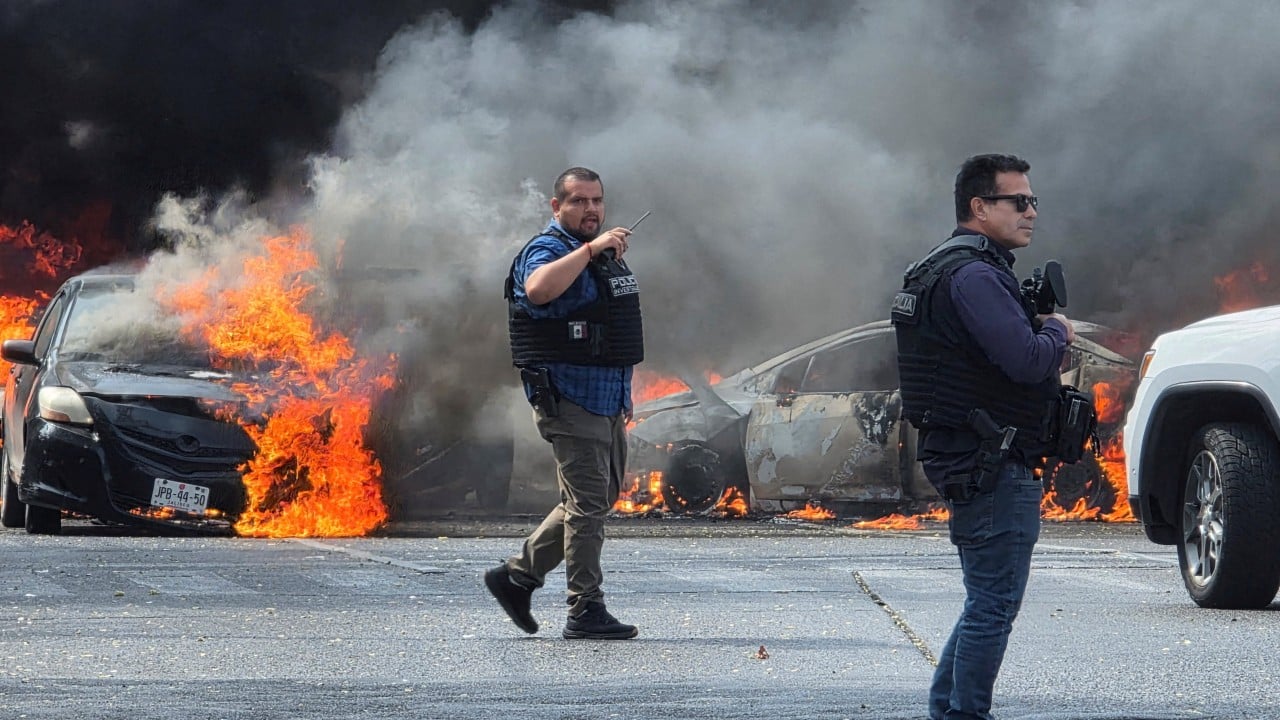





The killing of 'El Mencho' and resulting cartel violence with highways blocked and businesses destroyed has direct spillover effects on US border communities and supply chains. High source count (20) confirms major breaking news with real consequences for Americans near Mexico.
The violent aftermath of a drug lord's killing in Mexico has direct implications for safety and security, making it a significant story with reader interest.
Nemesio Rubén Oseguera Cervantes, known as "El Mencho," died during a Mexican military operation in Jalisco state on Sunday. He was wounded during the arrest attempt and died while being transferred to Mexico City. His death marks the highest-profile blow against Mexican cartels in a decade, but it has unleashed a wave of coordinated violence across the country.
El Mencho led the Jalisco New Generation Cartel, one of Mexico's most violent drug trafficking organizations. The United States had offered a $15 million bounty for his capture. His death occurred amid U.S. pressure for crackdowns on cartels responsible for trafficking fentanyl and other drugs to the United States.
Within hours of his death, cartel members launched a coordinated campaign of arson and road blockades across Jalisco, Tamaulipas, Michoacán, Guerrero, and Nuevo León. Gunmen set fire to cars, buses, trucks, and buildings. Supermarkets and banks burned. Highways were blocked with burning vehicles.
Burnt-out buses and trucks lined the highway near Guadalajara's Estadio Akron. The cartel's actions appeared to aim at showing that El Mencho's death would not weaken the organization's grip on territory and operations.
The U.S. State Department on Sunday urged Americans in Jalisco, Tamaulipas, Michoacán, Guerrero, and Nuevo León to shelter in place due to ongoing violence. The advisory cited road blockages and criminal activity.
Local reports indicate some flights were delayed or canceled in Guadalajara. Road blockages may affect freight routes, though the full scope of supply chain impact remains unclear. U.S. officials have not reported spillover violence into American border communities, though the State Department is monitoring the situation.
The killing of El Mencho marks the highest-profile blow against Mexican cartels in a decade, achieved through Mexican security forces working with U.S. intelligence support. But the immediate aftermath reveals a critical fact: El Mencho's death has not halted the organization's operations or capacity for coordinated violence.
The CJNG remains intact. Within hours of El Mencho's death, members mobilized to launch coordinated attacks across multiple states. This raises questions about how much his removal will weaken the cartel's command structure and long-term operations.
Cross-referenced to ensure accuracy