Somaliland Offers US Rare Minerals and Red Sea Bases to Win Recognition
Revised after bias review
 Council News
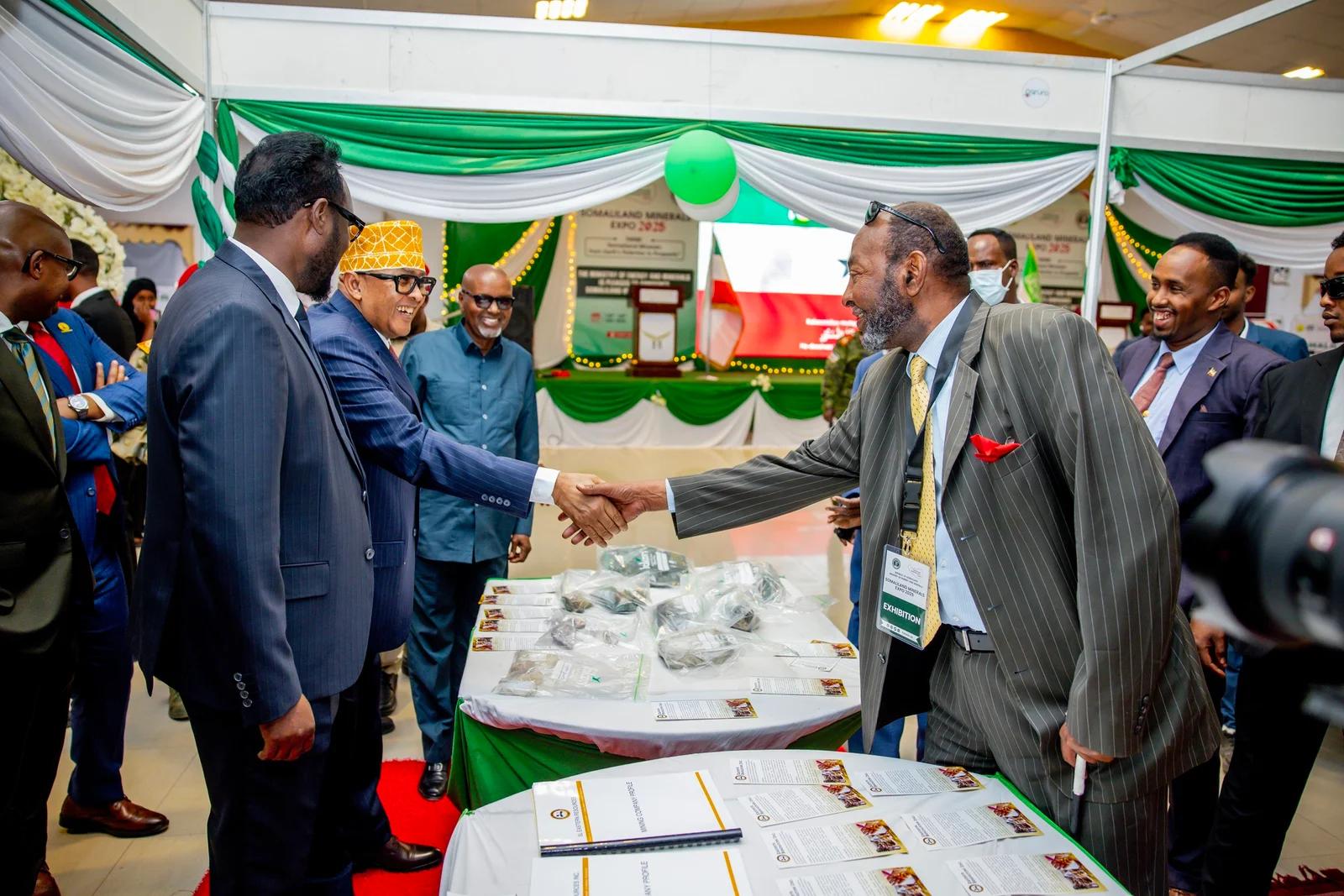





Somaliland willing to give US access to minerals and military bases, says minister - Only 2 sources covering a geopolitical shift with major implications for Horn of Africa strategy and US military positioning. Undercovered because it's a quiet repositioning that affects regional stability and US strategic interests without mainstream attention.
Only two niche sources (France 24 & DW) but huge strategic implications: Somaliland—unrecognized, stable, and sitting on billions in untapped rare-earth minerals—offers the U.S. both resource access and Red-Sea bases to counter China’s Djibouti presence. No mainstream outlet has framed this as the potential next ‘Taiwan moment’ for critical-minerals supply chains and 5th-Fleet basing, yet it directly affects American tech and defense wallets.
Somaliland, a self-declared independent state that controls the northwestern horn of Africa, is offering the United States direct access to its mineral reserves and military bases. A Somaliland minister made the offer public on Saturday, signaling a strategic approach to gain international recognition through partnerships with major powers.
The move carries enormous weight because Somaliland remains almost entirely unrecognized on the world stage. Only Israel has formally acknowledged its independence, a decision made in December 2025. Somalia's federal government in Mogadishu claims Somaliland as an integral part of Somalia, blocking its path to UN membership and mainstream diplomatic legitimacy.
Somaliland has mineral resources that the U.S. could develop, reducing American reliance on rival suppliers. The United States currently depends heavily on China and other rivals for these materials, a vulnerability that has become a national security concern as competition for critical resources intensifies.
The military base access is equally significant. Somaliland's location on the Red Sea and Indian Ocean puts it directly in one of the world's most contested shipping lanes. A U.S. military foothold there would give Washington greater influence over one of the world's busiest shipping routes.
Somaliland has functioned as a de facto independent state since 1991, with its own government, currency, and security forces. It is more stable than much of the Horn of Africa. Yet without formal international recognition, it cannot access global financial markets, sign trade agreements, or participate in international institutions.
By offering mineral and military access to the United States, Somaliland hopes to win formal recognition from Washington and other governments. If the U.S. accepts, it could encourage other nations to reconsider Somaliland's recognition.
Cross-referenced to ensure accuracy