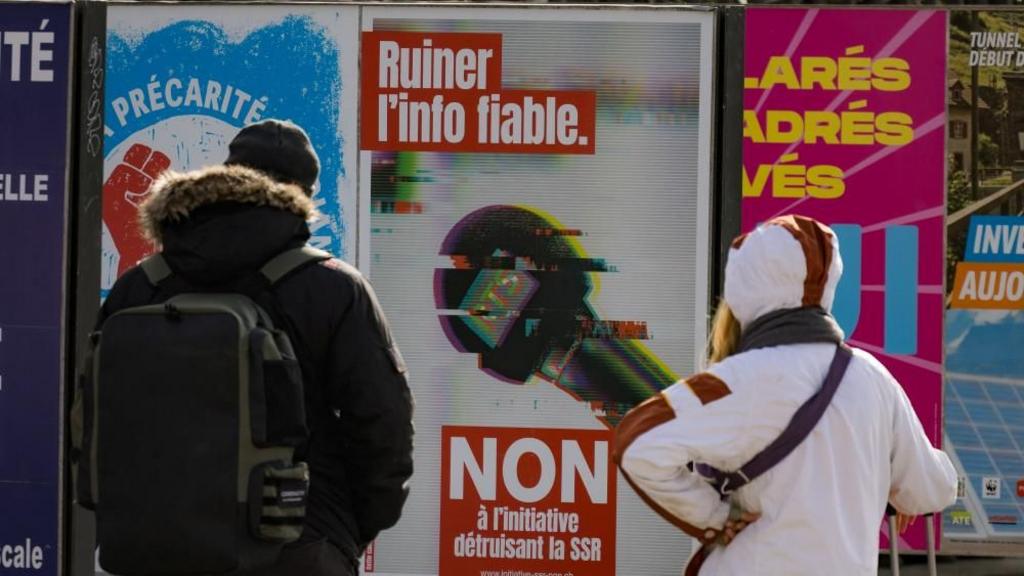
Swiss voters rejected a proposal to lower the annual licence fee for public broadcasting, with 62% supporting the status quo in initial projections. This decision preserves the current fee of 335 Swiss francs per household, ensuring continued funding for the Swiss Broadcasting Corporation.
The initiative, led by the Swiss People's Party, sought to reduce the fee to 200 Swiss francs annually and exempt businesses from payment. It also aimed to compel the Swiss Broadcasting Corporation to sell airtime to private firms for sports and entertainment content.
The government and all other parliamentary parties opposed the cuts, emphasizing the fee's role in representing Switzerland's four languages: French, German, Italian, and Romantsch. They highlighted potential harm to foreign news and sports coverage if funding decreased.
The Swiss People's Party and other supporters of the initiative sought to reduce the fee amid rising living costs.
The vote prevents a major overhaul of Switzerland's media infrastructure. The decision safeguards access to reliable information for households across the country.
Swiss voters rejected a proposal to lower the annual licence fee for public broadcasting, with 62% supporting the status quo in initial projections. The Swiss People's Party initiative gained only 38% backing in Sunday's vote. This decision preserves the current fee of 335 Swiss francs per household, ensuring continued funding for the Swiss Broadcasting Corporation.
The initiative, led by the Swiss People's Party, sought to reduce the fee to 200 Swiss francs annually and exempt businesses from payment. It also aimed to compel the Swiss Broadcasting Corporation to sell airtime to private firms for sports and entertainment content. Proponents argued that the fee is too high amid rising living costs, noting it exceeds fees in neighboring Austria and Germany.
The government and all other parliamentary parties opposed the cuts, emphasizing the fee's role in representing Switzerland's four languages: French, German, Italian, and Romantsch. They highlighted potential harm to foreign news and sports coverage if funding decreased. More than 1,000 university professors backed this view, stating that strong public broadcasting fosters democracy and social cohesion.
The Swiss People's Party and the youth wing of the Free Democratic Party claimed the broadcaster has a left-leaning bias that justifies reductions. They pointed to the fee as the highest in the world and pushed for more privatization to address these issues. SRG CEO Susanne Wille responded by announcing plans to cut 900 full-time jobs and save 17% of the broadcaster's 270 million franc budget by 2029.
The vote prevents a major overhaul of Switzerland's media infrastructure, as stated by Laura Zimmermann, who led the campaign against the cuts. SRG operates 17 television and radio channels in the country's four national languages, and the decision safeguards access to reliable information for households. The government will proceed with its own plan to lower the fee to 300 Swiss francs by 2029 while broadening exemptions for companies.
Highlighted text was flagged by the council. Tap to see feedback.