Trump Pushes Zelensky for Ukraine Peace Deal Within Months
Revised after bias review
 Council News





Trump telling Zelensky he wants to end the war ASAP is a notable development in the ongoing conflict and could signal a shift in U.S. policy or approach. People will want to know what this means for the future of the war and international relations.
Trump's call with Zelensky about ending the Ukraine war quickly has major geopolitical implications for American foreign policy and military commitments. With 10 sources, this is a significant development in how the administration approaches a major conflict.
Trump's call with Zelensky on ending the Ukraine war could shape U.S. foreign policy and global stability, impacting American interests; readers would be drawn in by the tension and potential for diplomatic shifts that affect international relations.
Trump told Zelensky he wants Ukraine war ended ‘ASAP’—the first hint of what ‘peace’ could look like and what it might cost in US aid or territory; Americans tired of footing the bill will read for the specifics.
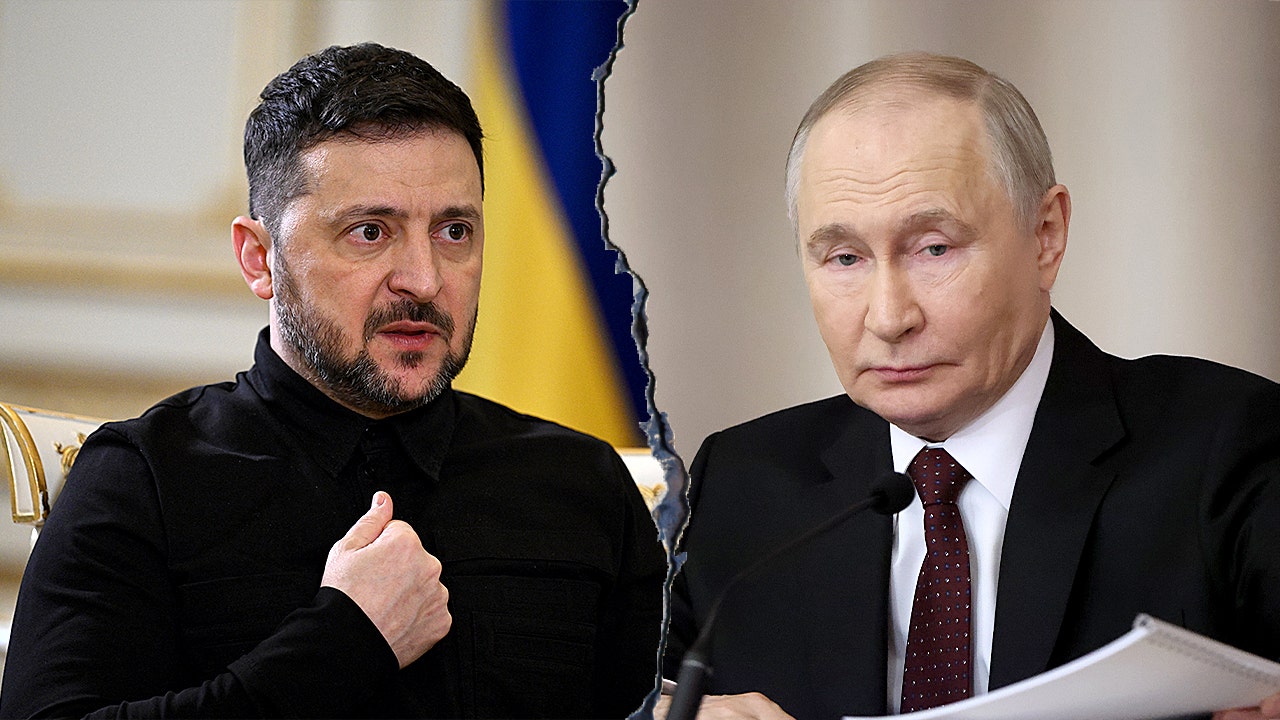
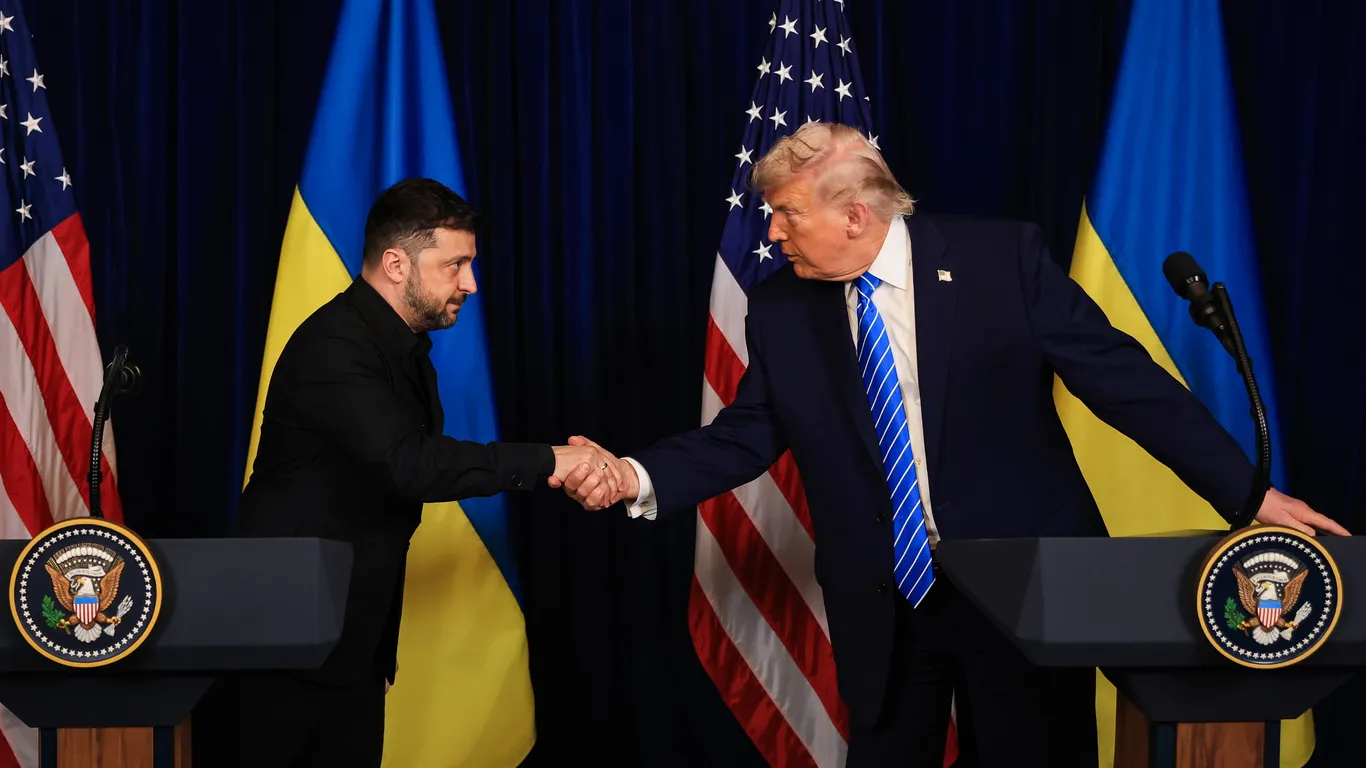
President Trump told Ukrainian President Volodymyr Zelensky he wants to end the war with Russia as soon as possible, according to a Ukrainian official and two U.S. officials briefed on the call. During the 30-minute call, Trump said he would like the war to end within a month. Zelensky said he hopes it will finish this year. The call took place on Wednesday, a day after the fourth anniversary of Russia's invasion and one day before Trump's envoys Jared Kushner and Steve Witkoff were scheduled to meet with Zelensky's negotiating team in Geneva.
A Ukrainian official and a U.S. official both described the tone as cordial. Zelensky thanked Trump for approving a $400 million military-aid package and said he believes Trump is the only Western leader who can persuade Putin to stop the war. Trump responded that the war has gone on far too long, according to the Ukrainian readout of the call.
The central obstacle remains the same: territorial control in eastern Ukraine. Russia insists the four annexed regions chose to join the Russian Federation in 2022 referenda, a vote Ukraine and the United Nations regard as illegal. Ukraine demands restoration of its 1991 borders. Significant gaps persist between the two sides on this issue.
Trump and Zelensky discussed a possible trilateral summit between themselves and Russian President Vladimir Putin. Zelensky believes direct talks at the leader level are the only way to resolve the territorial question and other sensitive issues. Trump told Zelensky he would work on making such a summit happen if the next round of negotiations in early March produces real progress.
A Ukrainian official said Trump reiterated his willingness to place U.S. military advisors in western Ukraine and to seek Senate ratification of a bilateral security treaty as part of any peace deal. These guarantees could serve as an alternative to NATO membership, which Russia has opposed in past negotiations.
Russian envoy Kirill Dmitriev might be in Geneva on Thursday for separate talks with U.S. envoys, according to a source with knowledge of the plans. This suggests a three-track negotiation: U.S. talks with Russia, U.S. talks with Ukraine, and eventually direct talks between all three sides.
Zelensky wrote on social media that he expects the early March meeting to create momentum for moving talks to the leader level. He framed this as the only path forward on the complex territorial and security issues that have deadlocked negotiations for years.
Trump's stated goal is a peace deal by summer. This would give negotiators roughly four months to address territorial and security issues that have been central to negotiations. A summer deal could mean an immediate cease-fire, a halt to Russian missile strikes on Ukrainian cities, and the first rollback of U.S. sanctions on Russian banks—changes that would lower European energy prices and ease global grain shortages. The gap between Trump's one-month aspiration and Zelensky's one-year outlook underscores the distance between their public negotiating positions, even as both sides signal willingness to engage.
Cross-referenced to ensure accuracy