Trump's Reactor Airlift Could Cut Your Energy Bills in Half
Revised after bias review
 Council News
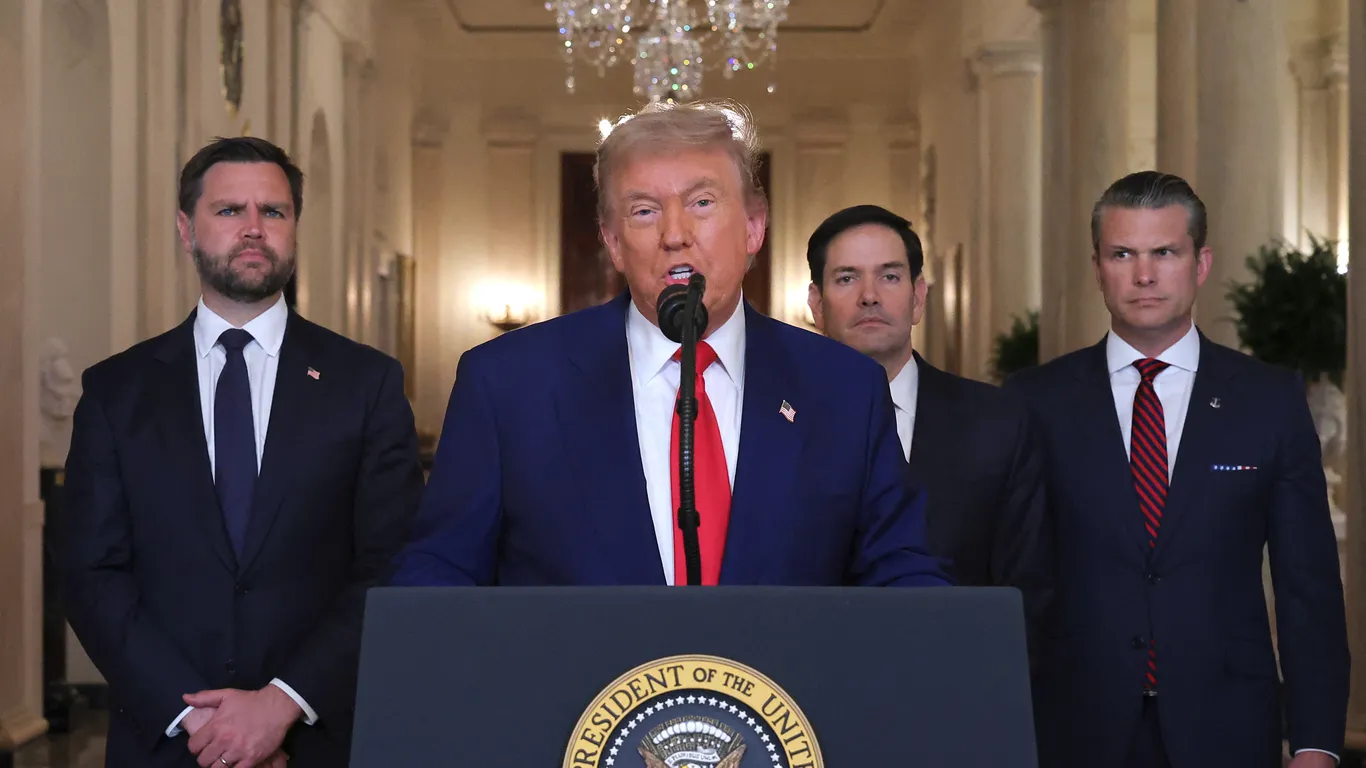





Trump's push for nuclear power deployment is a significant policy shift with potential environmental and economic consequences. The airlift of a reactor adds a visual element that will grab attention.
Trump's accelerated nuclear power deployment is a concrete policy shift affecting energy infrastructure and costs for years to come. This has real implications for electricity prices and energy independence that ordinary Americans should understand.
The US military's airlift of a small reactor as part of a push for nuclear power deployment is significant for energy policy and national security, capturing reader interest due to its implications for energy independence.
Trump's push for nuclear power deployment could lower energy costs and improve infrastructure, impacting Americans' bills and environmental policies; it's surprising and actionable, as it reveals a potential shift in energy strategy that people might discuss and prepare for.
The US military and Energy Department recently airlifted a small nuclear reactor from California to Utah. The operation showcases the Trump administration's plan to rapidly expand nuclear energy for military bases and civilian power grids. Whether this initiative will deliver cheaper electricity remains uncertain, as independent cost analyses are not yet available.
The Pentagon coordinated the first-ever airlift of a small nuclear reactor, transporting it via military aircraft to a test site in Utah. Energy Department officials described the operation as a proof-of-concept for deploying reactors in remote or high-demand areas, such as military outposts or disaster zones. Trump has championed this as part of his broader strategy to boost domestic energy production and enhance national security.
Trump directed the Pentagon and Energy Department to accelerate nuclear power initiatives, according to statements from both departments. The Energy Department highlighted that small reactors can be operational in months rather than years, unlike traditional large-scale plants. This shift aims to address recent spikes in energy demand driven by industrial expansion.
Proponents argue the reactor deployment strengthens energy independence by providing a stable power source amid global supply chain disruptions. The operation raises questions about safety and environmental impact that could affect communities near potential sites. Independent analyses of the economic and safety implications are ongoing.
The Energy Department plans to conduct tests on the Utah reactor in the coming months, with results guiding future deployments to military sites and possibly civilian areas. Trump has signaled that similar operations could expand if initial trials succeed. The administration will determine next steps based on test outcomes.
Cross-referenced to ensure accuracy