Trump's UFO Order Excites Astronomers and Fuels Political Clashes
Revised after bias review
 Council News
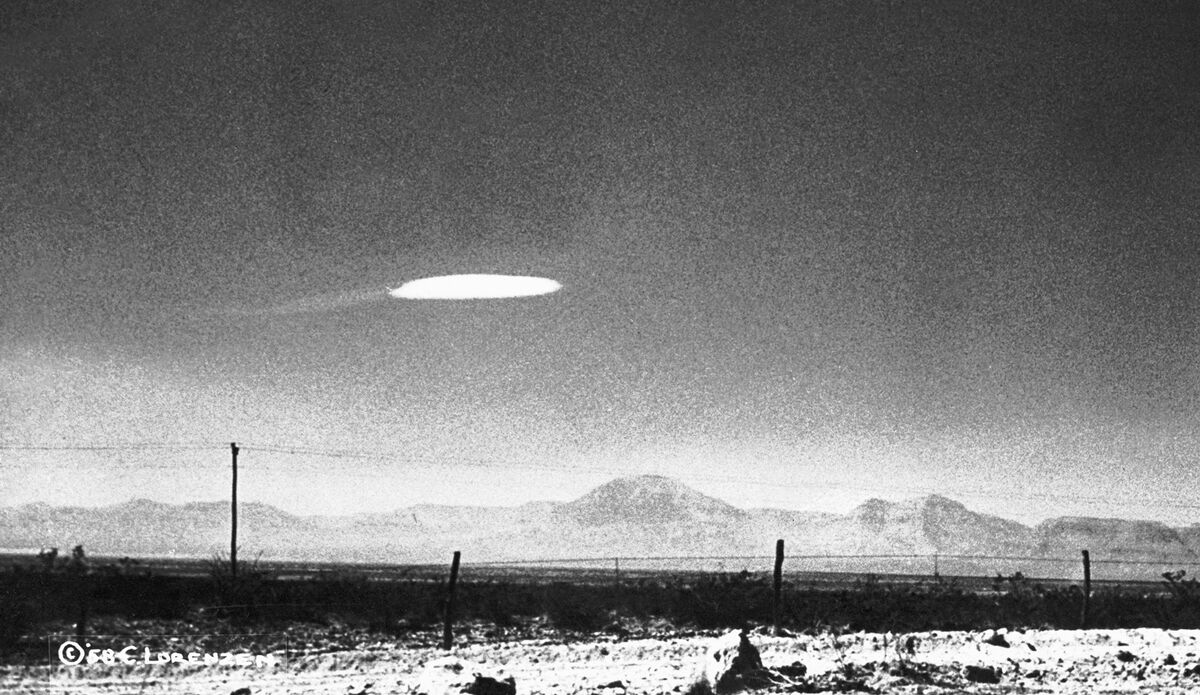





UFO files release with expert commentary (8 sources) has genuine reader pull and represents a surprising development that challenges conventional narratives about government transparency.
While the topic of UFOs often attracts sensationalism, the framing of "astronomers are very excited" and the mention of government transparency adds a layer of credibility and potential public interest. Jefferson's point about challenging conventional narratives is valid, suggesting the story might offer a fresh perspective beyond typical UFO reporting. The multiple sources also lend weight to the claim that this is more than just fringe speculation. While I initially dismissed it, the argument that it could genuinely capture reader attention and represents a surprising development is persuasive enough to warrant a second look.
President Trump directed the Pentagon to release classified UFO files. Trump referenced former President Barack Obama's comments about aliens. He clarified he saw no evidence of extraterrestrial activity during his term. Trump announced the order at the White House, framing it as addressing public interest in government transparency around unidentified aerial phenomena.
Cosmologist Janna Levin told CBS News that astronomers are excited about potential access to UFO files. She highlighted how these documents could contain data on unidentified aerial phenomena that challenge our understanding of the cosmos. For researchers tracking objects in the sky, this release means access to decades of observations. These span from the 1950s surge—attributed to classified U.S. spy-plane tests—to modern reports of unidentified phenomena.
Senator John Fetterman called the decision a rare bipartisan opportunity for transparency, contingent on full disclosure. He said it would be "incredible" if Trump actually declassifies the files.
Representative Thomas Massie called the UFO announcement an "ultimate weapon of mass distraction" from the Epstein-files release. He argued Trump was using the announcement to divert media attention from other controversies.
This split underscores deeper tensions. Fetterman sees the move as a victory for openness. Massie views it as political theater designed to shift focus from other issues.
The files could expose details on historical UFO sightings, including those tied to advanced military technology. Pentagon analysis found no proof of extraterrestrial activity but acknowledged the 1950s and 1960s spike in reports, possibly from U.S. experiments. This could affect public trust in institutions that guard such secrets.
Levin emphasized the scientific value of the disclosures, noting how they could advance studies of atmospheric anomalies. Trump's order sets the stage for public scrutiny, with agencies now tasked to identify and share the files.
The release could provide new information on phenomena that have generated public interest and speculation for years. Defense officials said they will begin compiling the files. The moment could shift public understanding of unidentified aerial phenomena.
Cross-referenced to ensure accuracy