
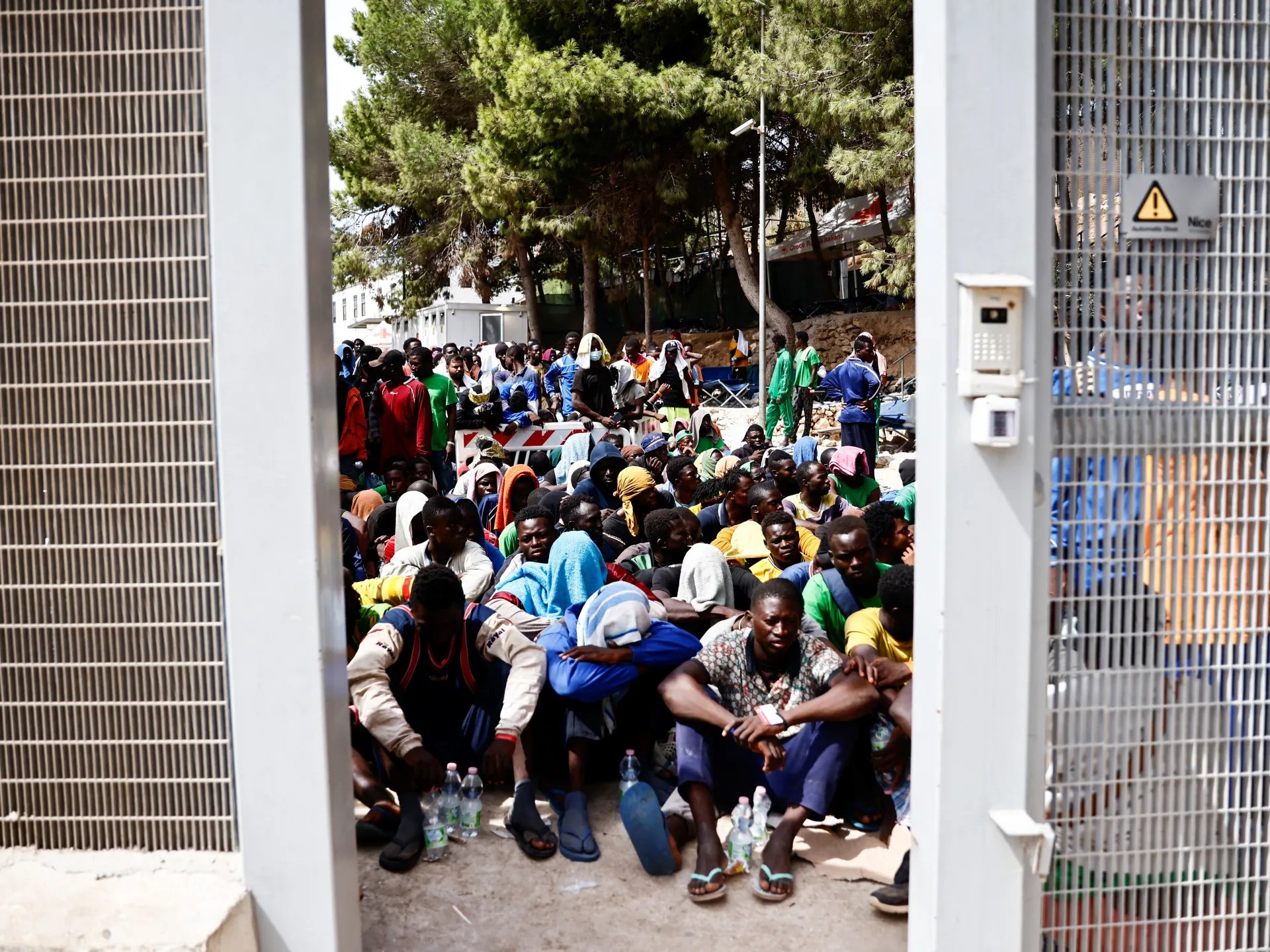





Deal Reached in Late-Night Talks
The European Union struck a provisional agreement Monday evening to overhaul its migration policy by speeding up deportations and enabling detention centers in countries outside the bloc. The deal emerged from a trilogue between the European Commission, the European Council and the European Parliament. Nicholas Ioannides, deputy migration minister for Cyprus which holds the rotating presidency of the 27-nation bloc, said the new regulation will speed up the return process and increase returns of persons who have no legal right to stay in the EU.
This change directly shapes the rights and futures of migrants and asylum seekers arriving from Africa and the Middle East. Member nations will soon set up bilateral deals with third countries, mostly in Africa, to host return hubs modeled on Italy's detention deal with Albania. At least five EU nations Germany, Austria, the Netherlands, Denmark and Greece have already begun talks to establish such facilities.
Supporters Cite Low Return Rates
Dutch lawmaker Malik Azmani, who guided the regulation through the European Parliament, said Europe cannot afford another period of standstill. He noted that only 28 percent of rejected asylum seekers return to their country of origin while the majority remain in the EU. Azmani called for an effective return policy with higher return rates to maintain public confidence in common migration policies.
European Commission President Ursula von der Leyen, from the center-right European People's Party coalition, argued the measures will prevent a repeat of the 2015 crisis when about 1 million people arrived seeking asylum after fleeing conflict in Syria. Center-right political groups allied with far-right parties to pass the deal after right-wing parties gained power in several countries in 2024 elections. Henna Virkkunen, EU commissioner for technology, said the new rules will ensure swifter, simpler and more effective procedures for returning non-EU nationals who have no right to stay while respecting international law and fundamental rights.
Critics Warn of Rights Erosion
Silvia Carter, spokesperson for the Brussels-based Platform for International Cooperation on Undocumented Migrants, said the regulation is going to create a draconian detention and deportation machine. She pointed to new powers allowing law enforcement across the bloc to raid private residences or public institutions like hospitals without judicial warrants. Carter added that across the Atlantic observers see the violence and fear created by ICE's brutal immigration enforcement and warned Europe should learn from those harms rather than replicate the model.
Mélissa Camara, a French lawmaker from the Greens, called the deal a historic setback for human rights in the bloc. She listed the legalization of return hubs outside the European Union, the green light for the detention of minors and home visits inspired by ICE practices as completing a legal arsenal serving a xenophobic ideology. Marta Welander, spokesperson for the International Rescue Committee, said the deal will give governments much broader powers to detain and deport people and looks set to normalize immigration raids while expanding detention in prison-like facilities outside EU territory that become legal black holes.
Parallels Drawn to US and UK Policies
Critics compared the EU regulation to the Trump administration's strategy of striking secretive agreements with nations to deport thousands of people to countries that are not their own. The United Kingdom planned to deport migrants to Rwanda but the effort became bogged down in legal challenges and the new government dropped the plan upon taking power. Rights groups warned the EU changes will endanger migrants and undermine human rights from Spain to Romania while cutting into protections in the EU fundamental charter on human rights.
Welander said the measures increase the risk of people being deported to countries where they could face persecution, torture or worse. Camara highlighted how the policy shift followed a rightward turn in European politics fueled by arrivals from conflict and poverty across Africa and the Middle East. The provisional agreement now moves to EU lawmakers and heads of state where approval is expected to proceed quickly.
Separate US Facility Faces State Lawsuits
In a parallel development, Newark Mayor Ras Baraka announced Tuesday that his city will expand its lawsuit against GEO Group, the private prison company operating Delaney Hall immigration detention facility in New Jersey. Baraka said the facility is a private operation subject to state and municipal laws rather than federal grounds. New Jersey Attorney General Jennifer Davenport filed a separate lawsuit alleging GEO Group refused to allow state health inspectors inside to verify reports of unsanitary and unsafe conditions.
The city has pursued a yearlong legal battle claiming GEO Group lacked proper permits to reopen the previously shuttered site last year. Demonstrations outside Delaney Hall erupted on May 22 following reports of detainees holding a hunger strike. Detainees and advocates alleged inadequate medical care, poor living conditions and delays in immigration proceedings. DHS denied both the hunger strike and the conditions allegations.
Officials Trade Claims on Facility Conditions
Davenport said reports of unsanitary and unsafe conditions inside Delaney Hall are extremely concerning and that GEO Group must follow the law like any other business in New Jersey. Lauren Bis, a Department of Homeland Security spokesperson, called the lawsuit frivolous and stated that ICE is committed to transparency while Delaney Hall complies with all required state and local laws. Bis added that state health representatives completed a one-hour inspection of the food service department and that all detainees receive proper meals, quality water, blankets, medical treatment and opportunities to contact family and lawyers.
GEO Group described the allegations as baseless accusations that form part of a coordinated politically motivated campaign targeting its contract with ICE. The company said its support services including around-the-clock medical care and dietitian-approved meals are monitored by on-site ICE personnel and other Department of Homeland Security organizations. White House border czar Tom Homan made an unannounced visit to the facility over the weekend and ate the same food given to detainees.
Protests continued for nearly two weeks with clashes escalating after officials reported protesters set tires and chairs on fire, threw makeshift projectiles and weaponized police shields. Mayor Baraka imposed a curfew around Delaney Hall, and Governor Mikie Sherrill sent state police to establish protest zones citing public safety concerns. As of Monday, at least 50 people had been charged with curfew violations, including many from outside New Jersey. Baraka expressed hope that the curfew could lift in the next couple of days after no new arrests occurred Monday evening.
The EU agreement and the New Jersey disputes illustrate how migration enforcement now hinges on private contractors, foreign partnerships and expanded detention powers that reshape daily realities for those seeking safety or facing removal.









For example, Dutch lawmaker Malik Azmani stated that only 28% of rejected asylum seekers return to their country of origin, highlighting the need for an effective return policy.