A Generation's Strongest Single-Party Win
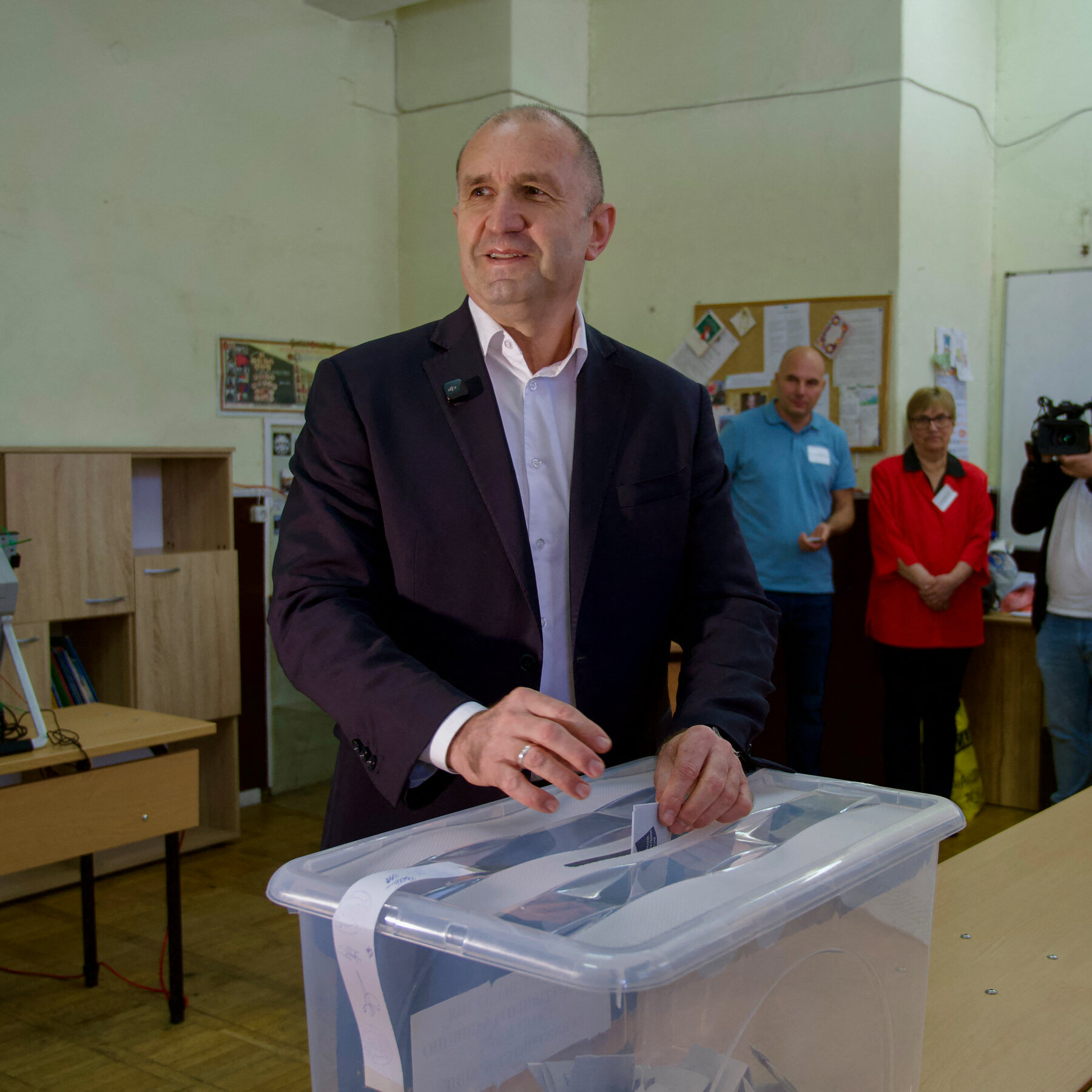
Rumen Radev's Progressive Bulgaria party won 44.7 percent of the vote in Sunday's parliamentary election, delivering one of the strongest results for a single party in a generation. The performance exceeded opinion poll forecasts and crushed long-dominant political forces, with Radev positioned to become the country's next prime minister. The landslide victory may end the chronic instability that produced eight elections in five years across the Balkan nation of 6.5 million people.
Radev's party finished far ahead of the pro-European We Continue the Change-Democratic Bulgaria coalition at 12.8 percent and the long-dominant GERB party led by former prime minister Boyko Borissov at 13.4 percent. Voters expressed frustration with political instability, corruption, and veteran parties that have dominated politics for decades. Radev has not ruled out forming a coalition with a pro-European group or a smaller party, despite his party's apparent ability to rule alone.
The Kremlin Connection and Ukraine Rhetoric
Radev's rise has drawn scrutiny over his relationship with Moscow. When asked during a 2021 presidential debate whether Crimea belongs to Ukraine, he replied that it is "currently Russian. What else can it be?" He later clarified that Crimea belongs to Ukraine but is currently controlled by Russia. After Russia's full-scale invasion of Ukraine, Radev initially called for a halt to military operations but increasingly targeted Ukraine and the EU in his rhetoric.
The former pilot has argued that providing military support to Kyiv only prolonged the war and that politicians sending weapons to Ukraine were "warmongers." He also criticized the Ukrainian counteroffensive as a mistake. Radev's campaign was bolstered by a network of former senior Bulgarian military officers with connections to Russian military intelligence who promoted his views against Ukraine support, according to a European intelligence official.
Both Russia and the EU welcomed Radev's victory, though for different reasons. His win potentially pushes the EU and NATO member state closer to Moscow. Observers question whether Radev will maintain Bulgaria's pro-European stance on Ukraine or block common EU decisions, as Hungary's former Prime Minister Viktor Orban did for years.
A Career Built in the West
Born in Haskovo near the Bulgarian-Turkish border in 1963, Radev began pilot training in 1987 while Bulgaria remained a communist dictatorship and Warsaw Pact member. After Bulgaria became a democracy in 1992, he completed his officer training in the US. In 2005, a year after Bulgaria joined NATO, he became Commander of the Bulgarian Air Force.
Radev first ran for president in 2016, nominated by the Bulgarian Socialist Party, the successor to the Bulgarian Communist Party. At the time, Leonid Reshetnikov, head of the Russian Institute for Strategic Studies and a long-serving member of Soviet and Russian intelligence services, stated he had discussed Radev's candidacy with the Bulgarian Socialist Party leadership. Radev won that election and served as president until now.
Anti-Corruption Message and Judiciary Questions
In 2021, Radev expressed support for massive anti-corruption protests targeting Boyko Borissov and Delyan Peevski, leader of the Movement for Rights and Freedom, declaring to demonstrators "Let's get rid of the mafia!" The US and UK subsequently imposed sanctions on Peevski for alleged corruption. The Alliance of Liberals and Democrats for Europe excluded his party from the group.
Radev could potentially seek support from the pro-European PP-DB alliance for a qualified majority that would allow him to replace people in the judiciary and other key state institutions he considers linked to Borissov and Peevski. He has not demonstrated willingness to cooperate with the nationalist, pro-Russia Revival party, which will also be part of the next parliament.
Disinformation and Foreign Interference Concerns
Russian propaganda is widespread in Bulgaria and represents one of the main problems for citizens and their access to information, according to Pavol Szalai, Director of Reporters Without Borders Prague Bureau. Sofia's Foreign Ministry set up a special unit in coordination with the European Commission to combat potential Russian meddling. Radev characterized this effort as an attempt by Brussels to interfere in the vote.