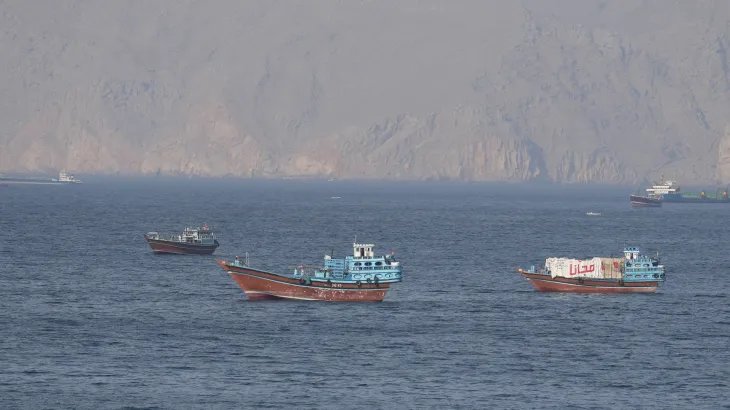
The U.S. military seized an Iranian-flagged cargo ship named Touska on Sunday in the Gulf of Oman, marking a significant escalation in tensions between the two nations. President Donald Trump stated that the vessel attempted to circumvent a U.S. naval blockade in the Strait of Hormuz.
In response to the seizure, Iran's joint military command condemned the action as "armed piracy" and vowed to retaliate against U.S. forces. The heightened rhetoric suggests a precarious situation, with Iran asserting that it will not ignore such provocations.
The U.S. blockade in the Strait of Hormuz remains firmly in place, with military assets actively monitoring the situation. Following the seizure of the Touska, the U.S. Navy is keeping a close watch on other Iranian vessels, including the Shoja 2, which appeared to be attempting to transit the strait early on Tuesday. This ongoing tension underscores the strategic importance of this waterway, through which approximately one-fifth of the world's oil passes.
The seizure and subsequent threats of retaliation have broader implications for regional stability. The situation remains fluid as both sides navigate the complexities of military and economic strategies in a volatile environment.
The U.S. military seized an Iranian-flagged cargo ship named Touska on Sunday in the Gulf of Oman, marking a significant escalation in tensions between the two nations. President Donald Trump stated that the vessel attempted to circumvent a U.S. naval blockade in the Strait of Hormuz. This operation is part of a broader strategy to apply economic pressure on Iran, as the U.S. has begun boarding Iranian-linked ships.
In response to the seizure, Iran's joint military command condemned the action as "armed piracy" and vowed to retaliate against U.S. forces. Iranian officials have signaled that they will take necessary measures to protect their maritime interests, raising concerns about potential military confrontations in the region. The heightened rhetoric suggests a precarious situation, with Iran asserting that it will not ignore such provocations.
The U.S. blockade in the Strait of Hormuz remains firmly in place, with military assets actively monitoring the situation. Following the seizure of the Touska, the U.S. Navy is keeping a close watch on other Iranian vessels, including the Shoja 2, which is reportedly trying to transit the strait. This ongoing tension underscores the strategic importance of this waterway, through which approximately one-fifth of the world’s oil passes.
The seizure and subsequent threats of retaliation have broader implications for regional stability. Analysts warn that increased military presence and aggressive posturing from both the U.S. and Iran could lead to a miscalculation, potentially igniting a conflict that could disrupt global oil supplies. The situation remains fluid as both sides navigate the complexities of military and economic strategies in a volatile environment.
As the U.S. and Iran engage in this tit-for-tat escalation, the international community is closely monitoring developments. Diplomats are urging both sides to consider dialogue to de-escalate tensions. The potential for further military action looms large, making it crucial for stakeholders to find a diplomatic resolution before the situation spirals out of control.
Highlighted text was flagged by the council. Tap to see feedback.