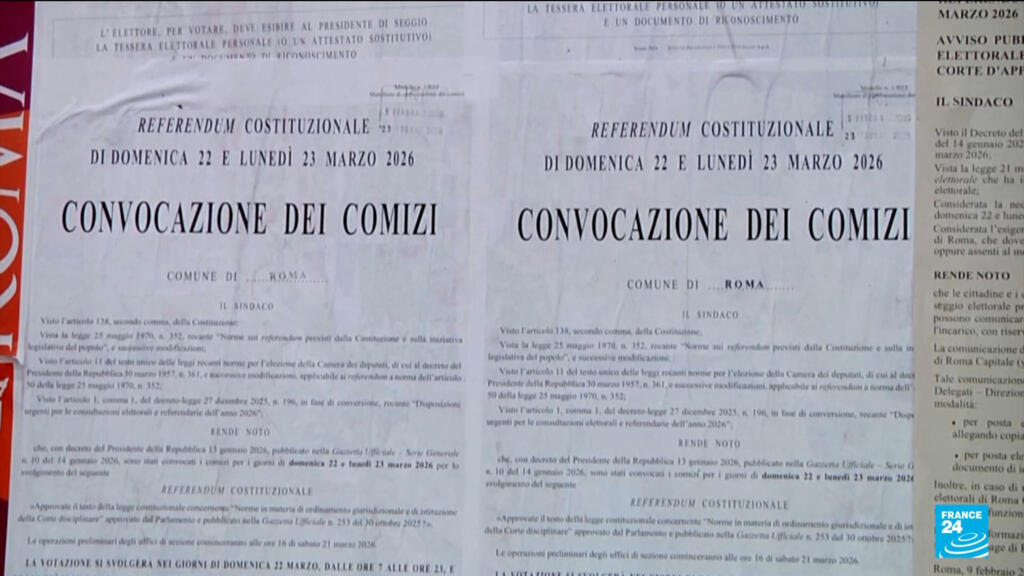
Italians started voting Sunday in a two-day referendum on judicial reforms that Prime Minister Giorgia Meloni claims will enhance the judiciary's independence. The poll has drawn attention as a broader judgment on Meloni's leadership, with analysts warning a "No" outcome could weaken her position.
Prime Minister Giorgia Meloni argues the reforms will address flaws in the justice system, pointing to benefits like preventing criminals from evading justice. She stated that without these changes, more "immigrants, rapists, pedophiles, drug dealers" might go free. These proposals aim to alter how judges operate, giving Meloni a platform to demonstrate her influence on national policy.
Opposition figures argue the reforms will undermine judicial independence rather than strengthen it, accusing Meloni of overreach. They argue the changes could allow political interference in court proceedings, a view expressed by opposition figures who see it as a threat to fair trials.
The vote has become a litmus test for Meloni's premiership, with a "No" result sending a political signal that might erode her authority. France 24's Seema Gupta reported the reforms would be the "biggest overhaul of the judiciary since World War II," altering how laws are enforced across Italy.
A "Yes" vote would implement sweeping changes to judicial processes, potentially speeding up trials and reducing case backlogs that delay justice for ordinary people. Conversely, a "No" vote might preserve current systems, avoiding risks of politicized courts but leaving existing inefficiencies in place.
Italians started voting Sunday in a two-day referendum on judicial reforms that Prime Minister Giorgia Meloni claims will enhance the judiciary's independence. The poll has drawn attention as a broader judgment on Meloni's leadership, with analysts warning a "No" outcome could weaken her position. This vote affects everyday Italians by potentially reshaping how courts handle cases involving crime and public safety, influencing personal security and trust in government decisions.
Prime Minister Giorgia Meloni argues the reforms will address flaws in the justice system, pointing to benefits like preventing criminals from evading justice. She stated that without these changes, more "immigrants, rapists, pedophiles, drug dealers" might go free, a claim she repeated in public remarks. These proposals aim to alter how judges operate, giving Meloni a platform to demonstrate her influence on national policy.
Critics contend the referendum proposals will undermine the judiciary's independence rather than strengthen it, accusing Meloni of overreach. They argue the changes could allow political interference in court proceedings, a view expressed by opposition figures who see it as a threat to fair trials. Such concerns matter to citizens because they could lead to biased rulings that affect individual rights and access to impartial justice.
The vote has become a litmus test for Meloni's premiership, with a "No" result sending a political signal that might erode her authority. Observers note that passing the reforms would mark the "biggest overhaul of the judiciary since World War II," altering how laws are enforced across Italy. This shift could influence public services and economic stability by changing how disputes are resolved in everyday life.
A "Yes" vote would implement sweeping changes to judicial processes, potentially speeding up trials and reducing case backlogs that delay justice for ordinary people. Conversely, a "No" vote might preserve current systems, avoiding risks of politicized courts but leaving existing inefficiencies in place. Italians will learn the outcome soon, as results could prompt Meloni to adjust her policies, directly affecting community safety and legal protections in the near term.
Highlighted text was flagged by the council. Tap to see feedback.