Senate Readies for Crucial Vote on Trump's SAVE America Act This Week
Revised after bias review
 Council News
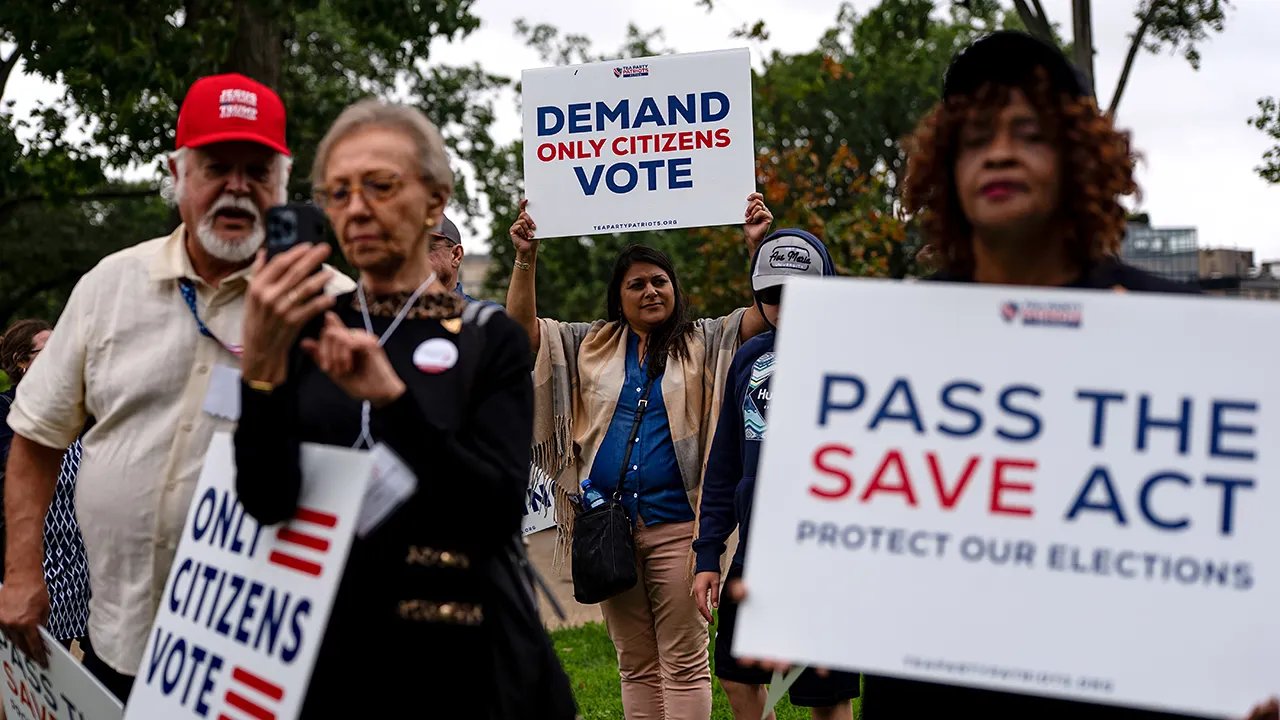





Senate is preparing to vote on Trump's SAVE Act this week—a specific, imminent legislative action with a defined timeline that will have concrete policy outcomes.
The Senate is preparing to vote on Trump's SAVE Act, which could have significant implications for immigration policy and enforcement.
Senate will vote within days on Trump’s SAVE Act requiring documentary proof of citizenship to register to vote; if passed, millions must produce passports or birth certificates at polls starting in 2026.
The Senate is preparing for a critical vote on the Safeguard American Voter Eligibility (SAVE) Act, a piece of legislation championed by President Trump that mandates proof of citizenship for voter registration. The bill, which has sparked significant debate, aims to address concerns over voter fraud—a claim that has been repeatedly debunked by researchers. According to a 2025 analysis by the Center for Democracy and Civic Engagement at the University of Maryland, approximately 21.3 million voting-age U.S. citizens lack the necessary documents to prove citizenship, raising alarms about the potential disenfranchisement of millions if the bill passes.
Senate Majority Leader John Thune, R-S.D., is under pressure from both Trump and conservative House members to advance the SAVE America Act. Thune stated, "I will be bringing the SAVE America Act to the floor, and we will be having a full and robust debate." However, the bill's passage faces obstacles due to a potential Democratic filibuster. Republicans hold 53 seats in the Senate, requiring 60 votes to overcome this hurdle. Some GOP members are advocating for a change in filibuster rules, with Senator Roger Marshall, R-Kan., suggesting, "I would nuke the filibuster to pass the SAVE America Act."
Senate Democratic Leader Chuck Schumer, D-N.Y., has vehemently criticized the SAVE America Act, labeling it "one of the most despicable pieces of legislation" he has encountered. Schumer and other Democrats argue that the bill aims to restrict voting rights, particularly for marginalized groups. Senator Dick Durbin, D-Ill., claimed, "The real reason this president wants this bill to pass is to reduce the number of people voting in the November election." Concerns have also been raised about the bill's impact on married women and others who may face challenges in proving their citizenship due to name changes.
Under the SAVE America Act, voters would be required to present government-issued photo identification alongside proof of citizenship, such as a birth certificate or passport, each time they register. This requirement could disproportionately affect demographic groups less likely to possess the necessary documentation, including low-income individuals and younger voters. Critics, including Eliza Sweren-Becker from the Brennan Center, warn that the legislation could create widespread confusion among voters and election officials alike, exacerbating existing barriers to voting.
On March 8, 2026, Trump stated that he would block future bills until Congress passes the SAVE America Act, except for perhaps a DHS funding measure. While some GOP senators express skepticism about the feasibility of a talking filibuster, others argue for a traditional approach to force Democrats to debate the bill exhaustively. Senator Josh Hawley, R-Mo., suggested that Democrats should be made to "hold the floor like it used to be in the old days," implying a strategy of prolonged debate to wear down opposition.
The upcoming vote is not just about the SAVE America Act; it is a pivotal moment for Senate Republicans facing potential backlash from their base if they fail to pass the legislation. As Trump's influence looms large, GOP members understand that any perceived weakness on this issue could lead to political repercussions. Senator Cynthia Lummis, R-Wyo., noted that it is not Thune who is stalling the bill, but rather a lack of consensus within the Republican Party on how to navigate the filibuster.
As the Senate gears up for its vote on the SAVE America Act, the implications for voters across the nation could be profound. If passed, the bill would fundamentally alter the voting landscape, requiring millions to navigate new and potentially confusing documentation processes. With the Senate expected to take a procedural vote soon, all eyes will be on the outcome and its potential impact on the upcoming elections. For Americans, this legislation could redefine their access to the ballot box, making it crucial to stay informed and engaged in the legislative process.
Cross-referenced to ensure accuracy