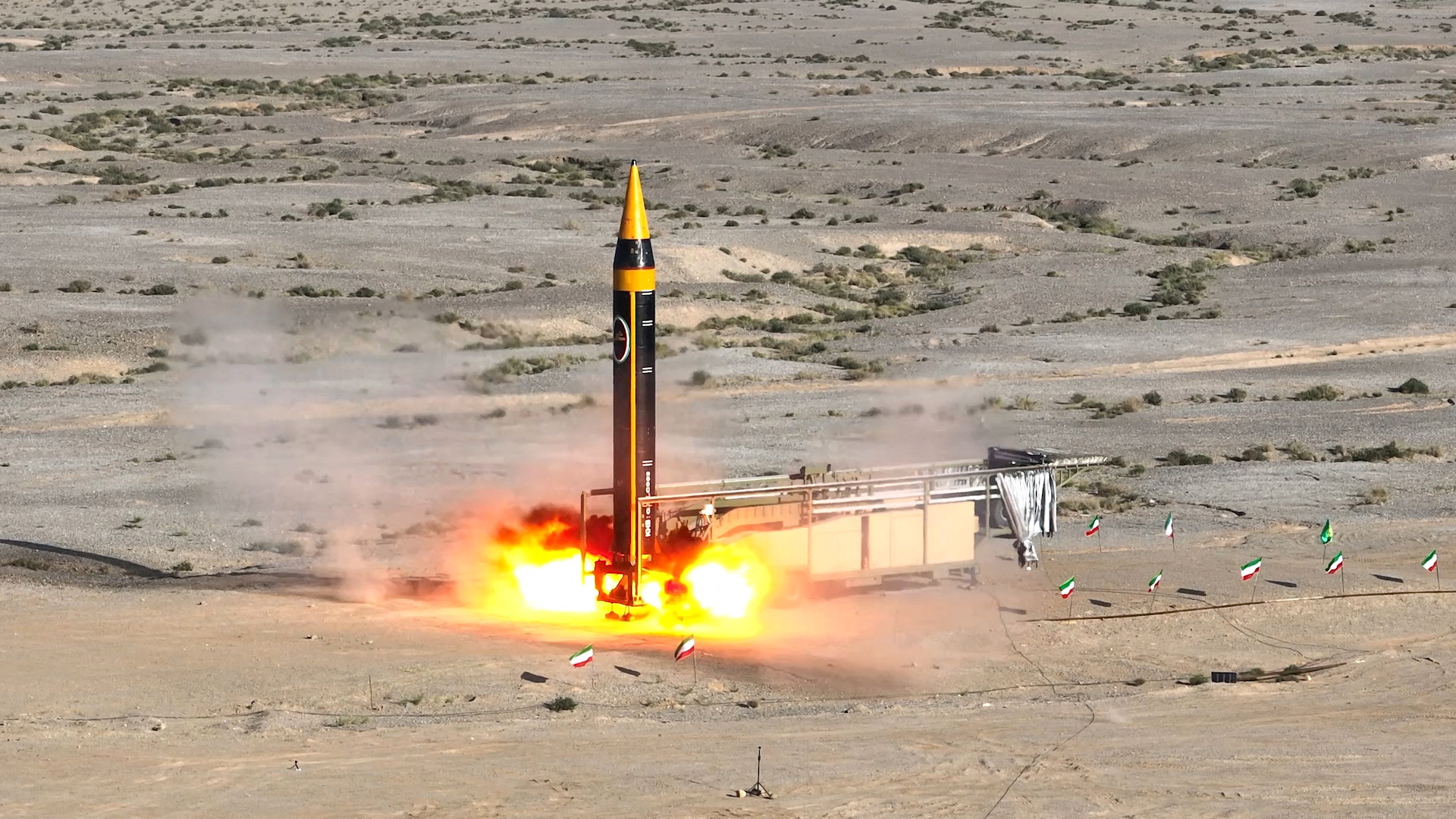
Iran launched two ballistic missiles at the joint U.S.-U.K. military base on Diego Garcia in the Indian Ocean on Friday. The base, located more than 2,000 miles from Tehran, suffered no damage as neither missile reached its target, according to Iran's Mehr news agency. The attempted strike could indicate that Iran has capabilities for long-distance attacks exceeding the 1,250-mile range that Foreign Minister Abbas Araghchi previously described in an interview.
The U.K. Ministry of Defense confirmed the unsuccessful strike, with a spokesperson calling it a threat to British interests. Prime Minister Keir Starmer's government agreed to let the U.S. use bases like Diego Garcia for defensive operations to protect shipping. Araghchi criticized this decision on X, stating that Starmer was endangering British lives by supporting actions against Iran.
Tom Karako from the Center for Strategic and International Studies said the intercepted missile could be a candidate for the longest-range missile the U.S. has ever shot down. Iran's Mehr news agency claimed the launch showed missile ranges beyond enemy expectations, marking a shift from Tehran's earlier denials.
Shipping in the Strait of Hormuz has halted since the war began, affecting 20% of global oil consumption.
Iran's Revolutionary Guard alleged it downed an Israeli F-16 over central Iran, a claim Israel rejected by confirming only missile fire against one of its aircraft. Britain assured Cyprus that its bases would not be used for offensive actions, as Starmer emphasized island security amid heightened defenses. This incident follows Iran's earlier assertion of damaging a U.S. F-35, adding to ongoing military exchanges.
The halt in Strait of Hormuz traffic raises costs for fuel worldwide, directly affecting household budgets through higher prices at gas stations. U.K. public opinion, as reflected in polling mentioned by Araghchi, shows widespread opposition to involvement, potentially leading to domestic protests. Families in regions near these bases now face increased anxiety over possible retaliation and broader conflict spread.
Iran launched two ballistic missiles at the joint U.S.-U.K. military base on Diego Garcia in the Indian Ocean on Friday. The base, located more than 2,000 miles from Tehran, suffered no damage as neither missile reached its target, according to Iran's Mehr news agency. This attack demonstrates Iran's capability for longer-distance strikes, exceeding the 1,250-mile range that Foreign Minister Abbas Araghchi previously described in an interview.
The U.K. Ministry of Defense confirmed the unsuccessful strike, with a spokesperson calling it a threat to British interests. Prime Minister Keir Starmer's government agreed to let the U.S. use bases like Diego Garcia for defensive operations to protect shipping. Araghchi criticized this decision on X, stating that Starmer was endangering British lives by supporting actions against Iran.
One missile failed in flight, while a U.S. warship shot down the other, as reported by multiple officials to the Wall Street Journal. Tom Karako from the Center for Strategic and International Studies described the intercepted missile as a potential record for U.S. defenses. Iran's Mehr news agency claimed the launch showed missile ranges beyond enemy expectations, marking a shift from Tehran's earlier denials.
Shipping in the Strait of Hormuz has halted since the war began, affecting 20% of global oil consumption. President Donald Trump labeled the U.K.'s support as a late response and called NATO allies cowards for not providing warships. Iran views these developments as part of its right to self-defense, with Araghchi warning of risks to British people.
Iran's Revolutionary Guard alleged it downed an Israeli F-16 over central Iran, a claim Israel rejected by confirming only missile fire against one of its aircraft. Britain assured Cyprus that its bases would not be used for offensive actions, as Starmer emphasized island security amid heightened defenses. This incident follows Iran's earlier assertion of damaging a U.S. F-35, adding to ongoing military exchanges.
The halt in Strait of Hormuz traffic raises costs for fuel worldwide, directly affecting household budgets through higher prices at gas stations. U.K. public opinion, as reflected in polling mentioned by Araghchi, shows widespread opposition to involvement, potentially leading to domestic protests. Families in regions near these bases now face increased anxiety over possible retaliation and broader conflict spread.
Highlighted text was flagged by the council. Tap to see feedback.