Supreme Court Blocks Deportations for 356,000 Migrants Amid Policy Fight
Revised after bias review
 Council News
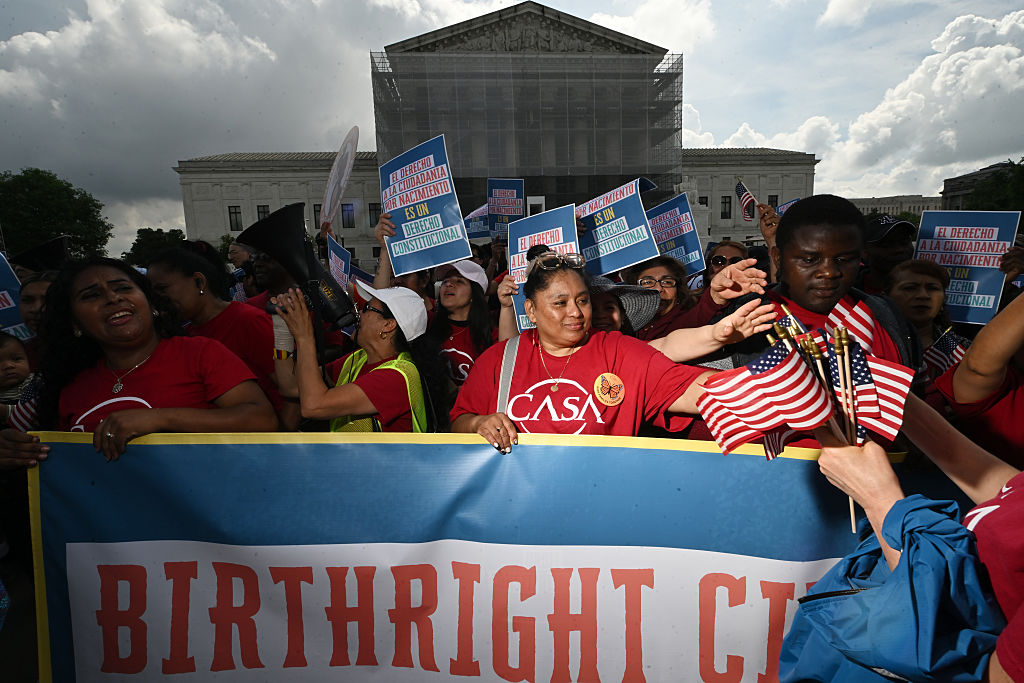





The Supreme Court is hearing expedited arguments, meaning a decision impacting migrants' protected status is imminent.
The Supreme Court is set to hear expedited arguments regarding the protected status for migrants, which could significantly impact immigration policy and the lives of many individuals seeking refuge.
The Supreme Court is scheduled to hear expedited arguments on migrant protected status, which is imminent and could affect immigration policies and individual rights starting soon.
Supreme Court set to hear expedited arguments on whether to end protected status for hundreds of thousands of migrants; ruling could strip work permits and deportation protections as soon as this term.
Lower courts blocked the Trump administration from deporting 6,000 Syrians and 350,000 Haitians. The Supreme Court on Monday declined to overturn those lower court orders, leaving protections in place while it considers the case. The decision affects individuals who rely on TPS for stability, potentially safeguarding their jobs and families from sudden upheaval.
The Court set oral arguments for late April on whether to uphold or end TPS for these groups. Justices will address three questions: whether TPS designations are reviewable by courts, whether TPS holders have valid claims, and whether their equal-protection claims fail on the merits. This timeline means a ruling could arrive by June, influencing immigration policies that touch millions of lives through work permits and deportation risks.
Secretary of Homeland Security Kristi Noem announced last year she would revoke TPS for Haiti and Syria, citing improved conditions in those countries. Noem stated that parts of Haiti are "suitable" for returns and that Syria no longer meets armed conflict criteria after the Assad regime's collapse. The Trump administration argues DHS has sole authority to make these decisions, as Solicitor General D. John Sauer urged the Court to act against lower court interference.
U.S. District Judge Ana Reyes blocked Noem's Haiti decision, ruling it likely stemmed from racial animus and failed to follow the law. Reyes wrote that Noem must "apply faithfully the facts to the law" despite her First Amendment rights to criticize immigrants. In a separate case, Judge Katherine Polk Failla found Noem's Syria revocation based on political motives, not facts, noting it aligned with an "anti-immigrant agenda."
The Court previously allowed the administration to end temporary deportation protections for Venezuelans in May 2025, with Justice Ketanji Brown Jackson dissenting. That order permitted deportations while appeals continued. Monday's decision maintains protections ahead of oral arguments in April. This history shows varying judicial responses to TPS challenges, highlighting inconsistencies in how foreign policy and immigration enforcement intersect.
Haitians gained TPS in 2010 after an earthquake killed over 200,000 people, with extensions following events like the 2021 assassination of President Jovenel Moïse. Syrians received the status in 2012 due to Bashar al-Assad's crackdown, which Trump extended in 2018. A ruling against them could force returns to unsafe conditions, disrupting communities and economies in the U.S. where these migrants contribute through work.
Cross-referenced to ensure accuracy