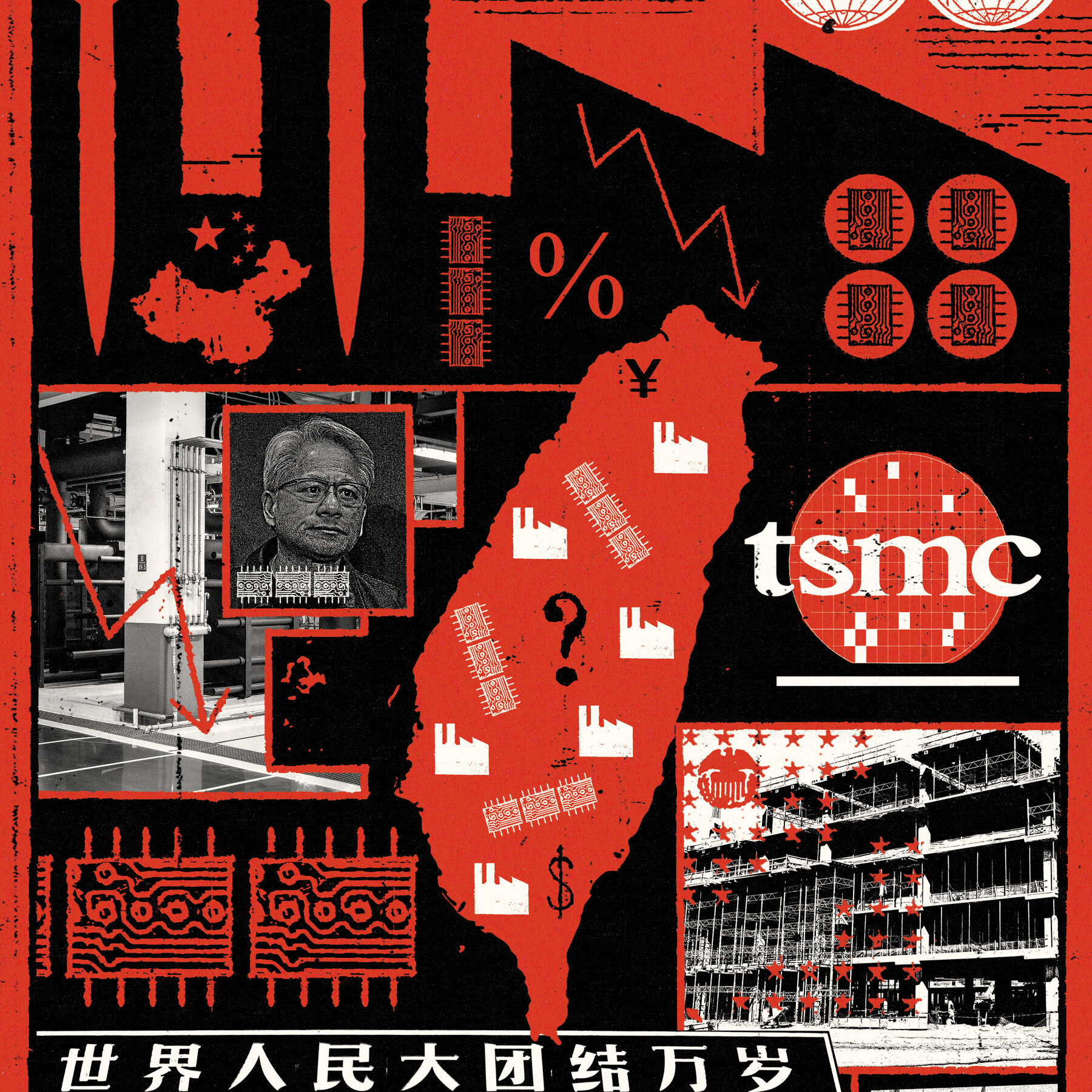
Taiwan's Chip Monopoly Could Cripple U.S. Tech Overnight
Revised after bias review
 Council News





Taiwan chip disaster that Silicon Valley has ignored—single NYT source. This is the supply chain story hiding in plain sight. If Taiwan's chip production is threatened, it affects every American consumer's phone, car, and appliance. Undercovered despite massive implications.
The looming Taiwan chip disaster ignored by Silicon Valley is undercovered (1 source) despite its high impact on global supply chains, making it a prime example of a story mainstream outlets have overlooked. Its counterintuitive angle—tech leaders ignoring a critical risk—could surprise readers and go viral, as it directly affects daily life through potential disruptions in electronics and U.S. economic security. This international story has clear U.S. implications, and the council can provide unique value by connecting it to broader geopolitical risks.
A single NYT piece warns that a Taiwan chip disaster could freeze US tech production overnight. No one else is connecting this geopolitical black-swan to Christmas gadget shortages or car prices. It's the kind of ‘wait, really?’ angle that turns niche into viral.
Your next phone, car, and refrigerator depend on a single island 100 miles off the coast of China. Taiwan produces more than half the world's computer chips and nearly all the most advanced ones, according to the New York Times. If China invades and cuts off those exports, American tech companies could face significant disruptions within weeks. Yet major American tech companies have continued prioritizing efficiency over supply chain resilience, despite warnings from military analysts and national security officials.
The concentration is extreme. Taiwan's chip manufacturers don't just dominate a market segment. They are the market. A military conflict that severs Taiwan from global trade wouldn't create a shortage. It would create a complete halt in chip supply. Smartphones, servers, automobiles, medical devices, and weapons systems all depend on chips that flow from a handful of factories on an island that China claims as its own territory.
Major American tech companies have built their entire business models around Taiwan's chip output. They could diversify production to other countries. They could invest in redundancy. They could stockpile inventory. Instead, they have chosen efficiency over resilience. Tech companies argue that diversification carries significant costs and technical constraints. However, critics counter that these investments are necessary for supply chain resilience.
Warnings about Taiwan's vulnerability have been issued for years. The geopolitical temperature around Taiwan has risen. China has increased military pressure on the island. The U.S. has strengthened its commitment to Taiwan's defense. Yet major tech companies have not prioritized this risk in their strategic planning.
A military conflict that severs Taiwan from global trade could result in severe economic damage. Within weeks, American manufacturers could exhaust their chip inventories. Production lines would stop. New cars wouldn't roll off assembly lines. Hospitals would struggle to maintain equipment. Data centers would face disruptions. The ripple effects would spread through every industry that depends on semiconductors, which is nearly all of them.
The U.S. government has begun to recognize this vulnerability. Federal investments in domestic chip manufacturing have increased. But building new fabrication plants takes years. Even with aggressive government support, American production capacity cannot replace Taiwan's output anytime soon.
For consumers, the consequences are concrete. A Taiwan conflict would mean months or years of shortages, price spikes, and delayed purchases of everything from laptops to cars. For the U.S. economy, a conflict could result in significant lost output. For national security, a conflict could mean American military systems would rely on a supply chain vulnerable to disruption from China.
The debate centers on how to balance supply chain resilience against the costs and complexity of diversification.
Cross-referenced to ensure accuracy