




Weighing Ground Options
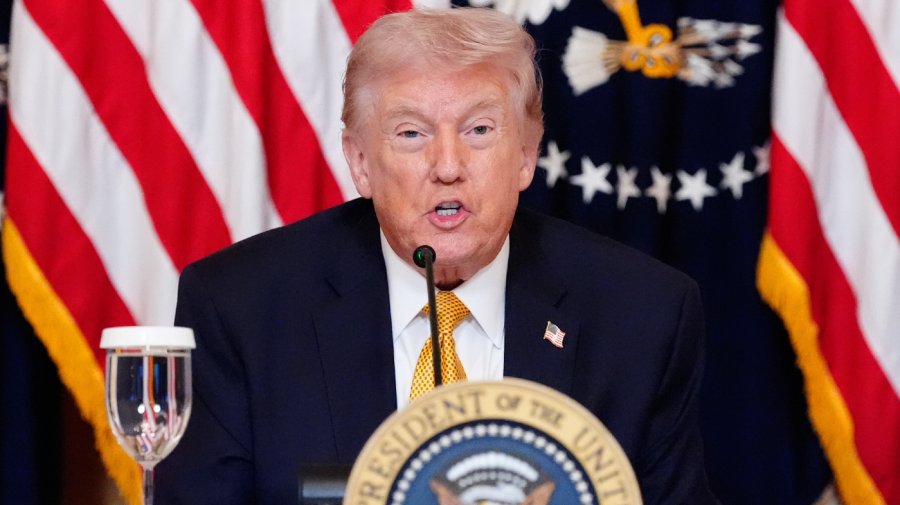
President Donald Trump is weighing whether to send possibly thousands of U.S. troops into Iran as he looks for a way to achieve some of his key goals and end the war, according to current and former U.S. officials. The scale of such a deployment could range from hundreds of specialized forces to thousands of troops over a matter of weeks. White House spokesperson Anna Kelly stated that Trump "has no plans to send troops anywhere," but also added that he "wisely does not broadcast his military strategy to the media."
Securing Hormuz
One option under discussion involves deploying troops to Iranian ports or small islands in the Persian Gulf to secure passage in the Strait of Hormuz, where over 20% of the world's oil flows. Iran has established a military presence on islands such as Abu Musa and Greater and Lesser Tunbs, posing a threat to vessels. Despite U.S. strikes eliminating over 120 Iranian ships, the Iranian Navy and the Islamic Revolutionary Guard Corps (IRGC) Navy maintain a "mosquito fleet" of over 1,000 fast boats that pose a threat to shipping, according to officials.
Targeting Oil
Another potential operation involves seizing Iranian oil facilities on Kharg Island, located about 15 miles off the Iranian coast, which accounts for 90% of the country's oil production. According to officials, seizing control of these facilities with several hundred troops could cripple the Iranian regime's economy and provide leverage to negotiate an end to the conflict. The U.S. bombed military targets on Kharg Island last Friday.
Nuclear Concerns
The most perilous option involves sending troops to locate and secure Iran's highly enriched uranium, addressing concerns about Iran's nuclear weapons ambitions. Roughly half of Iran's 440-kilogram highly enriched uranium stockpile was at Isfahan, according to International Atomic Energy Agency Director-General Rafael Grossi earlier this month.
Risks and Disagreements
Joe Costa, the director of the Forward Defense program of the Scowcroft Center for Strategy and Security at the Atlantic Council, said putting troops on the ground is more perilous than an air campaign. Officials from the U.S., Israel, and other American allies recently reviewed intelligence indicating an Iranian-backed militia would likely target U.S. bases if Trump deployed ground troops. Divisions have also emerged between the U.S. and Israel over strategy in the war, with Israeli Prime Minister Benjamin Netanyahu stating that "Israel acted alone" in attacking an Iranian gas field.
Domestic Pressure
President Trump is facing increasing criticism from his own supporters over the war in Iran. Amanda Robbins from Pennsylvania said she regrets voting for Trump because of rising gas prices. Joe Kent, who served as Trump's director of the National Counterterrorism Center, resigned Wednesday, stating that he disagreed with Trump's decision to launch a war in Iran because the regime did not pose "an imminent threat." A recent NBC News poll indicates that 54% of voters disapprove of Trump's handling of the war.
Allies' Concerns
America's Gulf state allies want to see an end to the war, with some of them concerned about the U.S. leaving Iran's hard-line regime in power. Spanish Prime Minister Pedro Sanchez announced a five billion euro package aimed at offsetting the economic impact of the Middle East conflict, including a "drastic reduction" in energy taxes. Syrian President Ahmed al-Sharaa said Friday he is working to keep his country away from conflict.
Strategic Calculations
U.S. Central Command has developed plans for potential ground operations for the various options under consideration. Deploying troops on Iran's coastlines would be aimed at mitigating the current threat to shipping in the Strait of Hormuz, through which more than 20% of the world's oil typically flows. With Iran closing the strait, Costa said the U.S. is in a corner where it may be forced to put U.S. troops on the ground to reopen the Strait of Hormuz and ultimately to end the war.