
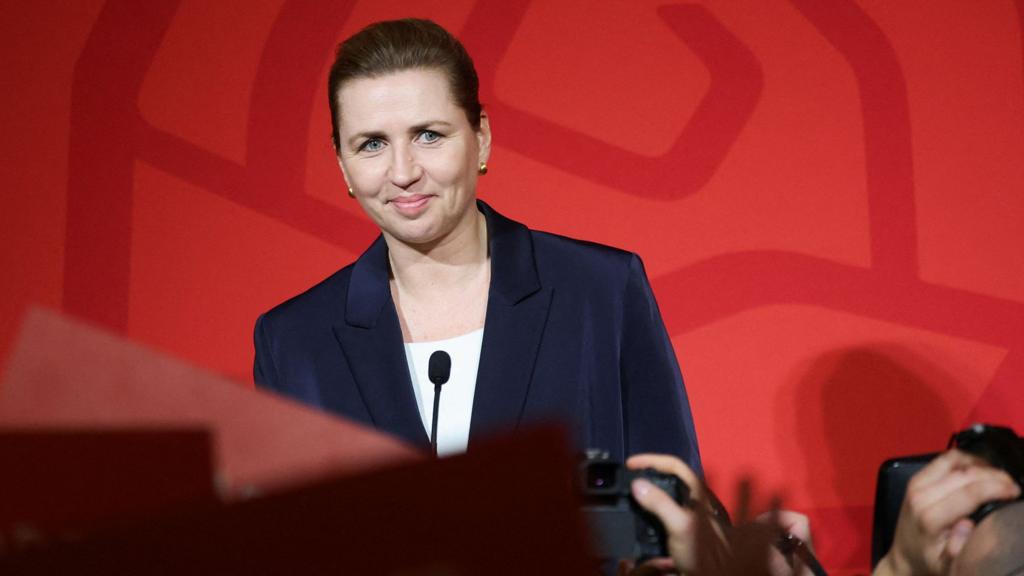





Frederiksen's Weakest Result in 123 Years
Prime Minister Mette Frederiksen's Social Democrats captured the most votes in Tuesday's Danish election with 21.9% of the ballot, yet the party's worst showing since 1903 leaves her political future uncertain. The result represents a sharp decline from the 27.5% the Social Democrats won in the 2022 election. Frederiksen, 48, told supporters she was "sorry that we did not get more votes" but insisted the party remained "the Danes' absolute favourite political party."
The election outcome leaves Denmark's 179-seat parliament without a majority bloc. Frederiksen's left-wing coalition bloc, known as the "red bloc," secured 84 seats, while the right-wing "blue bloc" claimed 77 seats. Both fall short of the 90 seats required to form a majority government. Twelve different political parties competed in the contest, creating the tightly contested race that produced no clear winner.
The Kingmaker's Leverage
Former Prime Minister Lars Løkke Rasmussen now holds the balance of power. His centrist Moderate party controls 14 seats, positioning him as the decisive figure in coalition negotiations that could take days or weeks. Rasmussen, who gained attention for handling Denmark's response to U.S. President Donald Trump's interest in acquiring Greenland, told supporters Tuesday night: "We're standing in the middle. We're ready."
Rasmussen called on political rivals to "come and play with us" and abandon hardline campaign positions. He framed the moment in global terms, noting that Denmark is "a small country of 6 million people in a world of 8 billion, which is in upheaval — and there is war in Iran, and there is war in Ukraine." He argued that Danes "must come together" rather than remain divided.
The Right's Rejection
Defense Minister Troels Lund Poulsen, who leads the Liberal party Venstre, flatly rejected working with Frederiksen again. The Liberals, which also suffered a historic defeat with just 10.1% of the vote—their worst showing in a century—have urged Rasmussen to join them on the right. Poulsen declared that "it is possible to get a new direction in Denmark."
Yet Frederiksen signaled her willingness to continue. After nearly seven years in power, she told supporters: "I am still ready to take on responsibility as Denmark's prime minister." DR's political correspondent, Christine Cordsen, has suggested that the most likely outcome is a center-left government with the Social Democrats, Red-Greens, the Moderates and the Danish Social Liberal Party.
Campaign Focused on Kitchen-Table Issues
Frederiksen called the election in February, months ahead of schedule. She apparently hoped that her resolute image in the standoff over Trump's push for control of Greenland, rallying European allies behind Denmark, would help her with voters. Instead, domestic concerns dominated the campaign. Danes focused on the cost of living, economic conditions, pensions, and welfare services. Environmental issues also gained traction, including concerns about pesticide levels in drinking water linked to pig farming and agriculture's climate footprint.
The Social Democrats' coalition partners in the outgoing government also lost ground, compounding the left's overall weakness. Frederiksen acknowledged that her popularity had waned as the cost of living rose, even though most Danes believe she steered the country well through international crises.



For example, the Liberal party Venstre's historic defeat is noted as their worst showing in a century, with just 10.1% of the vote.