





Parliament Rejects Constitutional Amendment
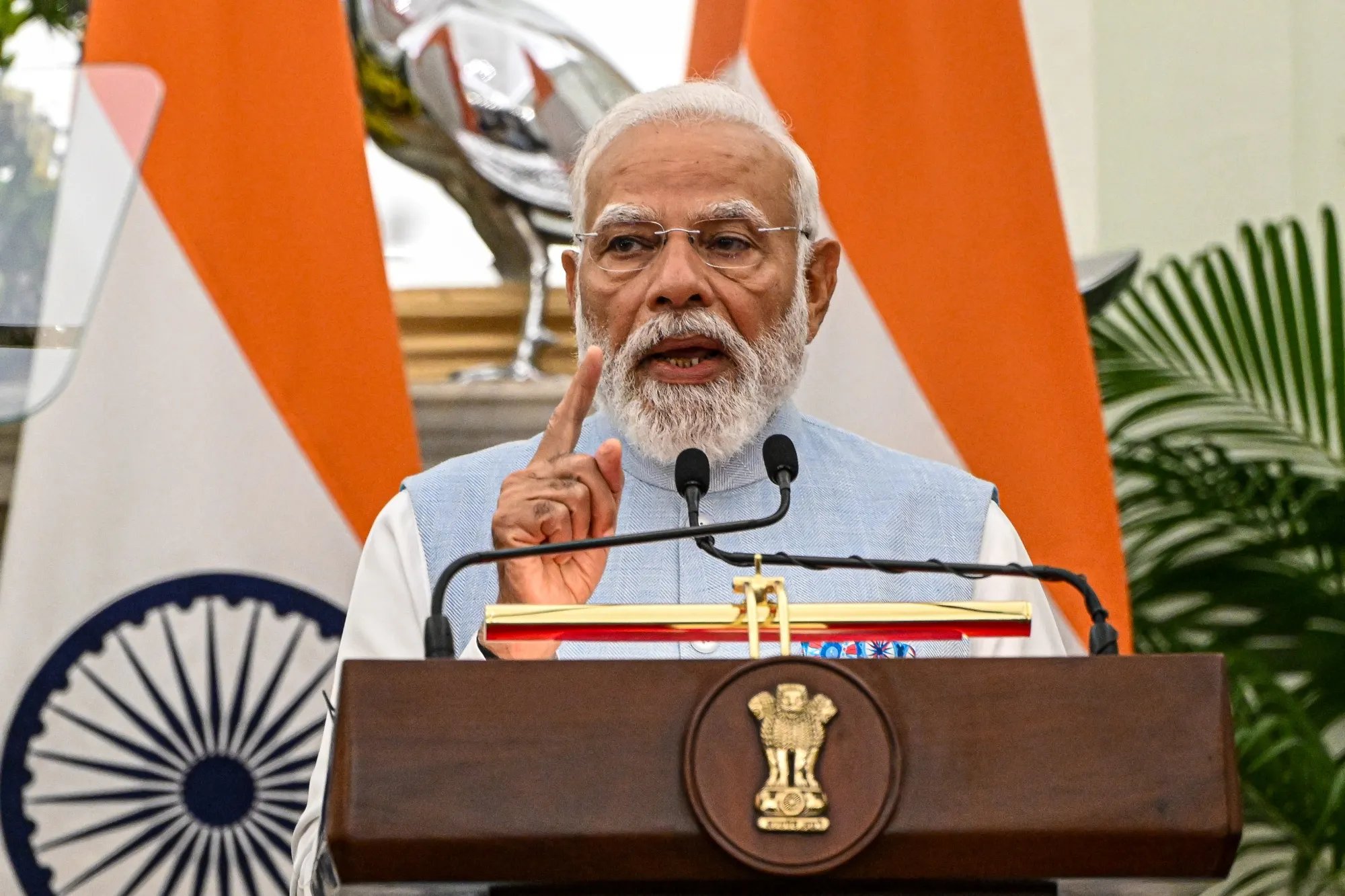
India's parliament rejected Prime Minister Narendra Modi's constitutional amendment bill on Friday, marking the first time his government has failed to pass such legislation in 12 years. The Constitution (131st Amendment) Bill, 2026 needed a two-thirds majority but fell short: 298 lawmakers voted in favor while 230 opposed, leaving it 55 votes short of passage. The measure would have reserved one-third of parliamentary seats for women and expanded the lower house to 850 seats from its current 543.
The bill linked women's quota implementation to a controversial redrawing of electoral constituency boundaries called delimitation. Opposition parties supported the quota itself but rejected the boundary changes, which they argued would benefit Modi's Bharatiya Janata Party ahead of elections in 2029.
Modi's Accusation and Apology
He accused opposition parties including Congress, the Dravida Munnetra Kazhagam, the Trinamool Congress, and the Samajwadi Party of prioritizing self-interest over women's empowerment. "The opposition has committed a grave mistake by opposing the women's reservation bill and will be punished by the people," Modi said. He also accused opposition parties of carrying out "bhroom hatya," a reference to female feticide, and predicted that "women of our country will give a befitting reply to Congress and its allies."
Earlier in the day, an NDTV report cited Modi as telling his cabinet that the opposition had made a mistake and would face consequences. "This message must be taken to every single person, to every single village," Modi said.
Opposition's Counterargument
Congress Party President Mallikarjun Kharge rejected Modi's criticism, insisting his party "has always supported women's reservation" and noting Congress had backed the proposal on at least two previous occasions. He called on Modi to implement the 33% quota without tying it to constituency redrawing. Kharge pointed to Congress governments' record passing "some of the most important pro-women laws in Indian history" including workplace sexual harassment laws and domestic violence bills.
Mahua Moitra, an opposition MP from West Bengal, noted that a women's quota law had already passed in 2023 and was notified two days before the failed vote. "NOTHING stops you from implementing it now & giving 1/3 of 543 seats to women," she wrote. Congress lawmaker Jairam Ramesh called Modi's attempt to link delimitation to women's quotas "shameless" and "deceitful," saying his motive was "poisonous."
Priyanka Gandhi, another Congress lawmaker, demanded immediate implementation of the 2023 Women's Reservation Act without delimitation changes. "If you want to do something concrete, bring back the bill that was passed unanimously in 2023, supported by all parties," she said at a press conference.
Government's Rationale for Boundary Changes
Modi's government argued that constituency redrawing was necessary because parliamentary seats were last fixed after a 1971 census and no longer reflected population shifts. The delimitation exercise would have increased lower house seats by two-fifths by the time of the 2029 general elections.
Southern Indian states had expressed concern that population-based delimitation would unfairly shift political representation toward northern states with higher population growth. Modi and Home Minister Amit Shah provided assurances in parliament that southern states' proportional representation would remain nearly unchanged.
BJP's Street Response
The Bharatiya Janata Party held protests Saturday against opposition parties, calling their stance "anti-women." BJP women workers burned an effigy of Rahul Gandhi, the opposition leader in the lower house, during a march to his residence. Police deployed water cannons to disperse demonstrators. The protests included Delhi Chief Minister Rekha Gupta and BJP leaders Hema Malini, Bansuri Swaraj, Kamaljeet Sehrawat, and Manoj Tiwari. Swaraj told reporters: "Entire Opposition, especially LoP Rahul Gandhi, betrayed the women of this country yesterday. They backstabbed women."




The sources indicate that with 528 members voting, two-thirds required 352 votes, so the bill was 54 votes short, not 55.