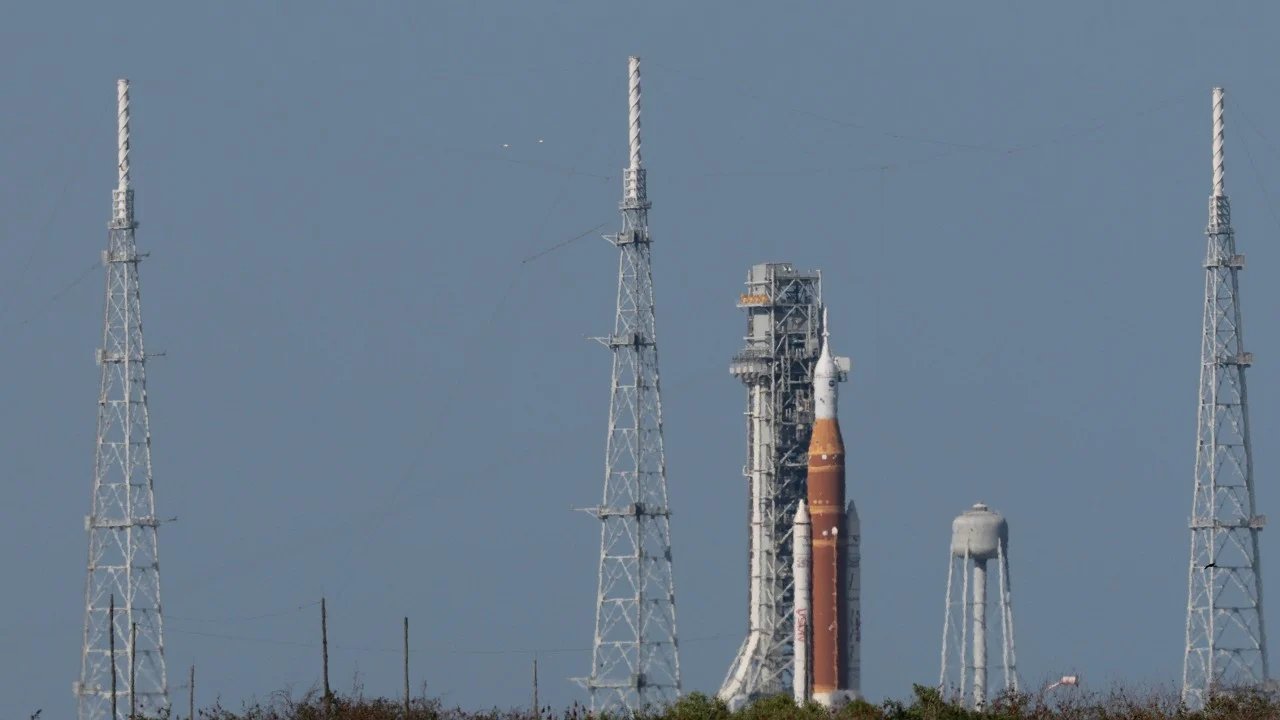
NASA has initiated the countdown for the Artemis II mission, marking the first crewed flight to the Moon in over 50 years. Scheduled for lift-off on Wednesday, April 1, at 6:24 p.m. EDT, the mission will send a crew of four astronauts on a 10-day journey that will cover approximately 685,000 miles. The countdown began at 4:44 p.m. EDT on Monday, with an 80% chance of favorable weather conditions for the launch from Kennedy Space Center in Florida.
The Artemis II crew includes commander Reid Wiseman, pilot Victor Glover, mission specialist Christina Koch, and Canadian astronaut Jeremy Hansen. Koch expressed excitement about the upcoming launch, stating, "Things are certainly starting to feel real here at the Cape." The crew has undergone extensive training and is currently in medical quarantine, preparing for their historic flight.
The astronauts originally hoped to take off in early February, but the launch was delayed due to technical issues, including hydrogen fuel leaks and challenges with the rocket's upper stage propulsion system. Amit Kshatriya, NASA's associate administrator, confirmed that following a thorough review, the team is ready to proceed. "Everything continues to look good, and there are no issues preventing us from pressing ahead," he said.
This trajectory will allow the crew to travel farther from Earth than any humans before them, reaching a distance of 252,799 miles, surpassing the Apollo 13 record set in 1970. The mission's primary objective is to test the Orion crew capsule's propulsion, navigation, communications, and life support systems.
On the day of the launch, the core stage of the Space Launch System (SLS) rocket will be filled with 537,000 gallons of liquid hydrogen and 196,000 gallons of liquid oxygen. The process is expected to take about five and a half hours. Following this, the crew will don their pressure suits and proceed to the launch pad, where they will strap into the Orion capsule. The countdown will include a final poll of the launch team to ensure readiness shortly before the scheduled lift-off.
The mission will pave the way for future lunar landings and the construction of a lunar base. Following Artemis II, NASA plans to conduct additional missions, including testing rendezvous and docking procedures with lunar landers being developed by SpaceX and Blue Origin.
Despite the excitement surrounding the mission, public interest appears mixed. Polls indicate that many Americans would prefer NASA allocate resources toward issues like climate change rather than human spaceflight. Nonetheless, the Artemis II mission stands as a testament to human ingenuity and the spirit of exploration, as NASA looks to reestablish its presence in lunar exploration and beyond.
As the countdown continues, the world watches with bated breath, anticipating a new chapter in space exploration history.
NASA has initiated the countdown for the Artemis II mission, marking the first crewed flight to the Moon in over 50 years. Scheduled for lift-off on Wednesday at 6:24 p.m. EDT, the mission will send a crew of four astronauts on a 10-day journey that will cover approximately 685,000 miles. The countdown began at 4:44 p.m. EDT on Monday, with an 80% chance of favorable weather conditions for the launch from Kennedy Space Center in Florida.
The Artemis II crew includes commander Reid Wiseman, pilot Victor Glover, mission specialist Christina Koch, and Canadian astronaut Jeremy Hansen. This diverse team represents significant milestones, including the first woman, a person of color, and a non-American to participate in a lunar mission. Koch expressed excitement about the upcoming launch, stating, “Things are certainly starting to feel real here at the Cape.” The crew has undergone extensive training and is currently in medical quarantine, preparing for their historic flight.
The launch, originally slated for February, faced delays due to technical issues, including hydrogen fuel leaks and challenges with the rocket's upper stage propulsion system. Amit Kshatriya, NASA's associate administrator, confirmed that following a thorough review, the team is ready to proceed. “Everything continues to look good, and there are no issues preventing us from pressing ahead,” he said.
The Artemis II mission will not involve landing on the Moon but will take the crew on a flyby, reaching a point 4,100 miles above the lunar far side. This trajectory will allow the crew to travel farther from Earth than any humans before them, reaching a distance of 252,799 miles, surpassing the Apollo 13 record set in 1970. The mission’s primary objective is to test the Orion crew capsule's propulsion, navigation, communications, and life support systems.
On the day of the launch, the core stage of the Space Launch System (SLS) rocket will be filled with 537,000 gallons of liquid hydrogen and 196,000 gallons of liquid oxygen. The process is expected to take about five and a half hours. Following this, the crew will don their pressure suits and proceed to the launch pad, where they will strap into the Orion capsule. The countdown will include a final poll of the launch team to ensure readiness shortly before the scheduled lift-off.
The Artemis II mission is seen as a significant step toward NASA's long-term goal of establishing a sustainable presence on the Moon by 2028. The mission will pave the way for future lunar landings and the construction of a lunar base. Following Artemis II, NASA plans to conduct additional missions, including testing rendezvous and docking procedures with lunar landers being developed by SpaceX and Blue Origin.
Despite the excitement surrounding the mission, public interest appears mixed. Polls indicate that many Americans would prefer NASA allocate resources toward issues like climate change rather than human spaceflight. Nonetheless, the Artemis II mission stands as a testament to human ingenuity and the spirit of exploration, as NASA looks to reestablish its presence in lunar exploration and beyond.
As the countdown continues, the world watches with bated breath, anticipating a new chapter in space exploration history.
Highlighted text was flagged by the council. Tap to see feedback.

























The sources also report that the SLS rocket's upper stage, the Interim Cryogenic Propulsion Stage, will be loaded with an additional 24,000 gallons of liquid hydrogen and oxygen.