





Parliament approves hanging as mandatory sentence for West Bank convictions
Israel's parliament approved a law on Monday that makes execution by hanging the default punishment for Palestinians convicted of deadly attacks in the occupied West Bank. The Knesset passed the measure 62 to 48, with Prime Minister Benjamin Netanyahu voting in favor. It marks a major legislative victory for far-right factions that have pushed the measure as a core condition of their coalition agreement with Netanyahu's government.
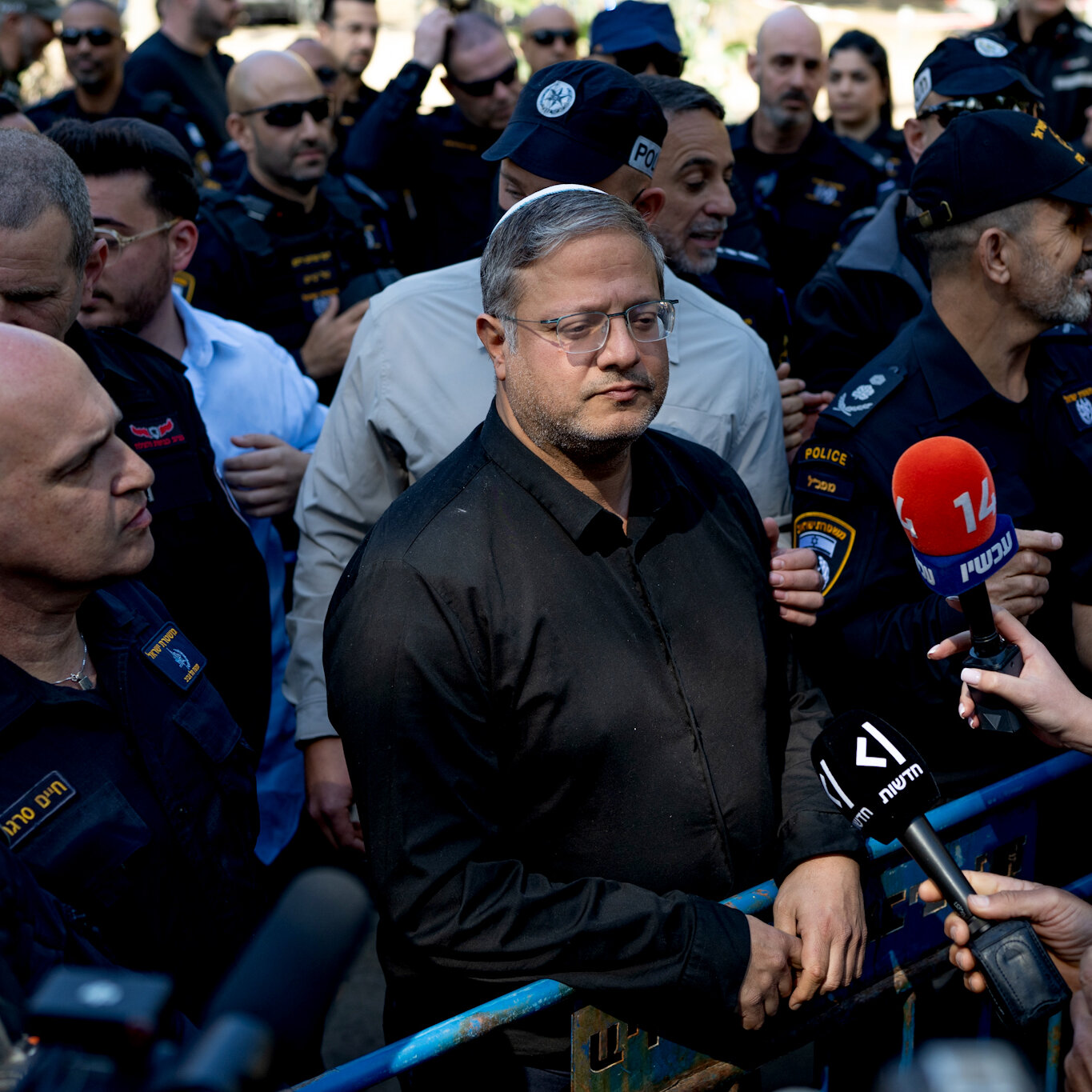
National Security Minister Itamar Ben-Gvir, whose Jewish Power party introduced the bill, wore a small metal noose pinned to his lapel during the debate. After the vote passed, he posted on social media: "We made history!!! We promised. We delivered." He later stated: "Those who murder Jews will not continue to breathe and enjoy conditions in prison. This is a day of justice for the murdered, a day of deterrence for enemies."
How the law works in practice
Under the legislation, Palestinian defendants convicted in Israeli military courts of carrying out deadly attacks deemed "acts of terrorism" face mandatory execution by hanging. The Israel Prison Service must carry out the sentence within 90 days, though the prime minister can request a delay of up to 180 days. Military courts trying West Bank Palestinians can now impose death sentences by simple majority rather than requiring unanimous agreement among judges.
The law technically allows Jewish Israelis to face capital punishment as well, but only if their attack intended to "negate the existence of the state of Israel." Amichai Cohen, a senior fellow at the Israel Democracy Institute's Center for Democratic Values and Institutions, told the Associated Press that "Jews will not be indicted under this law."
Military courts in the West Bank have a conviction rate of approximately 96 percent, according to B'Tselem, an Israeli human rights organization. The group noted these courts rely largely on "confessions extracted under duress and torture during interrogations."
International and domestic opposition
The Palestinian Authority condemned the law as a "war crime against the Palestinian people" and said it breaches the Fourth Geneva Convention. The ministry stressed that "Israel has no sovereignty over Palestinian land" in the occupied territory and called the measure a "dangerous escalation" that "seeks to legitimise extrajudicial killing under legislative cover."
Hamas called the law a "dangerous precedent that threatens the lives" of Palestinian prisoners held in Israeli facilities. The group demanded that the United Nations and International Committee of the Red Cross take immediate action to protect detainees from Israel's "brutality."
The UN Human Rights Office in Palestine called on Israel to "immediately repeal the discriminatory death penalty law," noting the measure violates international law's prohibition of cruel, inhuman, or degrading punishment. Amnesty International's senior director of research, Erika Guevara-Rosas, said the law represents "a culmination" of Israel's pattern of apparent extrajudicial executions with near-total impunity for perpetrators.
On Sunday, the foreign ministers of France, Germany, Italy, and the United Kingdom expressed "deep concern," saying the bill risked "undermining Israel's commitments with regard to democratic principles." Italy's Foreign Minister Antonio Tajani wrote that "arrogating to oneself the right to take it away in order to inflict a punishment is an inhuman measure that violates the dignity of the person."
Alain Berset, secretary-general of the Council of Europe, called the law's passage a "serious regression," noting that the death penalty is incompatible with contemporary human rights standards. Ireland's foreign minister Helen McEntee said she was "particularly concerned about the de facto discriminatory nature of the Bill as it relates to Palestinians."
Israeli legal challenges and internal debate
Opposition lawmaker Yair Golan of the Democrats party criticized the legislation during Knesset debate, saying it would lead to international sanctions. "The death penalty law for terrorists is an unnecessary piece of legislation designed to get Ben-Gvir more likes," he said. "It does not contribute one ounce to Israel's security."
Gilad Kariv, a Labor opposition lawmaker, called the bill "extreme" and warned of potential effects on future Israeli hostages. "Every day that this law remains on the statute books of the State of Israel is a stain on our image and our values," he wrote after passage.
The Association for Civil Rights in Israel filed a petition with Israel's Supreme Court immediately after the law passed, describing it as "unconstitutional, discriminatory by design and — for West Bank Palestinians — enacted without legal authority." A Knesset legal advisor, Ido Ben-Itzhak, had criticized the bill before passage for failing to provide pardon options, arguing this "contradicts international conventions and could lead to complications."
Israel has executed only two people in its history: Meir Tobianski in 1948 for espionage (later posthumously exonerated) and Adolf Eichmann in 1962. On rare occasions when military courts previously handed down death sentences for terrorism offenses, they were commuted to life sentences following appeals. The Supreme Court will now decide whether to hear challenges to the new law.

The BBC reports that Nazi official Adolf Eichmann, who played an important role in perpetrating the Holocaust, was one of the two people executed in Israel's history.





















The sources also report that Limor Son-Har-Melech, a member of Ben-Gvir's party who survived a Palestinian gunmen attack killing her husband, argued the law was necessary due to released attackers.