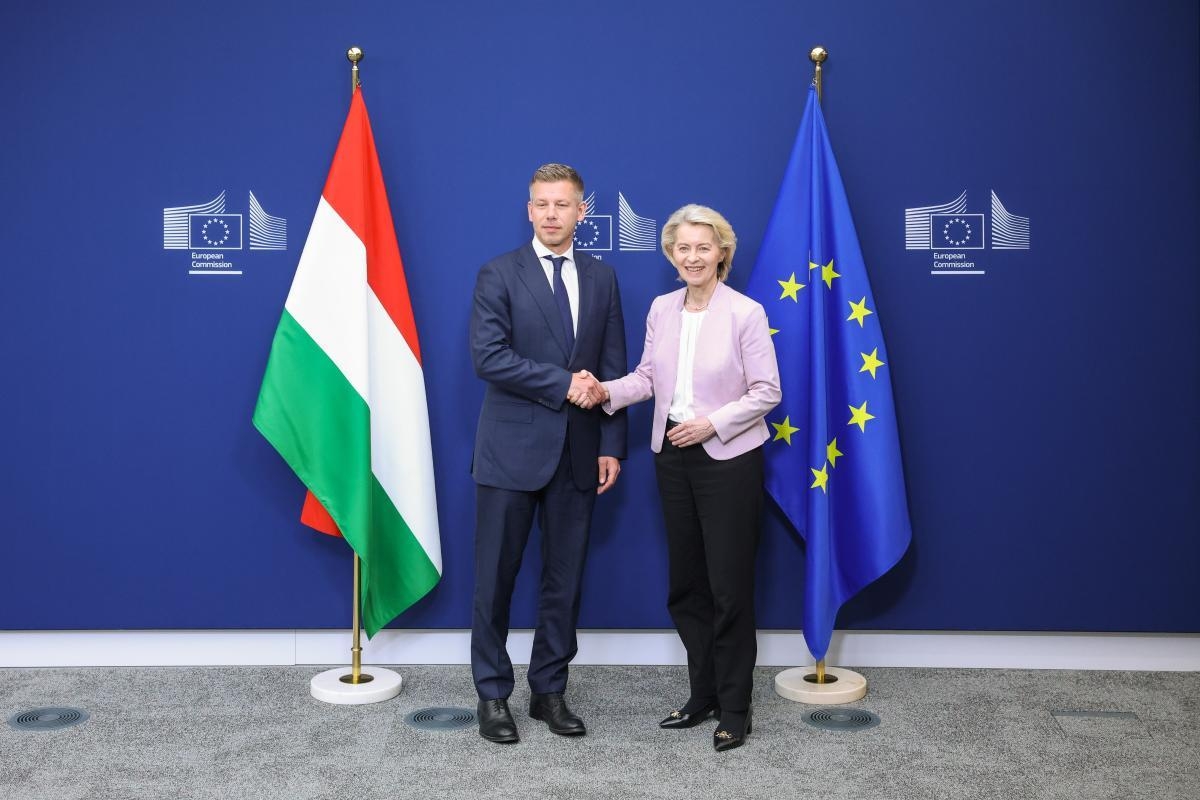
The European Union has unlocked €16.4 billion in funds for Hungary, a crucial financial lifeline for a country grappling with a stagnant economy. This decision follows a meeting between Prime Minister Peter Magyar and European Commission President Ursula von der Leyen, where Magyar outlined reforms aimed at combating corruption and improving governance. The unlocked funds, which equate to approximately 14% of Hungary's GDP, include €10 billion from the Next Generation EU recovery fund, €4.2 billion in cohesion funds, and a further €2.2 billion as reforms are completed.
Prime Minister Peter Magyar hailed the deal as a "historic breakthrough," emphasizing the importance of these funds in revitalizing Hungary's economy. He stated, "We will bring this money home, as we promised, to rebuild Hungary, to jump-start the economy, to restore and develop public services, and to strengthen the competitiveness of Hungarian companies."
Despite the positive outcome, the funds are not guaranteed. The agreement outlines conditions that Hungary must meet, including 27 binding "super milestones." Failure to comply could result in the withdrawal of the funding.
Among the agreed reforms is a restructuring of Hungary's university governance, which could unlock €2.2 billion for academic institutions. The government also plans to reform its national investment bank, potentially receiving a €2 billion injection. Specific projects earmarked for funding include €1.5 billion for energy grid improvements, €1.8 billion for railway investments, and €500 million for establishing an AI "gigafactory."
The announcement has prompted a swift response from former Prime Minister Viktor Orban. In a social media post, Orban questioned, "What Hungarian interests has [Peter Magyar] sold out to Brussels?"
Hungary's economic situation remains precarious, with a projected budget deficit of 6.2% of GDP this year. The country's currency, the forint, has shown signs of recovery since Magyar's election, driven by optimism surrounding the renewed EU funding. Economists, including Zsolt Darvas from the Bruegel think tank, view the unlocking of these funds as a signal to investors that legal certainty is improving, which may enhance investment appetite in Hungary.
Magyar's government is expected to submit a revised list of planned reforms and projects to the European Commission in early June. This proposal will undergo approval in July, setting the stage for Hungary to potentially access the much-needed financial support. As the government prepares for these legislative steps, the stakes remain high for both Magyar and the Hungarian economy.
The European Union has unlocked €16.4 billion in funds for Hungary, a crucial financial lifeline for a country grappling with a stagnant economy. This decision follows a meeting between Prime Minister Peter Magyar and European Commission President Ursula von der Leyen, where Magyar outlined reforms aimed at combating corruption and improving governance. The unlocked funds, which equate to approximately 14% of Hungary's GDP, include €10 billion from the Next Generation EU recovery fund and €4.2 billion in cohesion funds.
Prime Minister Peter Magyar hailed the deal as a "historic breakthrough," emphasizing the importance of these funds in revitalizing Hungary's economy. He stated, "We will bring this money home, as we promised, to rebuild Hungary, to jump-start the economy, to restore and develop public services, and to strengthen the competitiveness of Hungarian companies." The agreement comes after weeks of negotiations, with Magyar's government needing to fulfill specific reform commitments by August 31 to secure the funds.
Despite the positive outcome, the funds are not guaranteed. A senior EU official clarified that the agreement outlines conditions that Hungary must meet, including 27 binding "super milestones." Failure to comply could result in the withdrawal of the funding. Analysts express skepticism about whether Magyar's government can meet these stringent criteria in the limited timeframe, particularly given the challenges of public consultation and legislative processes.
Among the agreed reforms is a restructuring of Hungary's university governance, which could unlock €2.2 billion for academic institutions. The government also plans to reform its national investment bank, potentially receiving a €2 billion injection. Specific projects earmarked for funding include €1.5 billion for energy grid improvements, €1.8 billion for railway investments, and €500 million for establishing an AI "gigafactory."
The announcement has prompted a swift response from former Prime Minister Viktor Orban, who criticized Magyar's concessions to Brussels. In a social media post, Orban questioned, "What Hungarian interests has [Peter Magyar] sold out to Brussels?" His comments highlight the ongoing political tensions as Magyar's administration seeks to distance itself from Orban's legacy of confrontational politics with the EU.
Hungary's economic situation remains precarious, with a projected budget deficit of 6.2% of GDP this year. The country's currency, the forint, has shown signs of recovery since Magyar's election, driven by optimism surrounding the renewed EU funding. Economists, including Zsolt Darvas from the Bruegel think tank, view the unlocking of these funds as a signal to investors that legal certainty is improving, which may enhance investment appetite in Hungary.
Magyar's government is expected to submit a revised list of planned reforms and projects to the European Commission in early June. This proposal will undergo approval in July, setting the stage for Hungary to potentially access the much-needed financial support. As the government prepares for these legislative steps, the stakes remain high for both Magyar and the Hungarian economy.
Highlighted text was flagged by the council. Tap to see feedback.




























The sources report that the funds include €12.9 billion in nonrefundable grants and €3.5 billion in loans, which the summary omits.