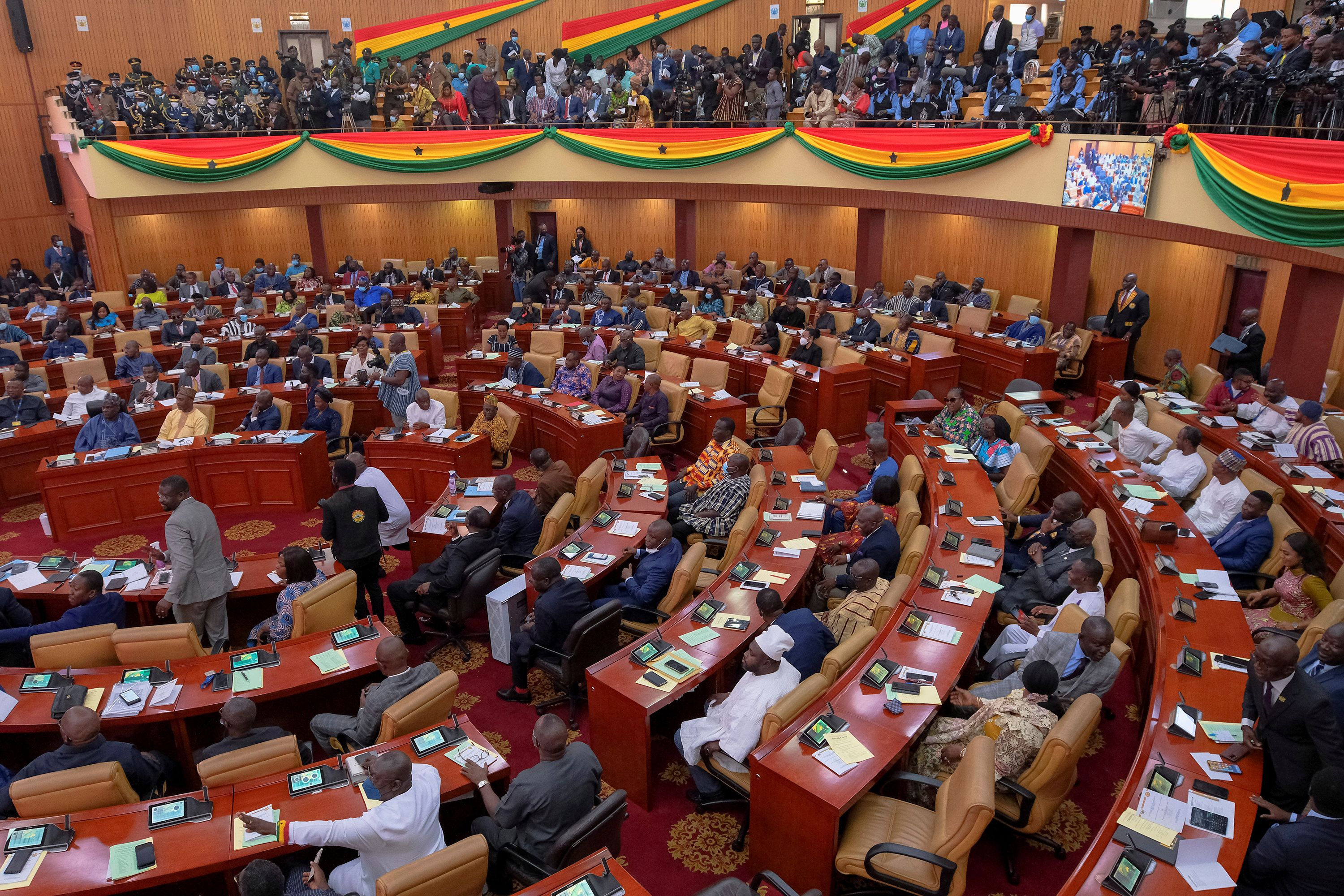
Ghana's parliament approved a bill that criminalizes identifying as lesbian, gay, bisexual, transgender or queer with prison terms of up to three years. The legislation also makes promotion, sponsorship or intentional support of LGBTQ+ activities punishable by three to five years in prison. Reverend John Ntim Fordjour, the bill's sponsor, told parliament the measure protected Ghanaian family and cultural values. He said the new bans would make existing laws "more robust, more encompassing, and more stringent in dealing with the practices of LGBTQI".
The new law introduces a duty to report prohibited acts to police. Anyone who identifies as an ally of LGBTQ+ people could also face prison time. These provisions expand on colonial-era laws that already banned same-sex relationships.
Mahama has indicated he would support the bill's passage. He stated shortly after taking office that he believes only two genders exist, man and woman, and that marriage is between a man and a woman.
The bill now awaits ratification by President Mahama. Parliament passed the measure on Friday.
Human Rights Watch said the bill places LGBTQ+ people's lives at risk while encouraging citizens to surveil and denounce one another. The organization recommended the bill be abandoned in a formal submission to the constitutional and legal affairs committee in Accra. It criticized the duty to report provision as a mechanism that turns neighbors into informants.
The legislation includes exemptions for legal, media and healthcare professionals who report on LGBTQ+ issues or provide medical treatment or other services for gay people. These carve-outs aim to protect certain professional activities from prosecution. Critics argue the overall framework still creates widespread danger.
Ghana passed a similar bill in 2024 but it did not become law after former president Akufo-Addo failed to sign it amid legal challenges. The current version returns with stronger language targeting both identity and support activities.
Senegal's parliament approved similar legislation in March which prescribes a maximum prison term of 10 years for sexual acts by same-sex couples and criminalizing the promotion of homosexuality. Uganda introduced a death penalty for certain same-sex acts in 2023. These developments reflect a broader trend of tightened restrictions in multiple African nations.
The duty to report clause adds a unique enforcement layer not highlighted in neighboring examples. Observers note the bill's potential to reshape daily interactions for thousands of citizens.
The final text carves out protections for doctors treating LGBTQ+ patients and journalists covering related stories. Healthcare workers can provide services without fear of prosecution under the new rules. Legal professionals receive similar immunity when fulfilling professional obligations.
Human Rights Watch had urged complete rejection rather than partial carve-outs. The organization argued that even with exemptions the law would drive underground communities and increase vulnerability to violence.
The legislation creates clear boundaries around what constitutes punishable support versus protected professional conduct. Media outlets can report facts without automatic legal risk. Medical providers maintain ability to offer care despite the surrounding criminal framework.
President Mahama faces the choice of signing the bill into law or allowing it to lapse. His public statements on gender and marriage suggest likely approval. Religious communities continue pressing for swift ratification to lock in the new penalties.
The law's effects will reach beyond those directly identifying as LGBTQ+. Families, friends and colleagues must now weigh the duty to report against personal loyalties. Medical clinics and newsrooms navigate the narrow exemptions while serving affected populations.
Ghana's parliament approved a bill that criminalizes identifying as lesbian, gay, bisexual, transgender or queer with prison terms of up to three years. The legislation also makes promotion, sponsorship or intentional support of LGBTQ+ activities punishable by three to five years in prison. Reverend John Ntim Fordjour, the bill's sponsor, told parliament the measure would make existing laws more robust, more encompassing, and more stringent in dealing with LGBTQI practices.
The new law introduces a duty to report prohibited acts to police. Anyone who identifies as an ally of LGBTQ+ people could also face prison time. These provisions expand on colonial-era laws that already banned same-sex relationships.
Religious leaders have pressured President John Dramani Mahama to strengthen anti-gay laws since he took office last year. Mahama has indicated he would support the bill's passage. He stated shortly after taking office that he believes only two genders exist, man and woman, and that marriage is between a man and a woman.
The bill now awaits ratification by President Mahama. Fordjour spoke to media after the vote, highlighting the legislation's protective intent toward Ghanaian family and cultural values. Parliament passed the measure on Friday.
Human Rights Watch said the bill places LGBTQ+ people's lives at risk while encouraging citizens to surveil and denounce one another. The organization recommended the bill be abandoned in a formal submission to the constitutional and legal affairs committee in Accra. It criticized the duty to report provision as a mechanism that turns neighbors into informants.
The legislation includes exemptions for legal, media and healthcare professionals who report on LGBTQ+ issues or provide medical treatment or other services for gay people. These carve-outs aim to protect certain professional activities from prosecution. Critics argue the overall framework still creates widespread danger.
Ghana passed a similar bill in 2024 but it did not become law after former president Akufo-Addo failed to sign it amid legal challenges. The current version returns with stronger language targeting both identity and support activities. Fordjour positioned the new text as an improvement that closes previous gaps.
The bill's sponsor emphasized its role in safeguarding traditional structures during his address to parliament. Lawmakers incorporated feedback from religious groups that had lobbied for tougher measures. This iteration explicitly lists allies as potential offenders.
Senegal's parliament approved similar legislation in March which prescribes a maximum prison term of 10 years for sexual acts by same-sex couples and criminalizing the promotion of homosexuality. Uganda introduced a death penalty for certain same-sex acts in 2023. These developments reflect a broader trend of tightened restrictions in multiple African nations.
Ghana's legislation stands out for its explicit criminalization of gender identity itself rather than only sexual acts. The duty to report clause adds a unique enforcement layer not highlighted in neighboring examples. Observers note the bill's potential to reshape daily interactions for thousands of citizens.
The final text carves out protections for doctors treating LGBTQ+ patients and journalists covering related stories. Healthcare workers can provide services without fear of prosecution under the new rules. Legal professionals receive similar immunity when fulfilling professional obligations.
These exemptions emerged during committee review in Accra. Human Rights Watch had urged complete rejection rather than partial carve-outs. The organization argued that even with exemptions the law would drive underground communities and increase vulnerability to violence.
The legislation creates clear boundaries around what constitutes punishable support versus protected professional conduct. Media outlets can report facts without automatic legal risk. Medical providers maintain ability to offer care despite the surrounding criminal framework.
President Mahama faces the choice of signing the bill into law or allowing it to lapse. His public statements on gender and marriage suggest likely approval. Religious communities continue pressing for swift ratification to lock in the new penalties.
The law's effects will reach beyond those directly identifying as LGBTQ+. Families, friends and colleagues must now weigh the duty to report against personal loyalties. Medical clinics and newsrooms navigate the narrow exemptions while serving affected populations.
Highlighted text was flagged by the council. Tap to see feedback.