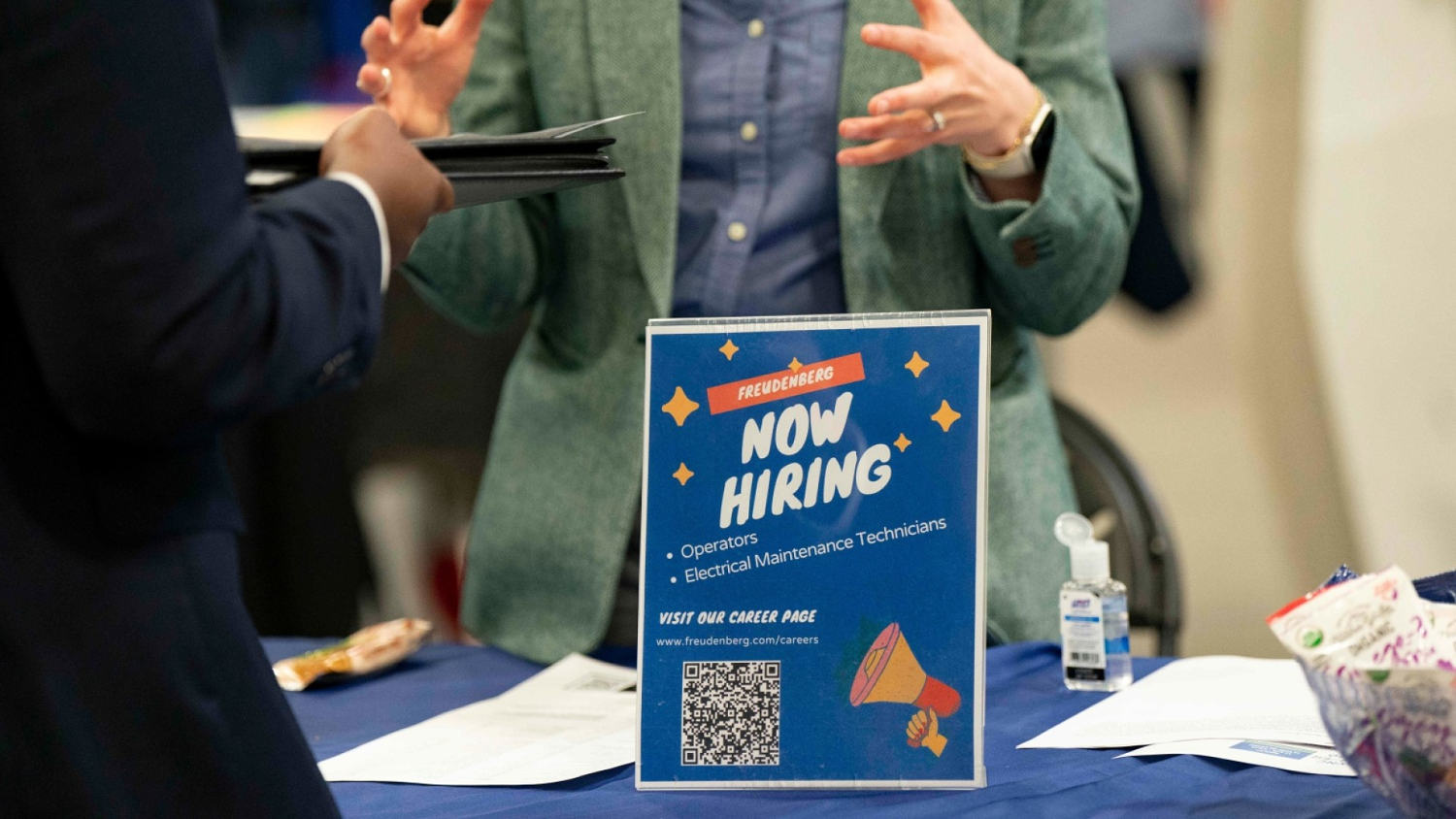
U.S. employers added 178,000 jobs in March, nearly triple what economists had forecast, marking the sharpest rebound in 15 months and reversing a brutal February decline. The unemployment rate fell to 4.3% from 4.4% the previous month, according to data released Friday by the Bureau of Labor Statistics. The surge came despite economic uncertainty tied to the U.S.-Israeli war on Iran, which triggered gasoline prices above $4 a gallon and oil prices topping $100 a barrel for the first time since 2022.
The March gains stand in sharp contrast to February's revised losses of 133,000 jobs, a figure 41,000 worse than initially reported. Economists had predicted only 60,000 to 70,000 new positions for March, making the actual result a decisive beat.
Health care drove more than a third of March's job gains, adding 76,000 positions as workers returned from strikes in California and Hawaii that had depressed February's numbers. Construction companies added 26,000 jobs, benefiting from mild spring weather, while transportation and warehousing gained 21,000 positions. Federal government employment continued its decline, shedding another 18,000 jobs in March.
Despite sharply elevated crude oil prices, employment among oil and gas drilling companies showed no increase, suggesting businesses had not yet adjusted hiring plans in response to the energy shock.
The stronger-than-expected payroll gains will likely keep the Federal Reserve on the sidelines regarding rate cuts. At their March meeting, Fed officials held the benchmark rate steady while indicating they still expected one rate cut in 2026, though multiple economists now predict the central bank will refrain from cuts entirely this year. Daniel Zhao, chief economist at Glassdoor, noted that the March report "alleviates pressure on the Federal Reserve to act immediately and instead lets them look ahead to prepare for the impacts of the U.S.-Iran war and rising energy prices."
Fed Chair Jerome Powell acknowledged the tension this week, stating there is "downside risk to the labor market, which suggests keep rates low, but there's upside risk to inflation, which suggests maybe don't keep rates low."
Job growth has been inconsistent throughout 2026, averaging just 68,000 positions per month from January through March. The labor force shrank by nearly 400,000 people in March, partly due to the Trump administration's immigration crackdown and ongoing retirements among baby boomers. Stephen Brown, chief North America economist at Capital Economics, cautioned that March's gains primarily reflect a reversal of February's strike and weather effects rather than genuine momentum, calling 2026 "a story of recalibration rather than acceleration."
Worker sentiment about job prospects has deteriorated sharply. Younger workers face particular headwinds, with anxieties rising about artificial intelligence's impact on employment. Fed Chair Powell told Harvard students this week that "there's no denying it's a challenging time to enter the labor market," though he emphasized long-term opportunities.
U.S. employers added 178,000 jobs in March, nearly triple what economists had forecast, marking the sharpest rebound in 15 months and reversing a brutal February decline. The unemployment rate fell to 4.3% from 4.4% the previous month, according to data released Friday by the Bureau of Labor Statistics. The surge came despite economic uncertainty tied to the U.S.-Israeli war on Iran, which triggered gasoline prices above $4 a gallon and oil prices topping $100 a barrel for the first time since 2022.
The March gains stand in sharp contrast to February's revised losses of 133,000 jobs, a figure 41,000 worse than initially reported. Economists had predicted only 60,000 to 70,000 new positions for March, making the actual result a decisive beat. Olu Sonola, head of U.S. economics at Fitch Ratings, called it "a great Friday for the labor market, with a decisively lower unemployment rate and a bumper headline payroll number."
Health care drove more than a third of March's job gains, adding 76,000 positions as workers returned from strikes in California and Hawaii that had depressed February's numbers. Construction companies added 26,000 jobs, benefiting from mild spring weather, while transportation and warehousing gained 21,000 positions. Federal government employment continued its decline, shedding another 18,000 jobs and bringing cumulative losses to 355,000 since October 2024.
The monthly survey was conducted in the first half of March, before the full economic impact of the Iran conflict became apparent. Despite sharply elevated crude oil prices, employment among oil and gas drilling companies showed no increase, suggesting businesses had not yet adjusted hiring plans in response to the energy shock.
The stronger-than-expected payroll gains will likely keep the Federal Reserve on the sidelines regarding rate cuts. At their March meeting, Fed officials held the benchmark rate steady while indicating they still expected one rate cut in 2026, though multiple economists now predict the central bank will refrain from cuts entirely this year. Daniel Zhao, chief economist at Glassdoor, noted that the March report "alleviates pressure on the Federal Reserve to act immediately and instead lets them look ahead to prepare for the impacts of the U.S.-Iran war and rising energy prices."
Fed Chair Jerome Powell acknowledged the tension this week, stating there is "downside risk to the labor market, which suggests keep rates low, but there's upside risk to inflation, which suggests maybe don't keep rates low." Powell's term expires next month.
Job growth has been inconsistent throughout 2026, averaging just 68,000 positions per month from January through March. The labor force shrank by nearly 400,000 people in March, partly due to the Trump administration's immigration crackdown and ongoing retirements among baby boomers. Stephen Brown, chief North America economist at Capital Economics, cautioned that March's gains primarily reflect a reversal of February's strike and weather effects rather than genuine momentum, calling 2026 "a story of recalibration rather than acceleration."
Worker sentiment about job prospects has deteriorated sharply. A Gallup poll from late 2025 found that 72% of Americans said it was a bad time to find a job, up from 54% a year earlier. Younger workers face particular headwinds, with anxieties rising about artificial intelligence's impact on employment. Fed Chair Powell told Harvard students this week that "there's no denying it's a challenging time to enter the labor market," though he emphasized long-term opportunities.
Highlighted text was flagged by the council. Tap to see feedback.