
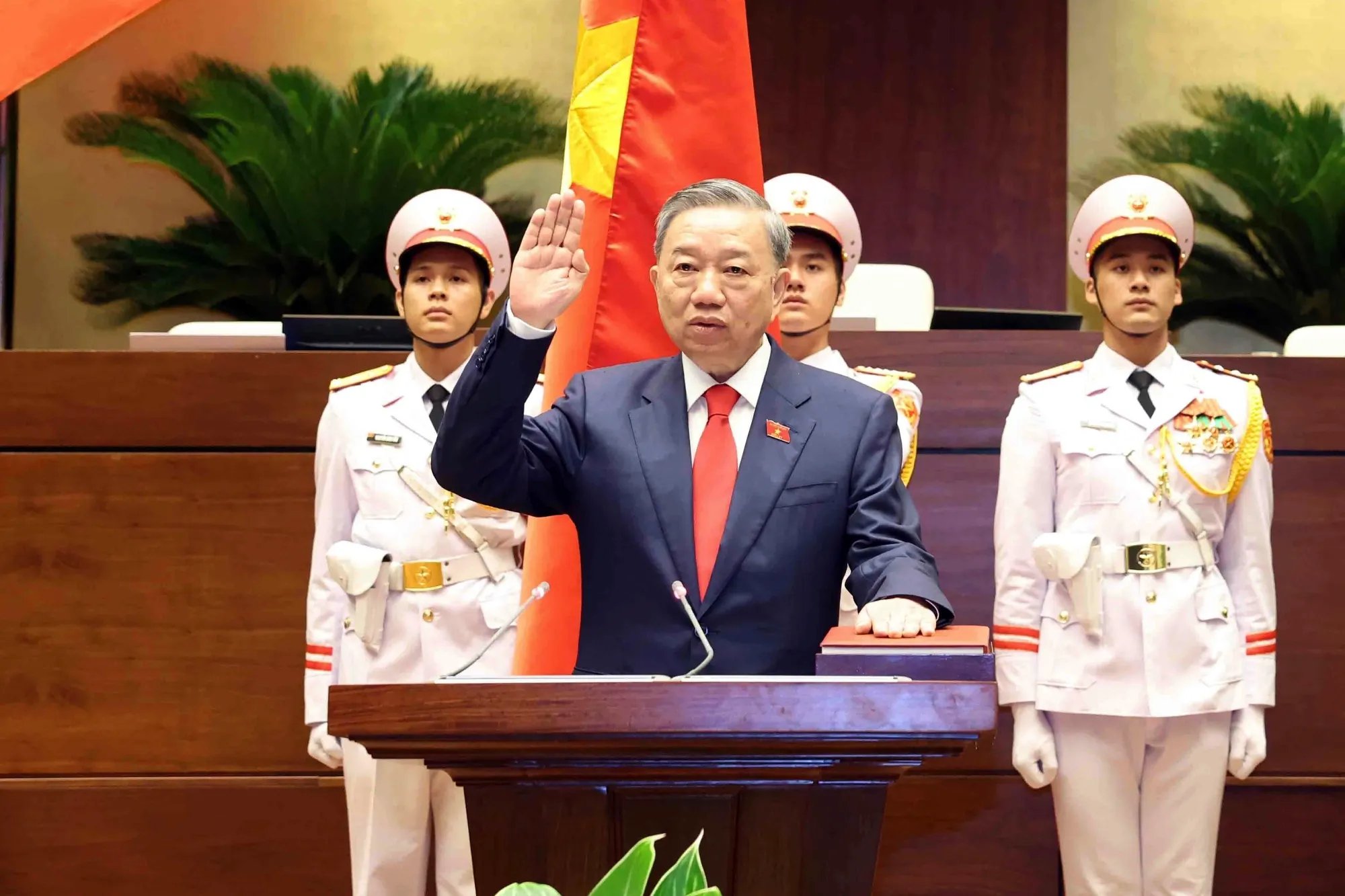



How One Man Now Controls Vietnam's Party and State
Vietnam's National Assembly elected Communist Party General Secretary To Lam as president on Tuesday, giving him both the country's top party and state positions in a rare consolidation of power. All 495 deputies present voted to approve Lam for a five-year presidential term, while five lawmakers were absent from the session. The vote cements Lam's authority over Vietnam's one-party state, ending the traditional separation between the Communist Party chief and head of state.
Lam's Immediate Economic Gambit
In his first address after being sworn in, Lam told lawmakers his administration would pursue double-digit annual growth for the next five years through what he termed a "new growth model." The model accelerates decision-making and expands the private sector. Lam has already demonstrated his willingness to overhaul government structures, eliminating eight ministries and combining provinces to cut bureaucracy during his first two years as party chief.

The sources also report that Lam received 99% of the vote in the parliamentary session, with the assembly's approval described as largely a formality in the one-party state.
The China Model Comes to Hanoi
Vietnam's political structure now mirrors China's governance under Xi Jinping, where one leader holds both party and state power. Analysts note this concentration of authority could lead to faster policy implementation but also risks increasing authoritarianism in the one-party state. Lam himself acknowledged the magnitude of his new dual role, calling it a "huge honor" and a "sacred and noble duty" in his address to the National Assembly.

The sources also report that Vietnam's political structure resembles that of Laos, a neighboring one-party state, in addition to China.
What Stability Means for 100 Million Vietnamese
Lam identified maintaining peace and stability as his top priority, declaring these conditions essential for fast and sustainable growth. He pledged to improve people's livelihoods so all citizens can share development benefits. The leader also emphasized defense self-reliance as a key goal, suggesting Vietnam may pursue more independent security policies rather than aligning closely with either China or the United States.
The Prime Minister Question
The National Assembly must still elect a new prime minister to replace outgoing Pham Minh Chinh, with lawmakers scheduled to vote later Tuesday.
From Security Chief to Supreme Leader
Lam's rise has been remarkably swift, with the former security minister surprising the country by sweeping aside competitors and implementing aggressive reforms. He has literally redrawn Vietnam's map by combining provinces and slashed bureaucracy while pushing massive infrastructure projects.

















Bloomberg reports that To Lam received 99% of the vote, not the unanimous approval described here.