



March prices surge as energy costs spike
Consumer prices in the U.S. rose 3.3% over the past year in March, marking the highest annual inflation rate in nearly two years, according to data released Friday by the Bureau of Labor Statistics. The monthly increase of 0.9% reflects a global energy shock triggered by the U.S.-Israeli war with Iran.
The war disrupted crude oil flows through the Strait of Hormuz, a critical chokepoint for global oil supply. Brent crude, the international benchmark, jumped from $73 a barrel before the conflict to $95.88 by Friday morning. The U.S. benchmark crude hovered around $97.
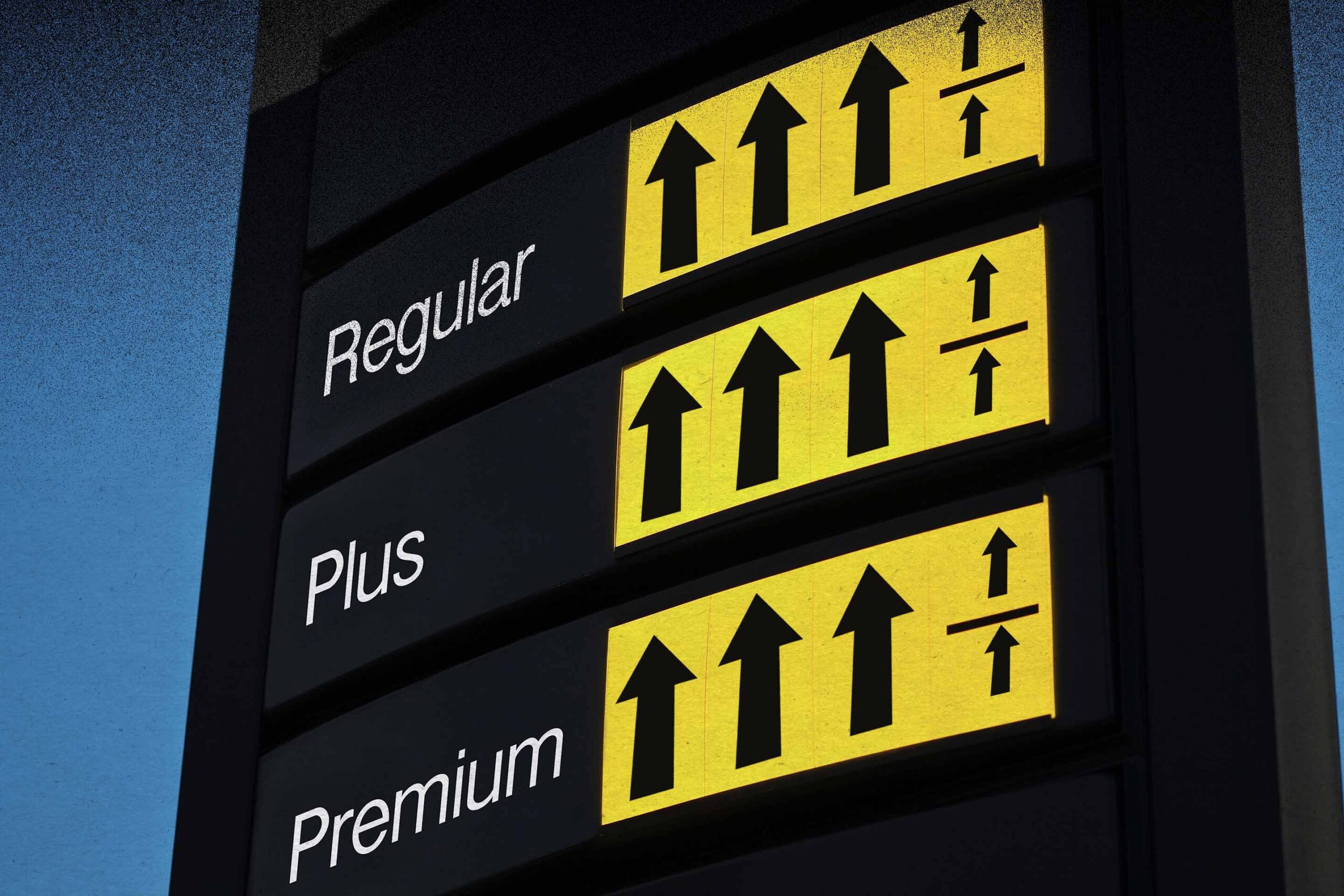
Energy prices surged 10.9% in a single month, driven by gasoline costs that rose 21.2% from February. The Bureau of Labor Statistics said this represents the largest monthly increase in gas prices since 1967. National average gas prices have climbed nearly 40% since the conflict erupted, reaching $4.15 a gallon on Friday, according to AAA.

The sources also report that the national average gas price of $4.15 a gallon represents a nearly 40% increase since the conflict erupted.

For example, the article reports that U.S. gas prices have soared nearly 40% since the conflict erupted, with the national average at $4.15 a gallon on Friday, according to AAA.
Ripple effects spreading beyond the pump
Higher energy costs are already cascading through the broader economy. Airlines raised fares by 14.9% on an annual basis in March as they offset fuel costs, with some carriers introducing or raising checked bag fees. Heather Long, chief economist at Navy Federal Credit Union, warned that "food prices, travel and shipping costs are all going up in April and will exacerbate the pain."
Economists had anticipated the March surge. The average of six separate forecasts reviewed by CBS News expected inflation to jump nearly a full percentage point from 2.4% in February to 3.3% in March on an annual basis, and the inflation report matched these expectations. Chris Zaccarelli, chief investment officer for Northlight Asset Management, noted that core inflation, which excludes volatile energy and food prices, rose only 0.2% monthly and 2.6% annually, lower than expected. This reading, he said, should "give the economy some room to absorb the higher energy price shock."
Uncertainty ahead for consumers and policymakers
A two-week ceasefire between the U.S. and Iran announced on Tuesday could ease gas prices if it holds, but energy experts said prices will likely take weeks to recede below $4 a gallon. Bernard Yaros, lead U.S. economist at Oxford Economics, called the April CPI reading a "key wildcard in the outlook for both inflation and monetary policy," adding that "the duration and intensity of the Iran war, which still hasn't been resolved by the tenuous ceasefire," remains uncertain.

The sources also report that a statistical quirk from a government shutdown disrupted data collection, adding upward pressure to the April CPI reading.
The Federal Reserve held its benchmark interest rate steady at 3.5% to 3.75% in March and penciled in one rate cut for 2026. However, minutes from that meeting signal some members of the Fed's 19-member rate-setting panel may be open to raising rates "if inflation were to remain at above-target levels." The Fed is scheduled to meet April 28 to 29.
Yaros noted the U.S. faces a different situation than 2022, when inflation peaked at 9.1% in June amid pandemic pressures and Russia's invasion of Ukraine. Global supply-chain stress measures "aren't flashing red," and the labor market has not created additional inflationary pressure as it did then. Still, households facing higher gasoline prices may eventually cut back on non-discretionary spending, potentially offering some relief to inflation later in the year.






































The sources also report that the increase in gas prices in March represents the largest monthly increase since 1967, according to the Bureau of Labor Statistics.